
Laying a Rug the Right Way: Sizing and Placement Rules That Actually Hold Up

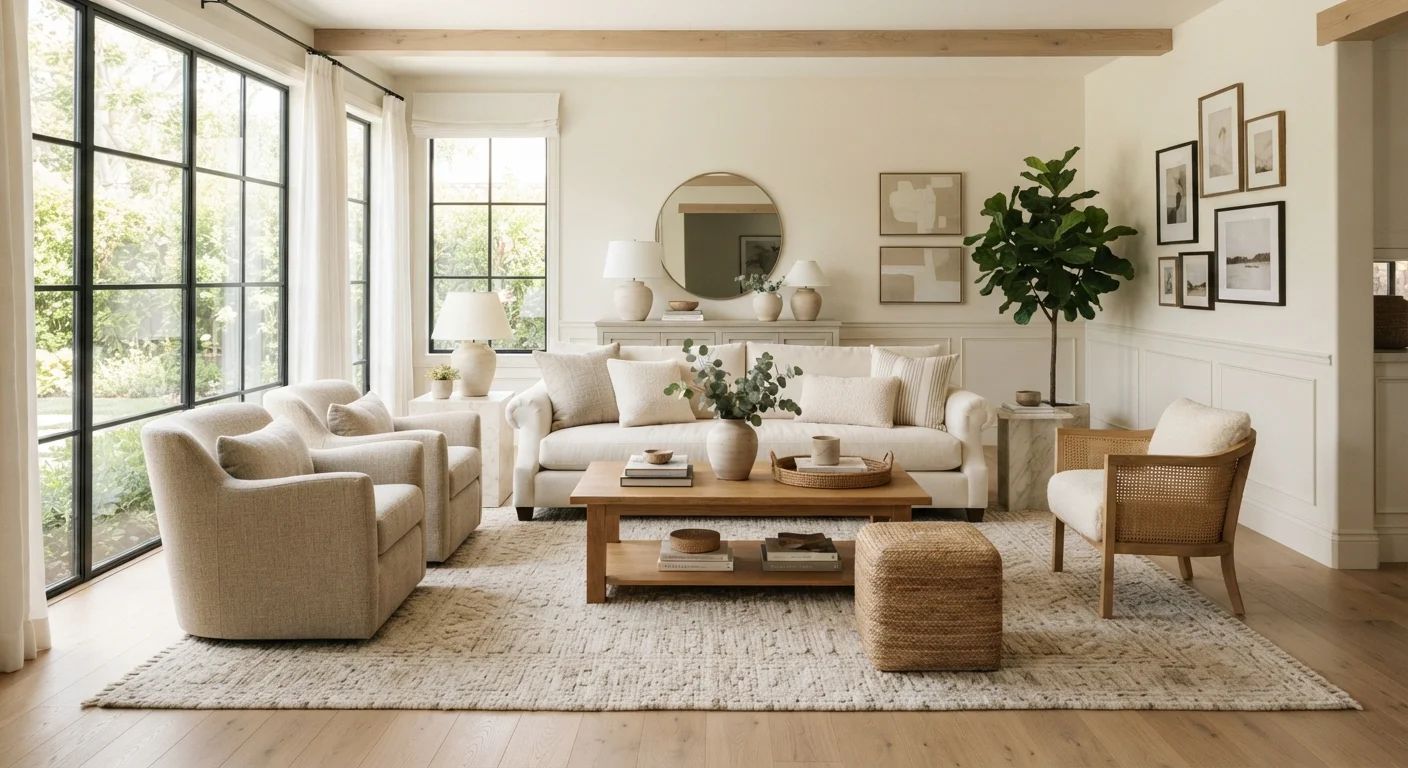
Photo: TotemBuzz.com | Your Lifestyle Companion editorial
Key Takeaways
- An undersized rug is the most common rug mistake — when in doubt, size up.
- In a living room, all front furniture legs should rest on the rug at minimum.
- In a dining room, the rug must extend at least 24 inches beyond the table on all sides.
- Measure your space before shopping — never choose a rug by eye alone.
- Rug placement anchors a room's layout and defines distinct zones in open-plan spaces.
Why Rug Size and Placement Matter More Than Style
Most beginners spend their energy choosing a rug's color or pattern, then grab whatever size seems reasonable in the store. The result is almost always too small — a rug that floats awkwardly in the middle of the room, disconnected from the furniture around it. Size and placement aren't afterthoughts; they're the foundation of whether a rug works at all.
A correctly sized and placed rug visually anchors a seating group, defines a zone in an open-plan space, and makes the whole room feel intentional. This principle connects to broader ideas about décor proportions beginners get wrong — rug size follows the same logic as artwork scale and lamp height. Get the proportion right and everything else clicks into place.
Measure your room and furniture footprint before shopping for a rug
Keep at least the front legs of all major seating on the rug in a living room
Extend a dining room rug at least 24 inches beyond every side of the table
Always use a non-slip rug pad cut to match your rug's dimensions
Use rug placement to intentionally define zones in open-plan spaces
Room-by-Room Sizing Guidelines
Standard rug sizes exist, but the right choice depends entirely on your room's dimensions and furniture layout. Here's how to think through each major space:
Living Room
The most widely accepted approach is to keep all main furniture legs either fully on the rug or — at minimum — with front legs on. A rug that only sits under the coffee table, surrounded by floating sofas, is almost always too small. For a typical living room seating group, a 8×10 ft rug is a common starting point; larger rooms often need a 9×12 ft or bigger. Measure the seating area first, then add roughly 12–18 inches of breathing room on each side.
Dining Room
The rule here is straightforward: the rug must be large enough so that chairs remain on it even when pulled out from the table. That generally means extending at least 24 inches beyond the table edge on all sides. For a standard 6-person rectangular table, a 8×10 ft rug is typically the minimum; a 10×14 ft works for larger sets.
Bedroom
A rug under a bed should extend 18–24 inches on each side and at the foot. The goal is that bare feet land on softness when getting up. Alternatively, two smaller rugs placed on either side of the bed can achieve the same comfort with more visual flexibility. See the room-by-room décor starter checklist for guidance on scaling other elements alongside your rug choice.
The Painter's Tape Test Saves Money
Placement Rules That Hold Up in Practice
Knowing the right size is only half the equation — how you position the rug matters just as much.
In open-plan living and dining areas, use rug placement deliberately to define separate zones. A rug under the sofa group signals the living space; a rug under the dining table carves out the eating area. This technique is explored further in our guide on making a small room feel larger with décor — a well-placed rug can actually expand the perceived dimensions of a tight space.
Center the rug under a defined seating arrangement rather than pushing it toward one wall. If your layout is asymmetrical, align the rug's center with the visual center of the grouping, not the architectural center of the room. And always use a quality rug pad — it keeps the rug from shifting, protects your floor, and adds a layer of cushioning underfoot.
For a fuller picture of how rugs work alongside curtains, cushions, and throws, the article on layering textiles in a space explains how each element contributes to texture and visual rhythm. And if you've heard the idea that a small rug makes a room look bigger — that's one of the decorating myths that keep beginners stuck worth leaving behind.
The content on this site is for informational purposes only and is not a substitute for professional advice. Always consult a qualified professional for guidance specific to your situation.