
How to Make a Small Room Feel Larger Using Décor Alone

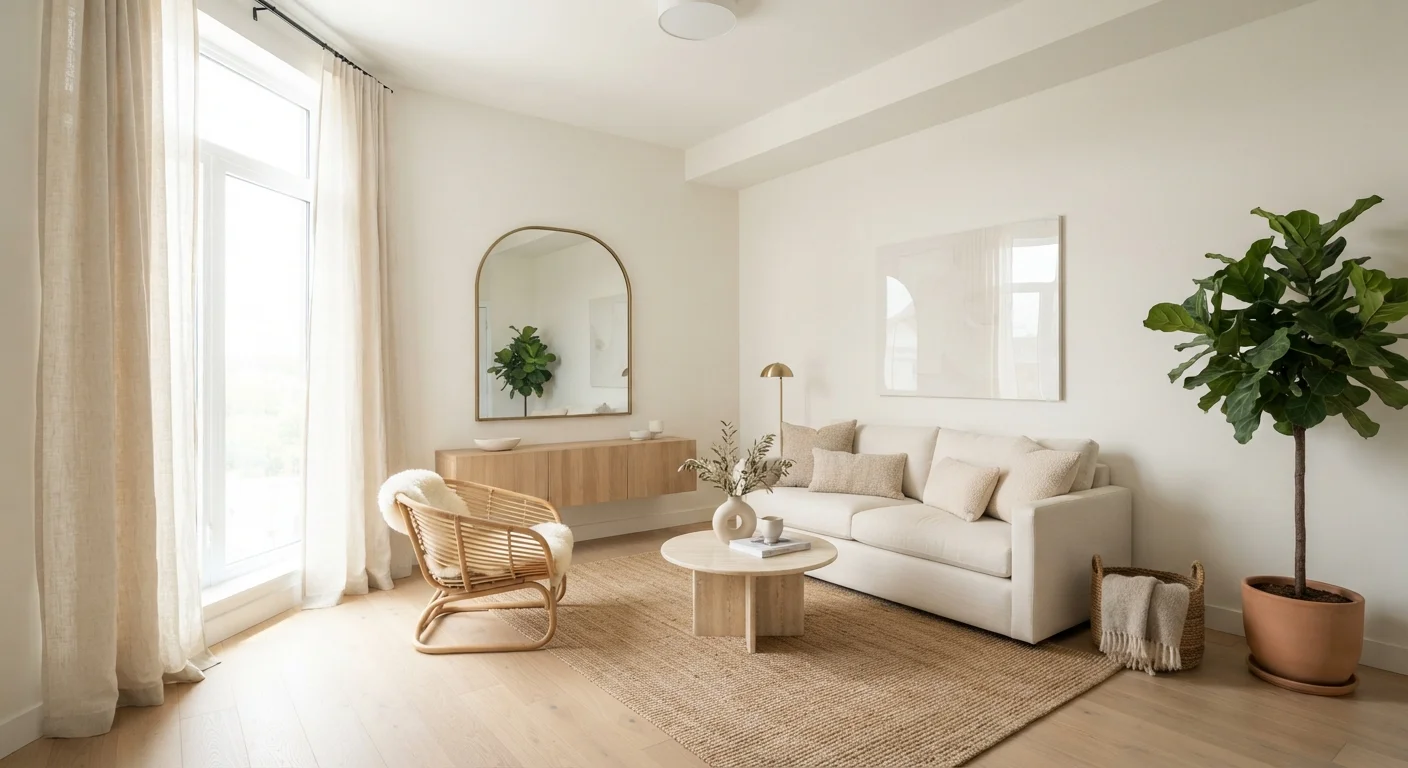
Photo: TotemBuzz.com | Your Lifestyle Companion editorial
Key Takeaways
- Mounting curtains close to the ceiling adds perceived height without any structural changes.
- Mirrors placed opposite light sources double the sense of depth and brightness in a small room.
- A correctly sized area rug anchors furniture and makes the space feel intentional rather than cramped.
- Choosing furniture scaled to the room and keeping legs visible preserves visual breathing room.
- Light, cohesive color palettes reduce visual noise and trick the eye into reading a space as larger.
Why Décor Choices Change How Big a Room Feels
A room's perceived size is shaped far more by how it's styled than by its actual square footage. Cluttered surfaces, mismatched scales, and poorly placed furniture can make a generous room feel tight, while deliberate décor decisions can transform a genuinely compact space into something that feels open and comfortable.
Before rearranging anything, it helps to understand how visual weight affects a room's balance — the distribution of mass and density across a space is what your eye reads first, even before color registers. Once you have that foundation, the techniques below each address a specific way the eye measures space.
None of these steps require structural work. For guidance on distinguishing cosmetic changes from load-bearing ones, see reading a room before you renovate.
What you will need
Step-by-Step: Décor Techniques That Expand a Space
Work through these steps in order — later choices build on earlier ones, particularly around color and furniture scale. You don't need to apply every technique at once; even two or three changes can produce a noticeable shift.
Raise Your Curtain Rods to the Ceiling Line
Install curtain rods 4–6 inches below the ceiling — or as close to the ceiling molding as possible — rather than directly above the window frame. Let the curtains fall all the way to the floor. This vertical line pulls the eye upward and makes the ceiling feel higher than it is. Extend the rod 6–10 inches beyond each side of the window so the curtain panels stack onto the wall rather than covering glass when open, maximizing light.
Position a Mirror to Borrow Light and Depth
Hang a large mirror — ideally at least 24 inches wide — on the wall directly opposite or at a 90-degree angle to your main light source. The reflection doubles the perceived depth of the room and bounces light into corners that would otherwise read as dark and closed-in. A full-length or oversized mirror leaned against a wall works equally well and avoids any wall hardware.
Choose and Size an Area Rug Correctly
An undersized rug is one of the most reliably cited causes of a room feeling disconnected and small. In a living room, aim for at least the front legs of every major seating piece to rest on the rug. In a bedroom, the rug should extend at least 18–24 inches beyond each side of the bed. For detailed guidance, see sizing and placing a rug correctly. A single cohesive rug in a low-contrast pattern or solid tone unifies the floor plane and signals that the space is intentional.
Select Furniture at the Right Scale
Resist the instinct to fill every corner or use oversized statement pieces. Choose sofas, chairs, and tables that leave clear pathways — at least 30–36 inches for main traffic routes. Prioritize furniture with exposed legs over pieces that sit flush with the floor; the visible gap underneath allows the eye to travel through the room rather than hitting a solid visual block. Limit your palette of furniture finishes to two or three to reduce fragmentation.
Simplify Your Color and Surface Palette
Paint walls, trim, and ceiling in the same light or closely related tones to eliminate the hard lines that visually box in a room. When the eye can't find a sharp boundary between the wall and ceiling, the space reads as continuous and open. Extend this logic to your textiles: layering fabrics in analogous tones creates depth without visual noise. For more on how layering works, textiles that transform a space explains the principle in full.
Start With One Change, Then Assess
Common Mistakes That Shrink a Room Further
Even with good intentions, a few habits reliably make small rooms feel smaller. Hanging artwork too high is one — it draws the eye upward but leaves the wall below looking empty and disjointed. For a fuller picture of proportion pitfalls, common décor proportions beginners get wrong walks through the most frequent errors and how to correct them.
Overcrowding surfaces with small objects is another common issue. Many small items compete for attention and add visual noise; a single considered object does more for the room. Similarly, blocking pathways with furniture legs pushed against every wall removes the sense of negative space the eye needs to feel relaxed.
If you're working with a rented space, decorating your first apartment without starting over every season covers how to apply these principles with minimal commitment and no permanent changes.
More Décor Is Rarely the Answer
The content on this site is for informational purposes only and is not a substitute for professional advice. Always consult a qualified professional for guidance specific to your situation.