
The Visual Weight of a Room and Why It Matters More Than Color

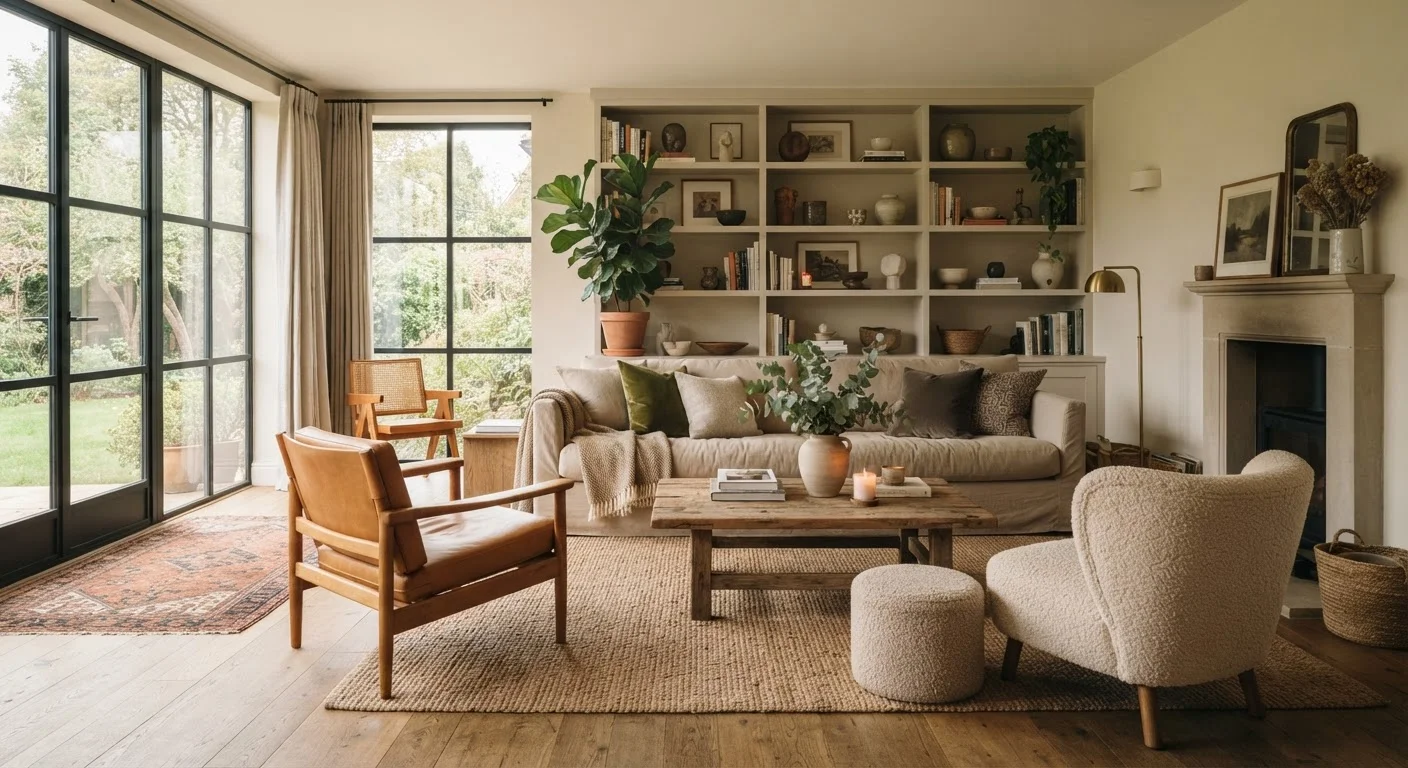
Photo: TotemBuzz.com | Your Lifestyle Companion editorial
Key Takeaways
- Visual weight is about how heavy something looks, not how heavy it actually is.
- Dark colors, large sizes, and rough textures all increase an object's visual weight.
- A room feels balanced when visual weight is distributed evenly across the space.
- You can adjust visual weight without buying new furniture — repositioning or restyling often works.
- Color matters, but size, texture, and placement shape a room's feel just as powerfully.
Why Color Gets Too Much Credit
When most beginners feel that a room is somehow "off," their first instinct is to repaint the walls. Color is visible, approachable, and endlessly discussed in home décor content. But experienced designers will tell you that color is rarely the root cause of a room that feels unsettled, top-heavy, or awkward. More often, the culprit is an imbalance of visual weight — and no paint color can fix that.
Visual weight is the perceived heaviness of objects in a space. Your eye assigns weight based on cues like size, darkness, texture, and pattern — and it does this automatically, without conscious thought. When those cues are unevenly distributed across a room, you feel it as discomfort or restlessness, even if you can't name why.
Color does play a role: a deep charcoal sofa carries more visual weight than an ivory one. But size, texture, and placement matter just as much. A pale oversized sectional in an otherwise spare room can dominate just as forcefully as a dark piece. Understanding visual weight lets you diagnose and fix balance problems that color changes alone never could. If you're also working through color decisions, our guide on warm tones vs. cool tones can help you layer color choices on top of a solid structural foundation.
The Factors That Make Something Look Heavy
Several qualities increase an object's visual weight — and you can use each one intentionally:
- Size: Larger objects carry more visual weight. A king-size upholstered headboard dominates a bedroom wall; a slim bookshelf on the same wall barely registers by comparison.
- Color value: Darker shades feel heavier than lighter ones. A black coffee table grounds a seating area firmly; a glass one nearly disappears.
- Texture: Rough, layered, or complex surfaces catch the eye and feel denser. A chunky knit throw adds visual weight; a flat cotton one does not. This is why layering textiles thoughtfully can dramatically shift how grounded or airy a room feels.
- Pattern density: Busy or bold patterns assert visual weight. A heavily patterned rug pulls more attention than a solid one of the same size.
- Shape and solidity: Bulky, closed shapes feel heavier than open or leg-lifted furniture. A sofa that sits flush to the floor reads as heavier than one raised on tapered legs.
- Quantity and clustering: A group of small objects gathered closely together can accumulate into significant visual weight, even if each piece alone is light.
60%
of room balance issues stem from furniture placement
Interior design educators commonly note that most living room imbalance problems relate to furniture arrangement rather than color selection, emphasizing the importance of spatial distribution.
3x
more visual weight carried by dark vs. light surfaces
Research in visual perception suggests that surfaces with high color contrast or low lightness values draw the eye significantly more than pale or neutral counterparts in the same composition.
Diagnosing an Unbalanced Room
Before rearranging anything, take a moment to read the room. Step back to the doorway or entry point and observe where your gaze lands first — and where it doesn't land at all. An unbalanced room typically falls into one of these patterns:
- One-sided heaviness: All the substantial furniture is clustered on one wall or in one corner, leaving the opposite side feeling bare and unanchored.
- Top-heavy arrangements: Large wall art or tall shelving is placed without complementary weight lower in the room, making the space feel as though it might tip over.
- Floor-level crowding: Too many heavy, floor-bound pieces with nothing at eye level or above create a squat, low-pressure sensation.
- Empty centers: The perimeter of the room is loaded with furniture while the center lacks any anchor — usually because a rug or coffee table is missing or undersized.
Once you've identified the pattern, the fix usually involves redistributing existing elements rather than buying anything new. Establishing a clear focal point can also help — it gives the eye a home base, which makes the distribution of weight around it feel intentional rather than random.
Try the Squint Test Before Rearranging
Practical Ways to Rebalance Without Starting Over
Restoring balance is rarely about gutting a room. Most corrections are subtle and surprisingly effective:
- Counter a heavy sofa with a substantial area rug underneath rather than a thin or undersized one. The rug grounds the entire seating area and extends its visual presence downward.
- Break up a heavy corner by introducing something light — a tall, slender lamp, a mirror, or a plant with an open, airy silhouette.
- Add weight to an empty wall with artwork, a gallery arrangement, or a floating shelf with objects. Even a single large-scale print can anchor a void convincingly.
- Raise furniture off the floor by adding leg risers or swapping a skirted piece for one with visible legs, which lightens its perceived mass.
- Use accessories strategically: A cluster of books, a ceramic vessel, or a textured basket on an overlooked side table can quietly build up weight in an area that needs it.
These same principles apply when working with challenging room sizes. If you're also trying to make a room feel more spacious, see our guide on making a small room feel larger with décor — many of the techniques there work hand-in-hand with visual weight adjustments.
Frequently Asked Questions
The content on this site is for informational purposes only and is not a substitute for professional advice. Always consult a qualified professional for guidance specific to your situation.