
Textiles That Transform a Space: What to Layer and Why It Works

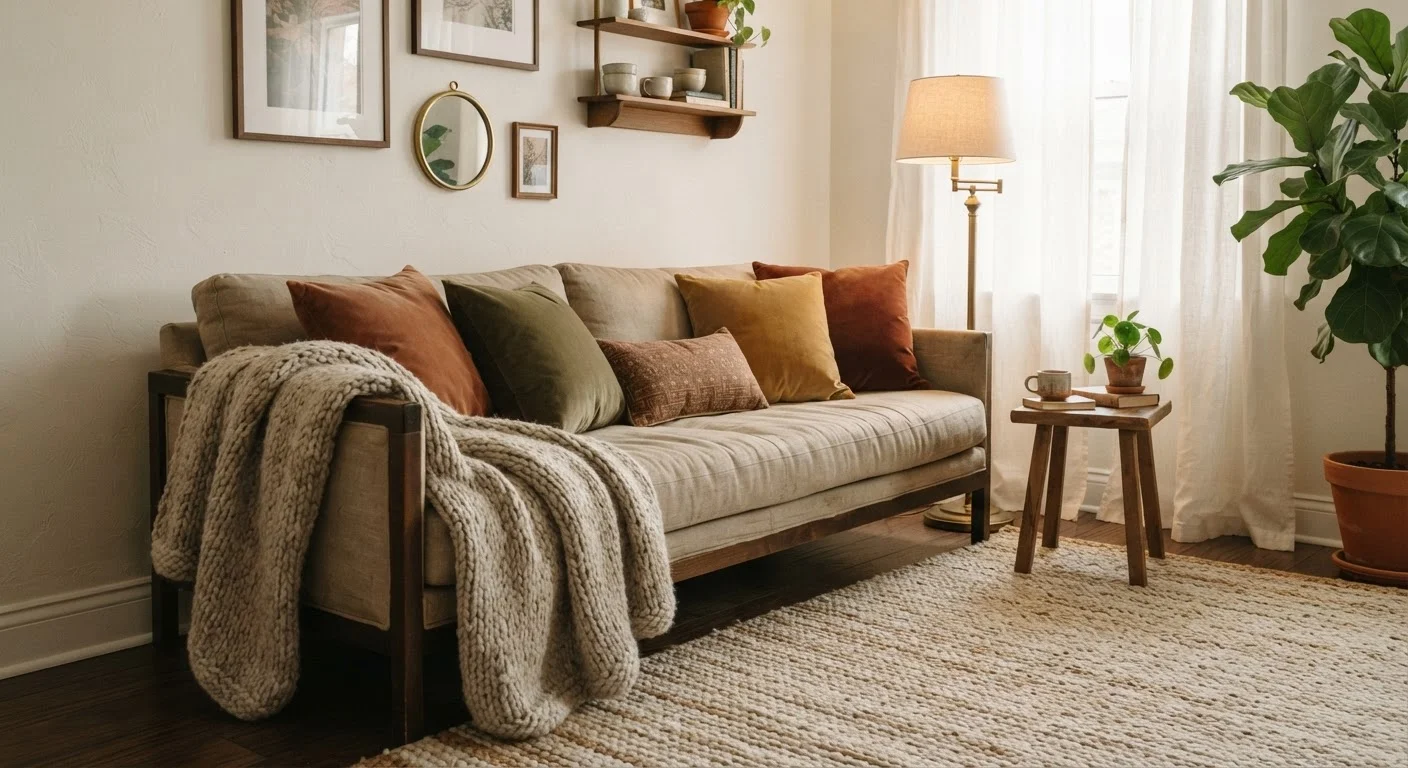
Photo: TotemBuzz.com | Your Lifestyle Companion editorial
Key Takeaways
- Rugs define zones and anchor furniture — choosing the right size is more important than pattern.
- Layering three or more cushion textures on one sofa creates depth without requiring a color overhaul.
- Curtains hung close to the ceiling make rooms feel taller and more finished, regardless of window size.
- Throws work best when casually placed rather than folded symmetrically — imperfection signals livability.
- Mixing fiber types — linen, cotton, wool, velvet — adds tactile variety that photographs and reads beautifully in person.
Why Textiles Do the Heavy Lifting in a Room
Paint and furniture get most of the credit, but textiles — rugs, cushions, throws, and curtains — are often what separates a room that feels staged from one that feels lived in. They introduce warmth, dampen sound, define scale, and signal personality in ways that hard surfaces simply cannot.
The good news for beginners: textiles are low-commitment. Unlike paint or new furniture, they're relatively easy to swap out seasonally or when your taste shifts. If you're just settling into a first home or rented apartment, understanding how to layer them well is one of the most efficient investments you can make in a space. For broader styling context, see our guide on decorating your first apartment without starting over every season.
Below are the core layering principles — each covering a different textile type and the logic behind why it works.
Start with the rug — it sets the room's foundation
Before adding any other textile, choose your area rug. It anchors furniture, defines zones (especially in open-plan layouts), and establishes the color and texture baseline that everything else will respond to. A common beginner mistake is choosing a rug that's too small; as a general rule, the front legs of major seating pieces should sit on the rug — this visually ties the grouping together.
In terms of texture, flatweave rugs keep a room feeling light and contemporary, while high-pile or hand-knotted styles add warmth and richness. If your floors and furniture are smooth and hard-edged, a rug with visual texture (such as a jute or wool weave) introduces the contrast the room needs. Rugs also help smaller rooms feel more intentional — a technique explored in our guide on making a small room feel larger using décor.
If the front legs of your sofa aren't on the rug, the rug is probably too small.
Layer cushions by varying texture, not just color
Cushions are where most beginners start — and where most beginners stop too early. The real impact comes not from matching sets, but from pairing different fabric types: a smooth linen cushion next to a chunky boucle, a velvet square beside a woven rectangle. This tactile contrast is what interior designers refer to when they talk about a room feeling "layered."
A practical formula: choose cushions in two to three sizes (e.g., 20-inch squares at the back, 18-inch squares in front, and a lumbar across the center), and vary the fabric finish at each size. Limit your palette to two or three hues, but within those hues, allow lighter and darker variations. This creates visual depth without visual noise.
Vary texture first, then size — matching cushion sets rarely produce the layered look you're after.
Use throws to add informality and seasonal flexibility
A throw blanket does two things well: it softens the silhouette of furniture, and it signals that a space is meant to be used, not just admired. Resist the urge to fold it neatly over an armrest — a loose, slightly rumpled drape over one corner of a sofa reads as genuinely inviting.
From a layering standpoint, throws are an opportunity to introduce a fiber type not already present in your cushions or rug. If your cushions are linen and velvet, a chunky knit or waffle-weave throw adds another dimension. Throws are also the easiest textile to rotate with the seasons: lighter cotton or gauze in spring and summer, heavier wool or fleece in autumn and winter.
A loosely draped throw signals livability — symmetrical folds tend to make a room feel untouchable.
Hang curtains high and wide to reframe any window
Curtains are arguably the most structurally impactful textile in a room. Where you hang them changes the perceived height and width of the window — and by extension, the whole wall. The standard guidance is to mount the rod 4 to 6 inches above the window frame (or closer to the ceiling in rooms with lower ceilings) and extend it 6 to 12 inches beyond the frame on each side. This makes windows look substantially larger and ceilings feel taller.
For fabric choice, heavier fabrics like velvet or lined linen add acoustic warmth and a formal weight, while sheers and unlined linen keep things airy and relaxed. In rooms where visual weight is already heavy — dark furniture, low ceilings, small footprint — opt for lighter curtain fabrics to keep the room breathing.
Mounting curtain rods near the ceiling — not just above the window frame — is a simple change with dramatic results.
Mix fiber types deliberately to build tactile richness
A room layered entirely in smooth fabrics can feel cold; one layered entirely in rough textures can feel heavy. The goal is a deliberate mix — at least two or three distinct fiber types distributed across the space. Natural fibers like wool, cotton, linen, and jute each bring their own visual weight and tactile quality. Synthetic blends (such as polyester-velvet or microfiber) can complement natural fibers without dominating.
Think of the room as having a texture "register" from coarse to smooth. A jute rug at the base, linen curtains at medium weight, and velvet cushions at the fine end creates a gradient that feels considered rather than accidental. This principle works well alongside mixing furniture styles — when materials vary thoughtfully, eclectic choices read as intentional.
A deliberate range from coarse to smooth fibers — jute to linen to velvet — creates a room that feels curated, not cluttered.
Putting It All Together
Layering textiles isn't about following rigid rules — it's about building a room that responds to how you actually live. Start with the rug to ground the space, then work upward through cushions, throws, and curtains. Introduce variety in texture before you experiment with pattern, and let natural light inform how fabrics read at different times of day. For more on how light interacts with your choices, our article on layering light in a room is a helpful companion read.
A Simple Rule for Building Your Textile Palette
Remember that restraint is a technique, not a limitation. Two well-chosen textiles layered thoughtfully will always outperform six competing ones. When in doubt, pull back — you can always add.
The content on this site is for informational purposes only and is not a substitute for professional advice. Always consult a qualified professional for guidance specific to your situation.