
Decorating Your First Apartment Without Starting Over Every Season

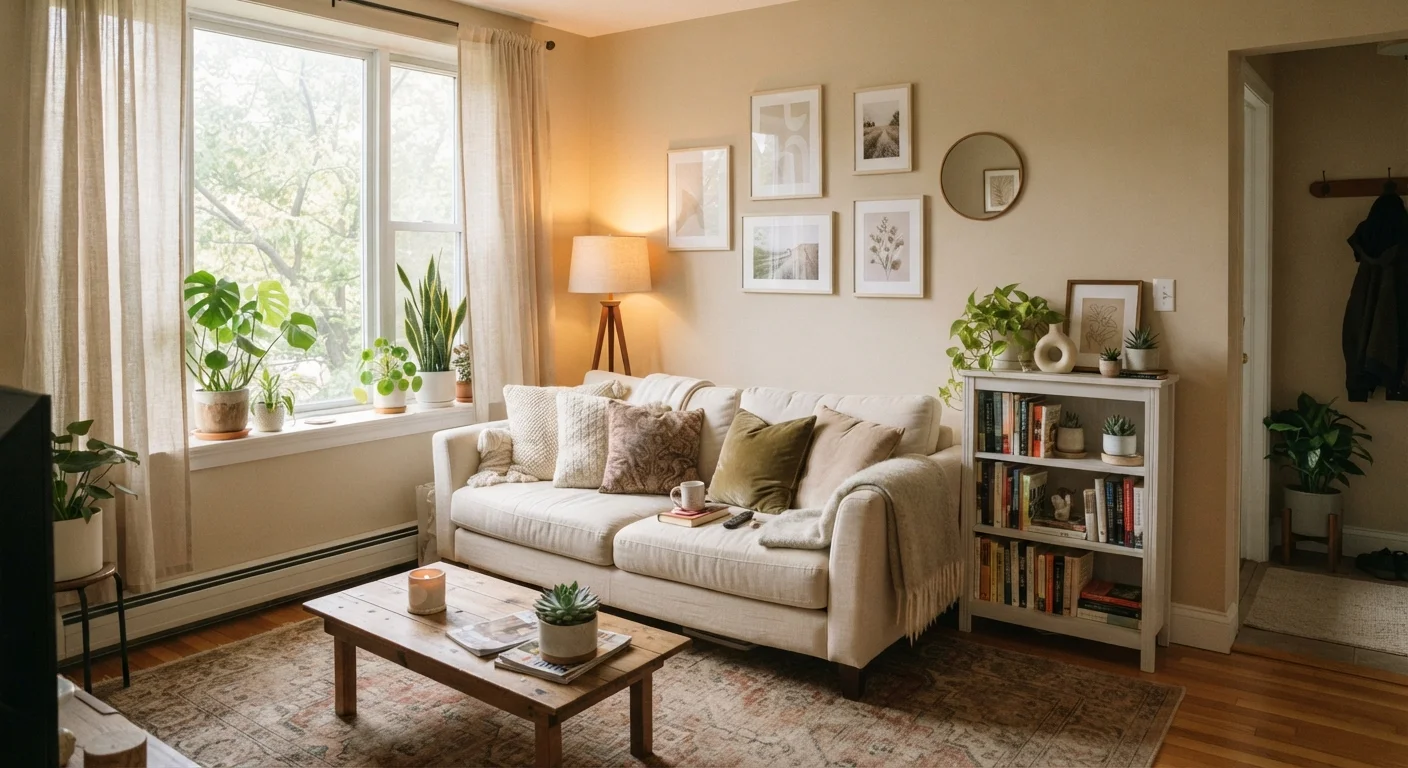
Photo: TotemBuzz.com | Your Lifestyle Companion editorial
Key Takeaways
- A neutral base lets you refresh a room's feel without replacing furniture.
- Textiles and lighting do more to set a mood than paint or art alone.
- Most rental agreements limit permanent changes — renter-friendly alternatives exist for nearly every situation.
- Swapping small accents seasonally costs far less than full redecorating.
- Furniture arrangement has a larger impact on comfort than most decorating elements.
Start With a Neutral Base
The most durable decorating decision you can make in a first apartment is choosing a neutral foundation — and that means your largest surfaces: sofa, area rug, and main storage pieces. Neutral doesn't mean beige and boring; it means choosing colors and finishes that won't fight each other as your taste evolves.
Think warm whites, soft grays, oatmeal tones, or even a muted olive or terracotta if one of those resonates with you. The point is that your sofa and rug will outlast any seasonal trend, so anchoring them in versatile tones gives you room to experiment with color in lower-commitment ways later.
Before arranging a single item, it's worth running through a quick checklist of scale, focal points, and flow. Our room-by-room décor starter checklist is a useful reference at this stage.
Neutral base
The foundational colors and finishes of your largest furniture and surfaces — chosen to be versatile enough to work with many different accent colors and styles.
Color temperature
A measure of how warm or cool a light bulb's output appears, expressed in Kelvin (K). Lower numbers (around 2700K) produce warm, amber light; higher numbers (5000K+) produce cool, daylight-style light.
Accent
A small decorative element — like a pillow, candle, or plant — used to add color or texture without committing to a major purchase.
Focal point
The visual anchor of a room — the feature your eye travels to first, such as a window, fireplace, television, or a large piece of art.
Floating furniture
An arrangement where furniture is pulled away from the walls and grouped toward the center of a room, making the space feel more connected and intentional.
Layer With Textiles and Lighting
Once your base is set, textiles and lighting are the two levers that do the most work for the least money. A plain white sofa becomes cozy with a chunky knit throw and a pair of linen cushions. A bare overhead bulb becomes warm and ambient with the addition of a single floor lamp set to a soft, warm color temperature (look for bulbs labeled 2700K–3000K).
Layer rugs if your space allows — a natural-fiber jute rug under a softer patterned rug adds depth without committing to an expensive single piece. Window treatments matter more than most beginners expect: simple linen curtains hung close to the ceiling (not at window height) make ceilings feel taller and windows feel larger.
Use Warm Bulbs Throughout
Lighting is where many first apartments fall flat. Overhead lighting alone tends to feel harsh and flat. Prioritize at least one lamp per main living zone — beside the sofa, near a reading chair, or on a desk — and your space will feel more intentional almost immediately.
Work Within Renter Limits
Rental agreements typically restrict painting, drilling, and permanent fixtures. That leaves more room for creativity than most first-timers expect. Removable adhesive strips now hold a surprising amount of weight and come off cleanly. Peel-and-stick wallpaper panels can transform an accent wall and remove without damage when applied correctly to a smooth surface.
Leaning art and mirrors against walls rather than hanging them is a deliberate design choice, not a compromise. A gallery ledge (usually mounted with two small screws rather than multiple hooks) lets you rearrange framed prints without adding new holes.
For a thorough breakdown of what's typically permitted and what isn't, our guide on renting and decorating within lease limits covers the most common scenarios.
Always Check Your Lease First
Swap Accents, Not Everything
The seasonal redecorating trap is real: it's tempting to buy entirely new things every few months to keep a space feeling fresh. A more sustainable approach — financially and practically — is identifying which elements are easy and inexpensive to swap, then rotating only those.
Candles, small plants, throw pillow covers, and a single decorative object on a shelf are all you need to shift the feel of a room from summer to fall. Swap a light cotton throw for a heavier wool one. Switch out a bright pillow cover for a deeper, earthier tone. Add a cluster of dried botanicals in autumn; swap them for a simple vase of eucalyptus in winter.
This approach also keeps your space from feeling overwhelming. When you're just starting out, restraint is a genuine design skill — not a limitation. For a broader look at how design myths can push beginners toward unnecessary spending, this guide on decorating myths is worth a read.
Layout Fundamentals That Actually Help
Furniture arrangement shapes how a room feels to live in more than almost any decorative choice. The most common first-apartment mistake is pushing everything against the walls, which makes a room feel like a waiting area rather than a home.
Instead, float your main seating piece (usually a sofa) so it faces or partially faces a focal point — a window, a TV console, or even a bookcase. Use an area rug to define the zone; a rug that's too small is a very common problem. As a general starting point, the front legs of your sofa and chairs should sit on the rug, even if back legs don't.
Leave clear pathways through the room — roughly 30–36 inches of clearance for main walkways makes a space feel organized rather than cramped. If you're working through your first decorating decisions alongside your first real budget, our beginner's guide to budgeting can help you plan your spending without stress.
Frequently Asked Questions
The content on this site is for informational purposes only and is not a substitute for professional advice. Always consult a qualified professional for guidance specific to your situation.