
Common Décor Proportions That Beginners Tend to Get Wrong

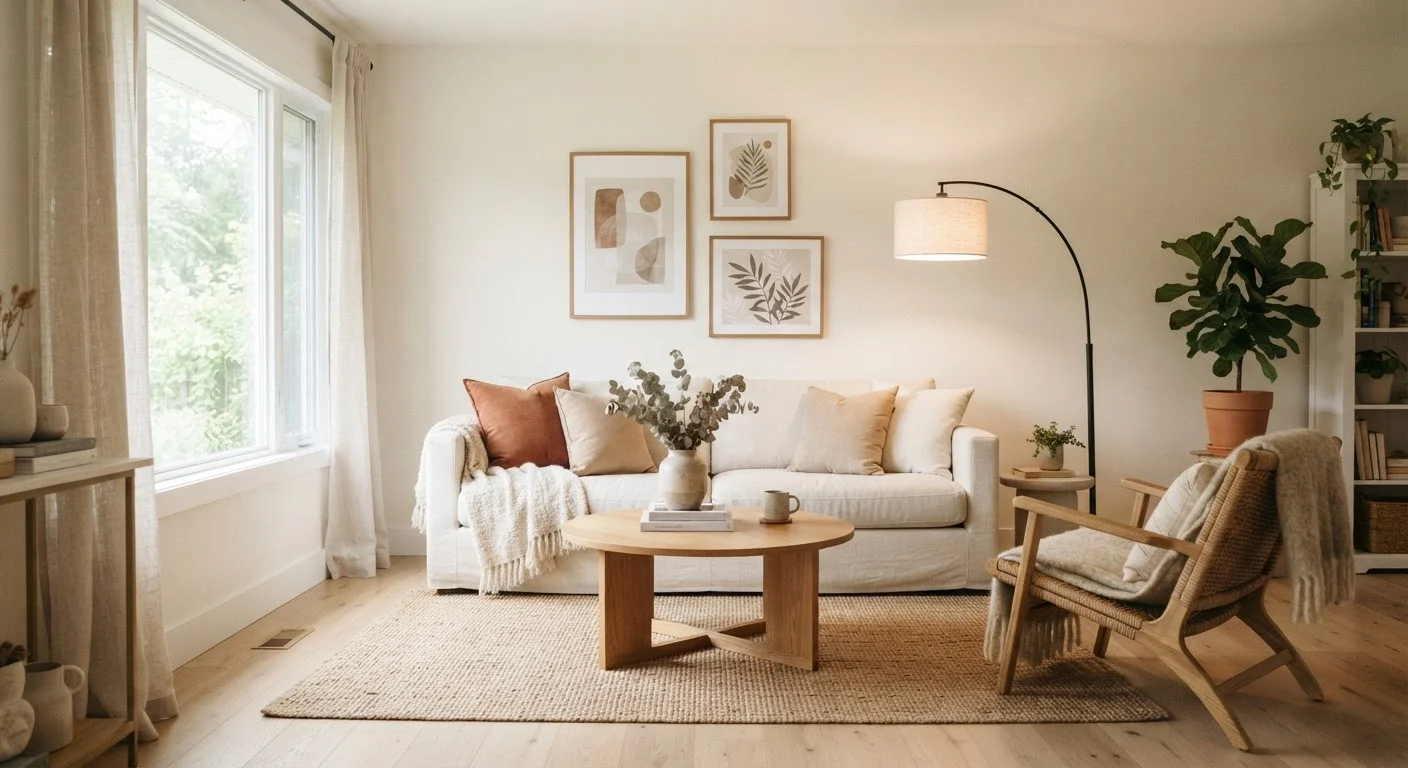
Photo: TotemBuzz.com | Your Lifestyle Companion editorial
Key Takeaways
- Artwork hung too high is one of the most common and easiest proportion mistakes to fix.
- Rugs that are too small make furniture groupings feel disconnected and the room feel smaller.
- Lamp height relative to seating height affects both function and visual balance.
- Furniture that is too small for a room creates emptiness rather than an open, airy feel.
- The 2/3 rule — keeping pieces roughly two-thirds the size of what they rest on — is a reliable starting guide.
- Most proportion errors stem from buying items individually without measuring the full room context.
Why Proportion Errors Are So Hard to Spot
Proportion in interior design refers to the size relationships between objects and the space they occupy. When something is off — a sofa too petite for a large room, a rug that barely clears the coffee table legs — the room simply feels wrong, even if you cannot immediately name the reason. Beginners tend to focus on color and style, which are more intuitive, and assume size will work itself out. It rarely does without deliberate attention.
Understanding a few core proportional principles gives you a reliable framework before you buy a single piece. For a broader starting point, the room-by-room décor starter checklist walks through scale alongside lighting, focal points, and flow — all of which interact with proportion closely.
Hanging artwork too high on the wall.
Choosing a rug that is too small for the seating area.
Placing lamps that are too short relative to the seating beside them.
Selecting a sofa or sectional that is too small for the room.
Decorating a coffee table with items that are all the same height.
Hanging curtains at window-frame height rather than ceiling height.
Fixing Proportion Problems Without Starting Over
Once you recognize these patterns, most proportion problems are correctable without replacing major furniture. Raising a low rug by sizing up, lowering artwork by a few inches, swapping a table lamp for a taller floor model — these are low-effort adjustments with outsized visual impact.
57–60"
Ideal artwork center height from the floor
Interior design educators and museum-standard hanging guidelines consistently reference this range as the most comfortable visual midpoint for artwork.
2/3
Furniture-to-wall ratio as a starting guide
The two-thirds rule is a widely used proportional heuristic in interior design education, applied to sofas relative to walls and rugs relative to seating groupings.
If your room feels cramped despite having space on paper, proportion may be working against you in a different way. Oversized furniture pushed against walls, for example, tends to make rooms feel smaller — not larger. Making a small room feel larger using décor alone covers how furniture scale, mirrors, and curtain placement work together to open up tight spaces.
Measure the Room Before You Buy Anything
Proportion confidence also comes from letting go of a few widely held design beliefs. If you have heard that matching sets always look polished, or that a white room automatically feels bigger, some of those assumptions may actually be holding your space back. Decorating myths that keep beginners stuck unpacks several of the most persistent ones.
The most useful habit you can develop is measuring before purchasing — not just the item, but the wall, the sofa it sits beside, the ceiling height, and the neighboring pieces. Proportion lives in relationships, not in individual objects.
The content on this site is for informational purposes only and is not a substitute for professional advice. Always consult a qualified professional for guidance specific to your situation.