
Supervision Ages: How Much Adult Oversight Do Kids Need Around Pets?

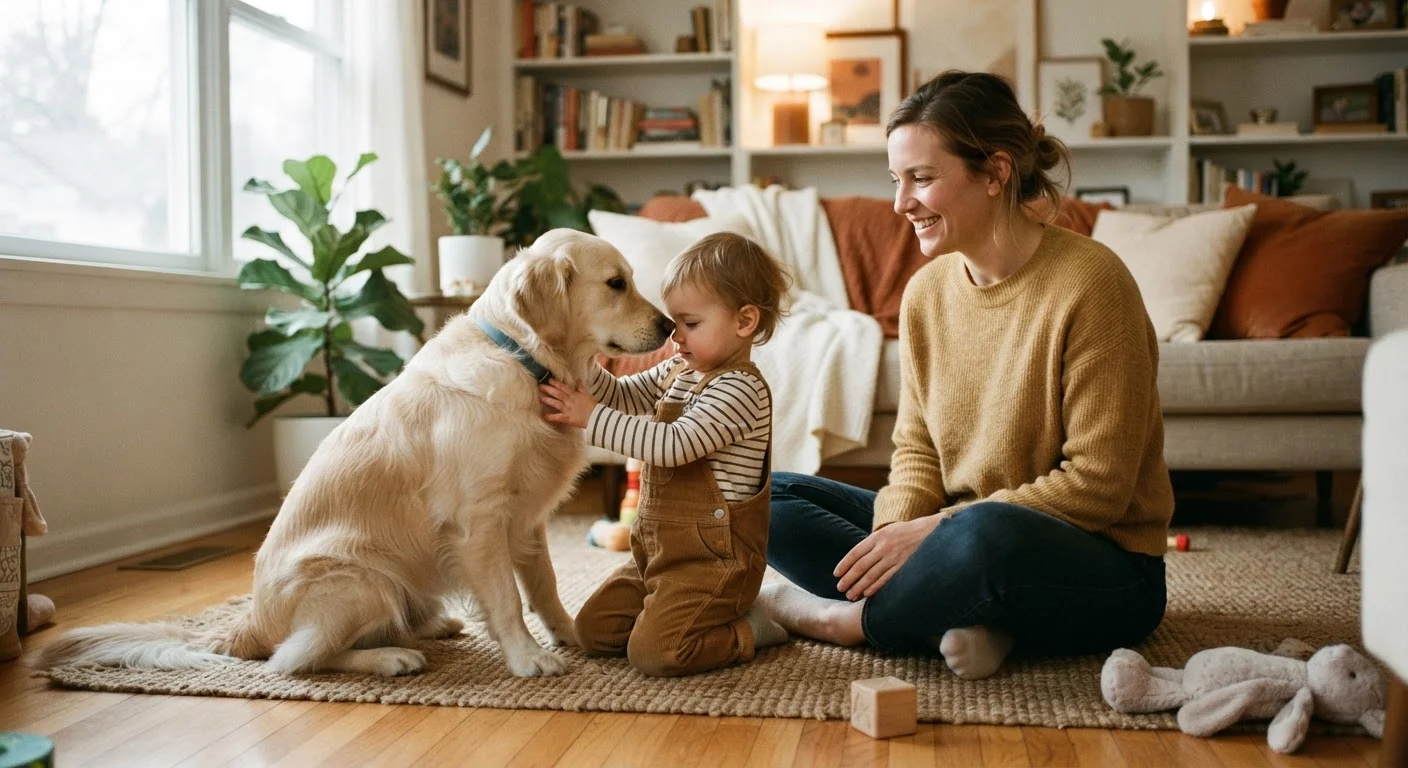
Photo: TotemBuzz.com | Your Lifestyle Companion editorial
Why Supervision Levels Aren't One-Size-Fits-All
When it comes to kids and pets, "keep an eye on them" is good instinct — but it's not a complete strategy. A toddler and a ten-year-old need very different levels of oversight, even with the same animal. Developmental stage matters: younger children lack impulse control and can't yet read an animal's warning signals, while older kids are capable of learning and applying real safety skills.
This guide breaks supervision down by age group so you can make informed, confident decisions for your family. It's a reference, not a rulebook — every child and every pet is different. Think of these as starting points you'll adjust based on your specific situation.
For a broader foundation on keeping kids and pets safe together, see our guide to pets and young children living together.
| Supervision level: Birth–3 years | Active, constant — adult within arm's reach at all times (American Academy of Pediatrics general safety guidance) |
| Supervision level: Ages 3–5 | Close, hands-on — adult in the same room, watching directly |
| Supervision level: Ages 6–9 | Nearby and engaged — adult nearby, checking in regularly |
| Supervision level: Ages 10–12 | Periodic check-ins — rules established, adult available |
| Supervision level: Ages 13+ | Guided independence — adult oversight for new or complex situations |
| Always requires closer oversight | First meetings, feeding/sleeping pets, unfamiliar animals, high-energy play |
Supervision by Age: A Stage-by-Stage Reference
Infants & Toddlers (Birth–3 Years): Active, Constant Supervision
This age group requires an adult within arm's reach whenever a pet is present — no exceptions. Babies and toddlers can't understand boundaries, may grab or pull suddenly, and cannot protect themselves if an animal reacts. Even the gentlest, most patient pet can be startled. Never leave this age group alone with any animal, regardless of past behavior.
Preschoolers (Ages 3–5): Close, Hands-On Supervision
Preschoolers are starting to follow simple rules but still act impulsively. An adult should be present in the same room, watching interactions directly. This is a good time to begin teaching gentle touch and reading basic animal body language — things like a dog turning away or a cat flicking its tail. Teaching children how to interact with animals safely offers practical age-appropriate approaches for this stage.
Early School Age (Ages 6–9): Nearby, Engaged Supervision
Children in this window are more capable of following household rules around pets and can start taking on small, supervised care tasks. Adults don't need to be physically hands-on at every moment, but should stay nearby and check in regularly. Reinforce what respectful interaction looks like, and use teachable moments when they arise. See our age-by-age pet care responsibilities guide for task ideas that match this stage.
Preteens (Ages 10–12): Periodic Check-In Supervision
Preteens can generally be trusted to follow established household rules and recognize when an animal seems stressed or unwell. Adults can move to periodic check-ins rather than constant proximity. That said, this doesn't mean unsupervised access to all situations — introducing the pet to new people, taking the pet outside, or caring for an unfamiliar animal still warrants closer adult involvement.
Teenagers (Ages 13+): Guided Independence
Most teenagers are ready to take on meaningful responsibility for pet care with general adult guidance rather than direct supervision. They can handle feeding schedules, basic grooming, and leash walks independently once they've demonstrated the skills. Adults should remain available for questions and continue modeling calm, respectful animal handling. Pair this stage with our age-appropriate chores reference for a broader responsibility framework.
Active supervision
The highest level of oversight — an adult is physically present, within arm's reach, and giving their full attention to the interaction. No screens, distractions, or distance.
Stress signals (animal)
Body language cues that indicate an animal feels uncomfortable or threatened, such as a dog yawning, licking its lips, or tucking its tail, or a cat flattening its ears. Recognizing these signals helps prevent bites and scratches.
Guided independence
A supervision model for older children where adults set clear expectations and remain available for support, but don't need to directly observe every interaction.
Impulse control
The developmental ability to pause and think before acting. Young children have limited impulse control, which is why they may squeeze, grab, or startle an animal without intending harm.
Situations That Always Require Closer Adult Oversight
Regardless of a child's age, certain situations call for heightened supervision from any adult in the household:
- First meetings between a child and an unfamiliar animal. See our guidance on introducing a new pet to children for how to approach these moments safely.
- When a pet is eating, sleeping, or injured — animals are more likely to react defensively in these states.
- High-energy or rough play, where both child and animal can quickly become overstimulated.
- Interactions with pets belonging to others, whose temperament and history you may not know.
Pet Temperament Also Plays a Role
This article is for general informational purposes only. For guidance specific to your child's development or a pet's behavioral history, consult a pediatrician or a certified animal behavior professional.
The content on this site is for informational purposes only and is not a substitute for professional advice. Always consult a qualified professional for guidance specific to your situation.