
Setting Age-Appropriate Chores for Every Stage of Childhood

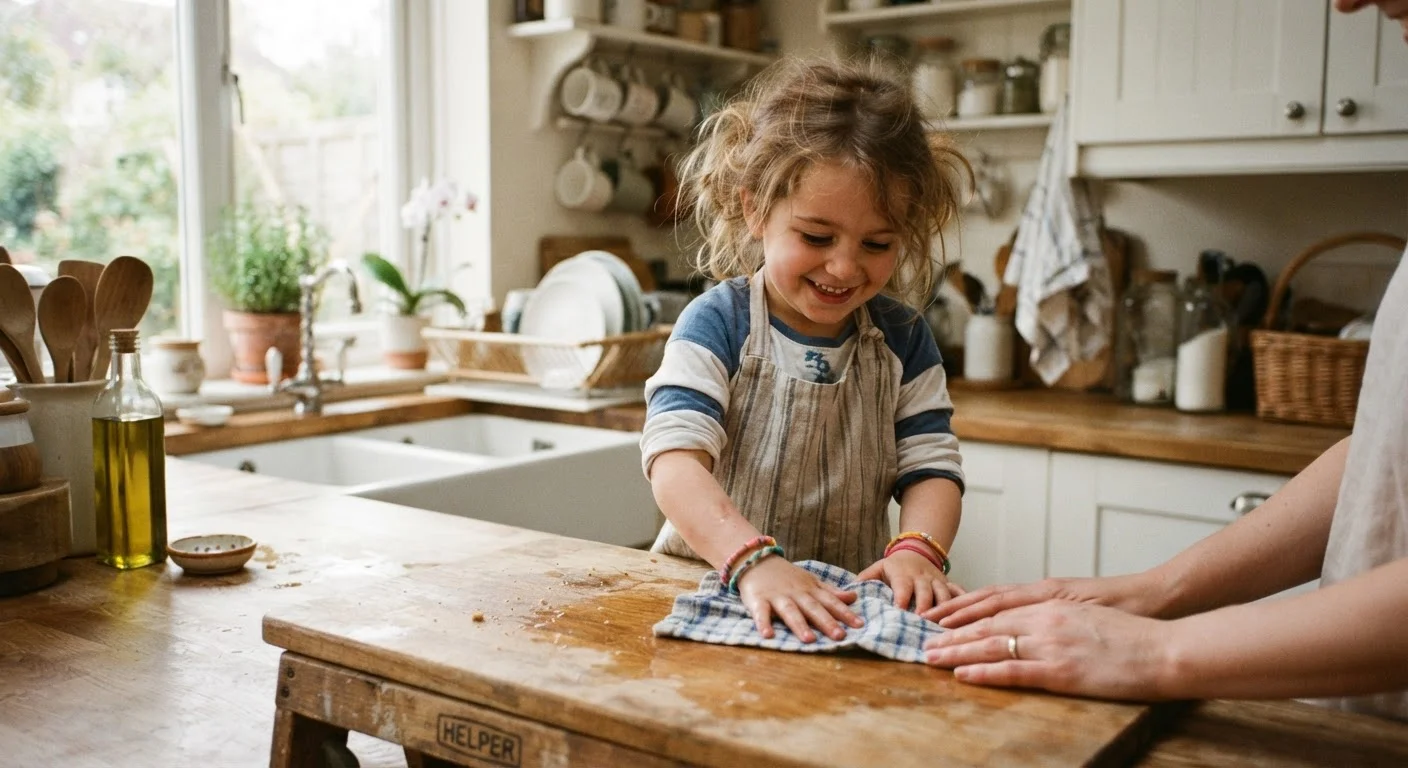
Photo: TotemBuzz.com | Your Lifestyle Companion editorial
Why Chores Matter at Every Age
Assigning household tasks to children isn't about getting free labor — it's one of the most consistent ways research links to building self-reliance, responsibility, and a sense of belonging within the family. Studies in child development suggest that children who contribute to household routines early tend to show stronger executive function and a greater sense of competence as they grow.
The key is matching the task to the child's developmental stage. Too complex, and the experience becomes frustrating; too simple for too long, and it stops building anything. This guide works as a quick reference for parents at any stage, whether you're just starting out with a curious toddler or nudging a teenager toward genuine independence.
For families navigating bigger transitions, like a new sibling or a household move, framing chores within bigger family conversations can help children feel involved and grounded rather than overwhelmed.
| Youngest recommended starting age | Around 2 years old (simple, supervised tasks) (American Academy of Pediatrics developmental guidance) |
| Average daily chore time (ages 6–12) | 15–30 minutes is generally considered appropriate (Child development practitioner general consensus) |
| Chores linked to long-term outcomes | Responsibility, empathy, and work ethic (University of Minnesota longitudinal research, broadly cited) |
| Most common parent mistake | Starting too late (waiting until age 7–8+) (Family therapist observations, widely reported) |
| Chore chart effectiveness | Visual charts significantly improve follow-through in ages 3–8 (Behavioral pediatrics, general practitioner guidance) |
Stage-by-Stage Chore Reference
Ages 2–3: Simple, Supervised Participation
Toddlers are naturally drawn to mimicking adults. The goal at this stage isn't task completion — it's involvement. Focus on short, concrete actions with immediate visible results.
- Putting toys into a bin
- Wiping up small spills with a cloth (with supervision)
- Placing dirty clothes in a hamper
- Helping carry lightweight groceries
Ages 4–6: Building Routines
Preschool and early elementary children can handle multi-step tasks with gentle guidance. Consistency here lays the groundwork for habits.
- Making their bed (doesn't need to be perfect)
- Setting and clearing the table
- Feeding a pet with adult oversight — see our age-appropriate pet care guide for specifics
- Sorting laundry by color
- Watering a single plant
Ages 7–10: Growing Independence
School-age children can take ownership of recurring tasks with minimal reminders. This is a great window for connecting chores to broader family routines and shared family activities.
- Vacuuming or sweeping a room
- Loading and unloading the dishwasher
- Taking out recycling and trash
- Packing their own school bag
- Basic yard tidying like raking leaves
Ages 11–13: Real Responsibility
Tweens can manage tasks that have real household impact. Framing these as meaningful contributions — not punishments — matters enormously at this age.
- Doing their own laundry (wash, dry, fold)
- Cooking simple meals with supervision
- Cleaning a bathroom
- Grocery list assistance
Ages 14+: Near-Adult Contribution
Teenagers benefit from tasks that genuinely mirror adult life and build skills they'll use independently. Avoid micromanaging — trust is part of the lesson.
- Preparing full family meals independently
- Mowing the lawn or shoveling snow
- Managing their own schedule and supplies
- Minor household maintenance like changing a lightbulb
Executive function
A set of mental skills — including working memory, flexible thinking, and self-control — that children develop over time. Routine tasks like chores are one way researchers believe these skills are practiced and strengthened.
Developmental readiness
The point at which a child has the physical coordination, cognitive ability, and emotional maturity to handle a specific task. Readiness varies by individual child, not just by age.
Scaffolding
A teaching approach where an adult supports a child through a new task and gradually reduces help as the child gains confidence. Commonly used in both education and parenting contexts.
Intrinsic motivation
Motivation that comes from internal satisfaction rather than external rewards. Chores framed as family contributions — rather than earn-to-get tasks — are thought to build more durable intrinsic motivation.
Tips for Making Chores Stick
Even well-matched chores can fall apart without the right setup. A few principles that child development guidance consistently supports:
- Model first, then step back. Children learn by watching. Do the task together a few times before expecting independence.
- Use visual chore charts for younger children. Pictures and checkboxes work better than verbal reminders for ages 2–7.
- Avoid tying chores to allowance exclusively. Many family experts suggest distinguishing between baseline household contributions and any earned rewards, so children understand that some responsibilities just come with being part of a family.
- Give genuine feedback, not just praise. Specific comments like "you remembered to wipe the edges of the counter" build more confidence than a generic "great job."
Every Child Develops at Their Own Pace
Families with pets can extend this framework naturally — knowing how much supervision kids need around animals by age helps parents assign pet-related chores safely and confidently.
The content on this site is for informational purposes only and is not a substitute for professional advice. Always consult a qualified professional for guidance specific to your situation.