
Family Bonding Activities That Work Across Age Gaps

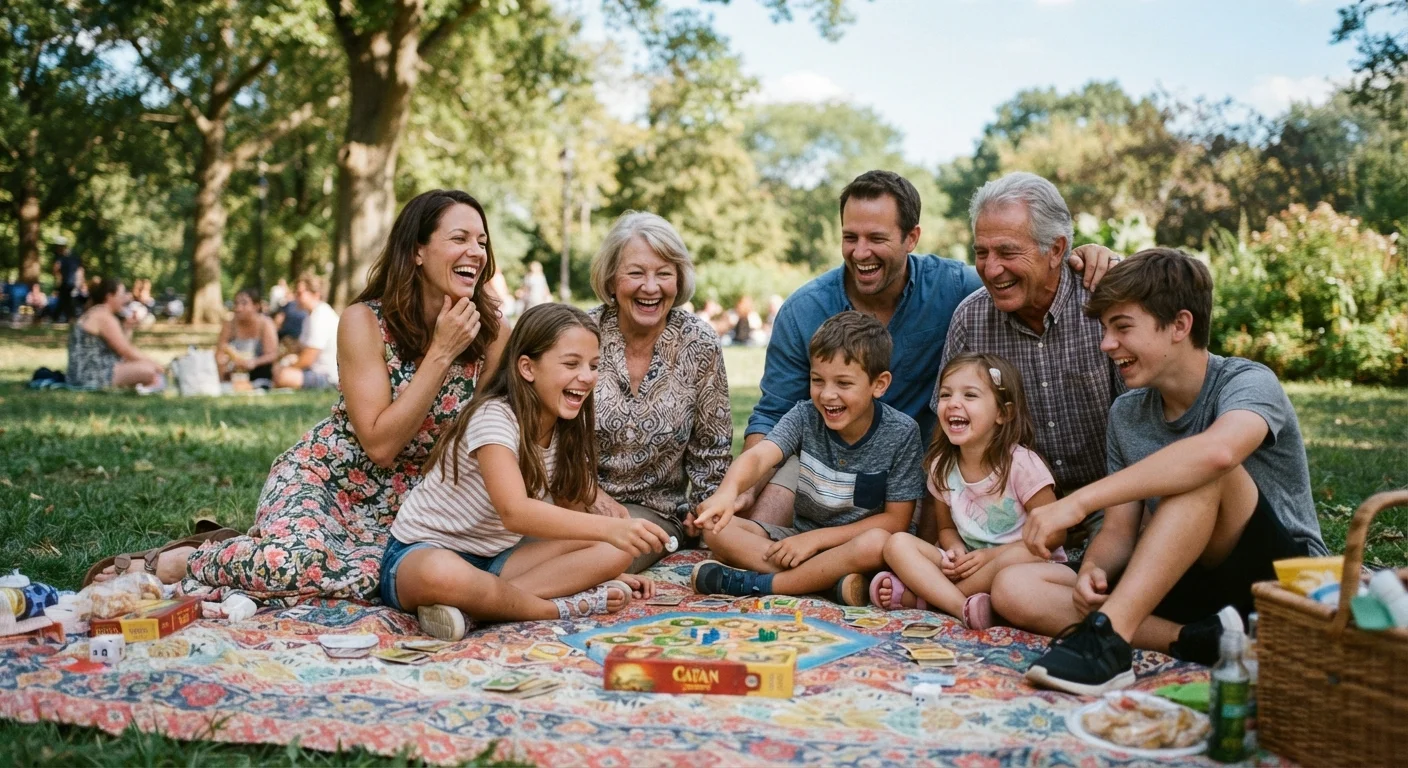
Photo: TotemBuzz.com | Your Lifestyle Companion editorial
Key Takeaways
- The best cross-age activities give each child a meaningful role, not just a participation ribbon.
- Teenagers engage more readily when they have some ownership or choice in the activity.
- Shared routines built around family bonding tend to outlast one-off planned events.
- Pets, cooking, and creative projects naturally accommodate different skill levels at once.
- Small, consistent doses of togetherness often matter more than elaborate scheduled outings.
Why age gaps don't have to mean separate interests
If your household spans a wide age range — say, a seven-year-old and a fourteen-year-old — finding activities that genuinely engage everyone can feel like a puzzle. What captures a young child's imagination often feels babyish to a teenager, while activities suited to older kids can frustrate or exclude younger ones.
But the gap is often more bridgeable than it looks. The activities that tend to work best share a common design principle: they offer each person a real and meaningful role, not just token participation. When every family member has something genuine to contribute, the age difference becomes an asset rather than an obstacle.
The seven activities below hold up across a range of ages and family setups. None of them require expensive equipment or elaborate planning — just a consistent effort to show up together.
Consistency matters more than novelty
Seven activities that genuinely engage every age
Let Teenagers Help Choose the Activity
Cook or bake a meal together
The kitchen is one of the few places where a five-year-old and a fifteen-year-old can both be genuinely useful at the same time. Younger kids handle washing vegetables or stirring batter; older kids tackle chopping, timing, and reading recipes. Everyone eats the result, which gives the activity a built-in payoff.
Cooking also sneaks in real-world skills — fractions, patience, following instructions — without anyone noticing. If you're curious about why the shared table matters beyond the cooking itself, our piece on shared meals and family wellbeing explores what the research says.
Everyone eats the result, which gives the activity a built-in payoff.
Involve the whole family in pet care
If your household has a pet, caring for that animal is a surprisingly powerful bonding activity. Walks, feeding schedules, training practice, and grooming sessions all scale naturally by age and ability. A toddler can fill the water bowl; a teenager can research enrichment ideas or take the dog on a longer trail walk.
Shared responsibility also gives kids of different ages something to talk about and collaborate on rather than compete over. For practical guidance on dividing those tasks fairly, see involving children in pet care by age group.
Shared pet responsibility gives kids something to collaborate on rather than compete over.
Play cooperative (not competitive) board or card games
Head-to-head competition is fine occasionally, but it tends to create tension across large age gaps — the older child usually wins, and the younger one gets frustrated. Cooperative games, where the whole family plays against the board, remove that dynamic entirely. Everyone wins or loses together, which encourages communication and mutual support instead.
Many cooperative games are explicitly designed to be playable across a wide age range, with simple mechanics that younger players grasp quickly and enough strategic depth that teenagers don't feel bored.
Cooperative games replace sibling rivalry with shared problem-solving and mutual support.
Start a shared creative project
Long-form creative projects — a family scrapbook, a backyard garden, a stop-motion video, a jigsaw puzzle left out on a table — work well across age gaps because participation is flexible and drop-in. A younger child might contribute ten minutes of enthusiastic effort; an older one might spend an hour perfecting a section. Neither invalidates the other.
The key is keeping the project visible and accessible rather than packed away. When it's out and in progress, it naturally draws people in.
Visible, ongoing projects invite drop-in participation without requiring everyone to commit at once.
Take regular outdoor walks or easy hikes
Walking removes screens, side-by-side movement reduces the social pressure of face-to-face conversation, and conversations that happen on a trail often go places they wouldn't at the dinner table. Teenagers especially tend to open up more when they're moving and not being directly interrogated.
Routes can adapt: a toddler-friendly loop in a local park and a longer trail are both walks. The ritual of going together matters more than the distance covered.
Side-by-side movement on a walk often unlocks conversations that wouldn't happen face-to-face.
Give older children a genuine mentoring role
Teenagers are much more likely to engage with younger siblings when they have a real role rather than just being asked to babysit. Letting an older child teach a younger one something they're actually good at — a card trick, a video game, a dance move, a craft skill — shifts the dynamic from obligation to pride.
This approach also builds empathy and patience in the older child, skills that tend to carry forward. If sibling friction is a recurring challenge in your home, navigating sibling conflict without taking sides offers some grounded strategies for parents.
Letting a teenager teach a real skill transforms obligation into pride and genuine connection.
Build a simple shared chore routine
Chores might not sound glamorous, but working alongside each other toward a shared goal — a cleaner house, a tidier yard — creates a sense of contribution and belonging that purely recreational activities sometimes don't. Age-appropriate tasks keep everyone meaningfully involved without overwhelming younger children or boring older ones.
Our age-appropriate chores guide breaks down what's realistic at each developmental stage if you're not sure where to start.
Working toward a shared goal builds belonging in ways that purely recreational activities sometimes miss.
Making it a habit, not a one-time event
The difference between a family that feels connected and one that merely coexists often comes down to repetition. A single cooking session or cooperative game night is a nice memory; doing it regularly builds an identity — this is what our family does.
Start small. Choose one activity from this list that feels realistic in your current schedule and try anchoring it to a specific time slot each week. Once it feels natural, add another. That kind of gradual layering is far more sustainable than a dramatic overhaul of family life.
The content on this site is for informational purposes only and is not a substitute for professional advice. Always consult a qualified professional for guidance specific to your situation.