
DIY vs. Hiring a Tradesperson: A Practical Framework for Deciding

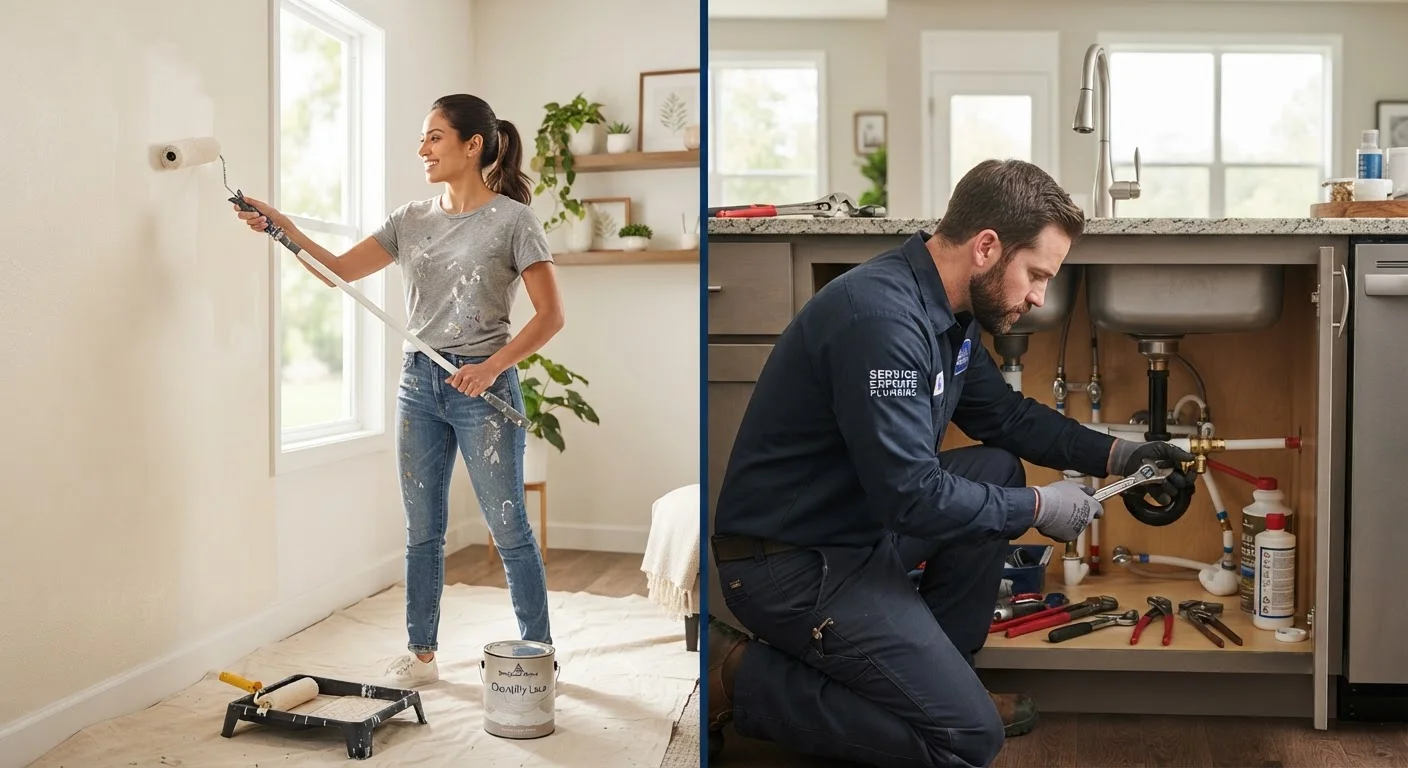
Photo: TotemBuzz.com | Your Lifestyle Companion editorial
Key Takeaways
- Safety, permit requirements, and skill level are the three most important factors in the DIY decision.
- Electrical, gas, and structural work almost always require a licensed professional and local permits.
- Many surface-level tasks — painting, caulking, minor patching — are genuinely beginner-friendly.
- Doing it wrong often costs more to fix than hiring out from the start.
- Always verify local code requirements before starting any project, regardless of complexity.
The Framework: Three Questions Before You Start
Every home repair decision comes down to three honest questions: Is it safe for me to do this? Am I legally permitted to do this myself? And do I have — or can I realistically build — the skill to do it correctly?
Work through these in order. If the answer to the first question is uncertain, stop there and consult a professional. Safety risks in home repair aren't always obvious: improperly patched drywall might look fine but mask a moisture problem; a loose electrical connection can become a fire hazard years later.
For a broader orientation to home improvement skills before diving into specific tasks, see our complete beginner's overview — it covers core skills and where to start.
Start With a Honest Skill Inventory
What Belongs in the DIY Column
Many common home tasks are genuinely accessible to beginners — and completing them yourself builds real competence over time. Tasks that typically suit DIY include:
- Painting interior walls and trim — low stakes, reversible, and well-documented
- Caulking around tubs, sinks, and windows — a small tool, simple technique, big impact
- Patching small drywall holes — kits are available and the skill curve is gentle
- Installing or replacing hardware (cabinet handles, towel bars, door knobs)
- Basic landscaping and garden work — planting, mulching, and simple edging
- Replacing a showerhead or faucet aerator — no soldering, no permits in most jurisdictions
The common thread: these tasks have low consequence for error, require no permits in most areas, and won't compromise structural integrity or safety systems. Our guide on what each home repair tool actually does is a useful companion if you're assembling your first toolkit.
What Belongs in the Hire-a-Pro Column
Some projects should almost always be handed to a licensed tradesperson — not because homeowners aren't capable learners, but because the margin for error is too narrow and the consequences too serious.
- Electrical panel work, new circuit installation, or rewiring — fire and electrocution risk; licensed electrician required in virtually all US jurisdictions
- Gas line work — any repair or installation involving gas supply lines
- Structural modifications — removing walls (especially load-bearing ones), adding beams, or altering the home's frame
- Roofing beyond minor patching — fall risk and potential for hidden damage
- Main plumbing connections — work that ties into supply or drain lines behind the wall
Beyond safety, many of these jobs trigger permit and inspection requirements. Skipping a required permit can create problems when you sell your home or file an insurance claim. See our article on permits, inspections, and licensed trades to understand which projects typically require official sign-off.
Never Skip a Required Permit
Comparing DIY vs. Hiring: Key Dimensions
Below is a practical side-by-side look at how DIY and hiring a tradesperson compare across the factors that matter most to homeowners:
| DIY | Hire a Tradesperson | |
|---|---|---|
| Upfront cost | Lower (materials only) | Higher (labour + materials) |
| Risk if done incorrectly | Low to high, task-dependent | Low — professional accountability |
| Permit compliance | Homeowner must research and apply | Tradesperson typically handles permits |
| Time required | Longer — includes learning curve | Faster in most cases |
| Skill requirement | Varies; beginners can learn many tasks | Expert level; no learning needed |
| Warranty or guarantee | None; you own the outcome | Often included with professional work |
| Best suited for | Cosmetic, low-risk, low-stakes tasks | Safety systems, structural, permitted work |
Keep in mind that cost is rarely the only variable. A job done incorrectly often costs significantly more to remediate than the original professional quote — a reality sometimes called the double-cost trap.
Making the Call With Confidence
If you've worked through the three questions and a task still feels ambiguous, a useful tie-breaker is to ask: What's the worst realistic outcome if this goes wrong? If the answer involves injury, flooding, fire, or structural compromise, hire out. If the answer is a patchy paint job or a slightly uneven tile, you can probably learn by doing.
Building DIY competence is cumulative — each small project adds to your skill base and helps you make better calls in the future. And for tasks that genuinely belong in the professional column, getting multiple quotes and asking contractors to explain their process is a perfectly reasonable way to be an informed homeowner without picking up the tools yourself.
For those curious about how the same DIY-or-hire logic applies beyond the home, our guide on when to handle a car problem yourself applies a similar framework to vehicle maintenance.
~33%
DIY projects that require a do-over
Industry estimates suggest roughly one in three DIY home repair attempts results in a costly mistake requiring correction, underscoring the value of honest skill assessment.
2x+
Potential cost multiplier for DIY errors
Home improvement professionals commonly note that remediating a poorly executed DIY repair can cost twice or more what the original professional job would have.
The content on this site is for informational purposes only and is not a substitute for professional advice. Always consult a qualified professional for guidance specific to your situation.