
What Is a Design Style? A Plain-Language Breakdown for New Decorators

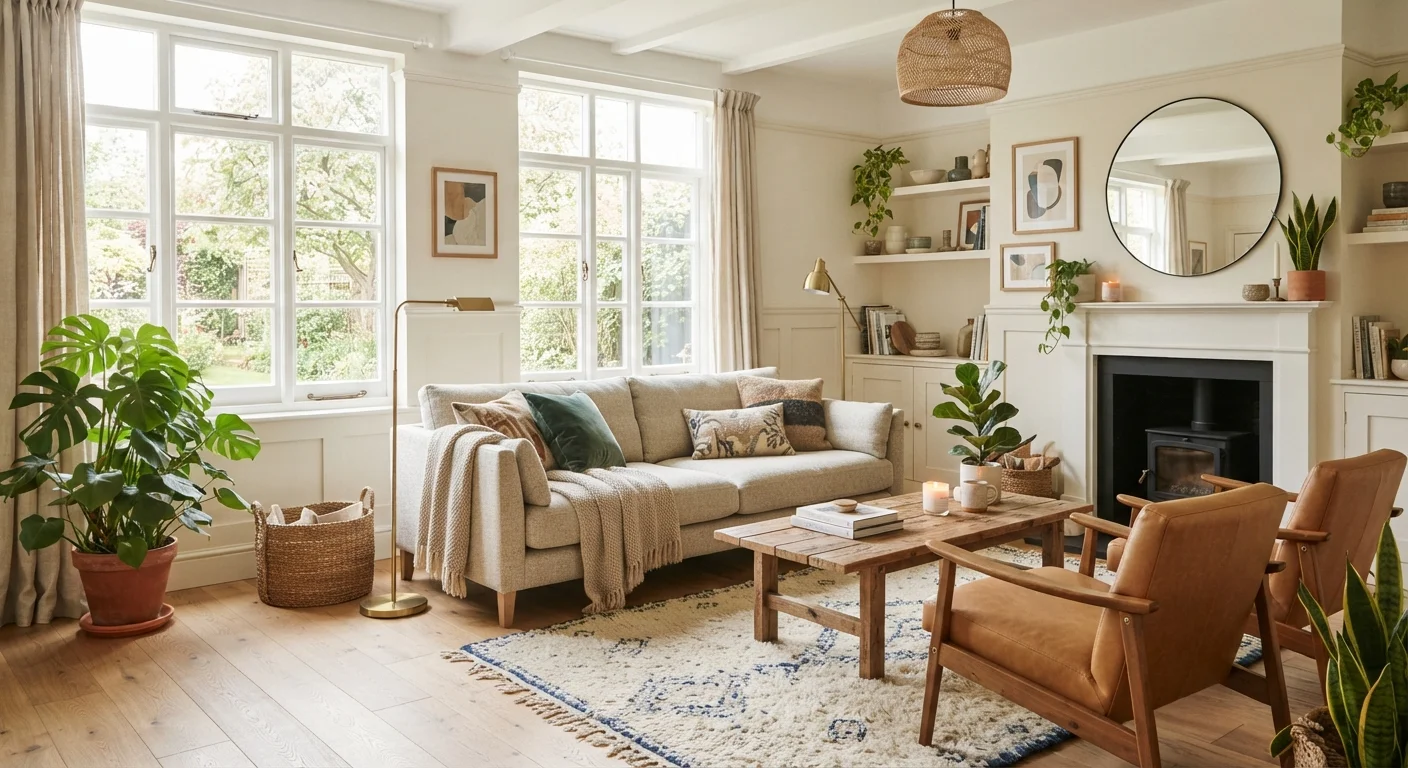
Photo: TotemBuzz.com | Your Lifestyle Companion editorial
Key Takeaways
- A design style is a set of consistent visual principles, not a strict rulebook you must follow exactly.
- Most homes blend elements from more than one style, and that is completely normal.
- Knowing your preferred style helps you make faster, more confident decorating decisions.
- Style labels like 'Japandi' or 'maximalist' are tools for communication, not requirements.
- Your lifestyle, habits, and comfort matter more than any trend or label.
Why the Word 'Style' Confuses So Many Beginners
Walk into any home décor conversation and you'll hear words like bohemian, industrial, coastal, or farmhouse thrown around as if everyone already knows what they mean. For someone new to decorating, that vocabulary can feel like a foreign language — and it stops a lot of people before they even start.
Here's the reassuring truth: a design style is simply a collection of consistent choices. When a room is described as 'Scandinavian,' it means the space leans on light woods, neutral colors, functional furniture, and minimal clutter. That's it. The label is shorthand, not a certification. No interior design police will arrive if your Scandinavian living room includes a brightly patterned throw pillow.
Understanding what a style is — rather than memorizing a list of them — is what gives beginners real confidence. It shifts decorating from guesswork into something much more intentional.
Start With What You Already Own
The Building Blocks Every Style Shares
Regardless of the name, every interior design style is built from the same raw ingredients. Learning to spot these makes any style easy to decode:
- Color palette: The dominant hues and their relationships. Warm, cool, neutral, bold — color sets the emotional tone of a room. Our guide to warm and cool tones explores this in detail.
- Shapes and lines: Are furniture edges curved or straight? Are patterns geometric or organic? Rounded shapes feel soft and welcoming; sharp angles feel crisp and structured.
- Materials and textures: Raw wood, polished concrete, linen, velvet, rattan — each material carries its own mood. Styles often center on a signature material (think leather in industrial design, or linen in coastal).
- Scale and proportion: Low-slung furniture reads as modern; tall, ornate pieces lean traditional. How big things are relative to the room matters enormously.
- Level of ornamentation: Minimalism strips away decoration; maximalism layers it in. Most styles fall somewhere on that spectrum.
When you look at a room you love and ask yourself what it's doing with each of these elements, you've already started learning its style language.
5
Core building blocks in any design style
Color, shape, material, scale, and ornamentation are the consistent elements that define how any interior design style looks and feels.
~70%
Homeowners who mix multiple styles
Industry surveys consistently find that the majority of homeowners describe their home's aesthetic as a blend of two or more named styles rather than a single pure category.
Common Style Families and What They Actually Mean
Rather than memorizing dozens of labels, it helps to think in broad style families:
- Minimalist styles (Modern, Scandinavian, Japandi)
- Defined by restraint — fewer objects, functional furniture, neutral or muted palettes, and an emphasis on negative space. The goal is calm and clarity.
- Maximalist styles (Bohemian, Eclectic, Hollywood Regency)
- Embrace abundance — layered patterns, rich color, collected objects, and a 'more is more' philosophy. Cohesion comes from repetition of color or mood rather than matching sets.
- Naturalistic styles (Coastal, Rustic, Organic Modern)
- Draw from the natural world — raw or reclaimed wood, stone, jute, linen, and palettes drawn from landscapes. These spaces feel grounded and textured.
- Historical and traditional styles (Traditional, Victorian, Mid-Century Modern)
- Reference a specific era's design conventions. Mid-Century Modern, for example, means tapered legs, warm wood tones, and abstract shapes popularized in the 1950s and '60s.
Most rooms blend families. An 'Organic Modern' space might be mostly minimalist but layer in natural materials. That blending is normal — and often more liveable than a style applied at full intensity. If you're curious how mixing works in practice, our article on mixing furniture styles without chaos walks through the principles.
How to Find the Style That Fits Your Home
The most durable design style for your home is the one that reflects how you actually live — not the one that looked perfect in a magazine shoot. A family with young children will find an all-white minimalist interior difficult to maintain. Someone who works from home may need more visual warmth and character than a sleek industrial loft provides.
A practical starting point: gather images of rooms you genuinely like without trying to analyze them first. After you've collected ten to fifteen, look for patterns. Do you keep gravitating toward warm wood tones? Lots of plants? Clean surfaces? Bold wallpaper? Those patterns are your instincts speaking.
From there, use style names as a compass, not a cage. If you love the calm of Japandi but also collect colorful ceramics, you don't have to choose — you just need a logic that connects them. Before decorating any room, it's also worth running through a basic checklist. Our room-by-room décor starter checklist covers scale, lighting, and focal points that apply regardless of style.
And if you've been holding back because you're afraid of making mistakes, take a look at common decorating myths that keep beginners stuck — many of the rules people worry about breaking aren't real rules at all.
Style Labels Shift Over Time
Frequently Asked Questions
The content on this site is for informational purposes only and is not a substitute for professional advice. Always consult a qualified professional for guidance specific to your situation.