
Annual vs. Perennial Plants: What the Difference Means for Your Garden Long-Term

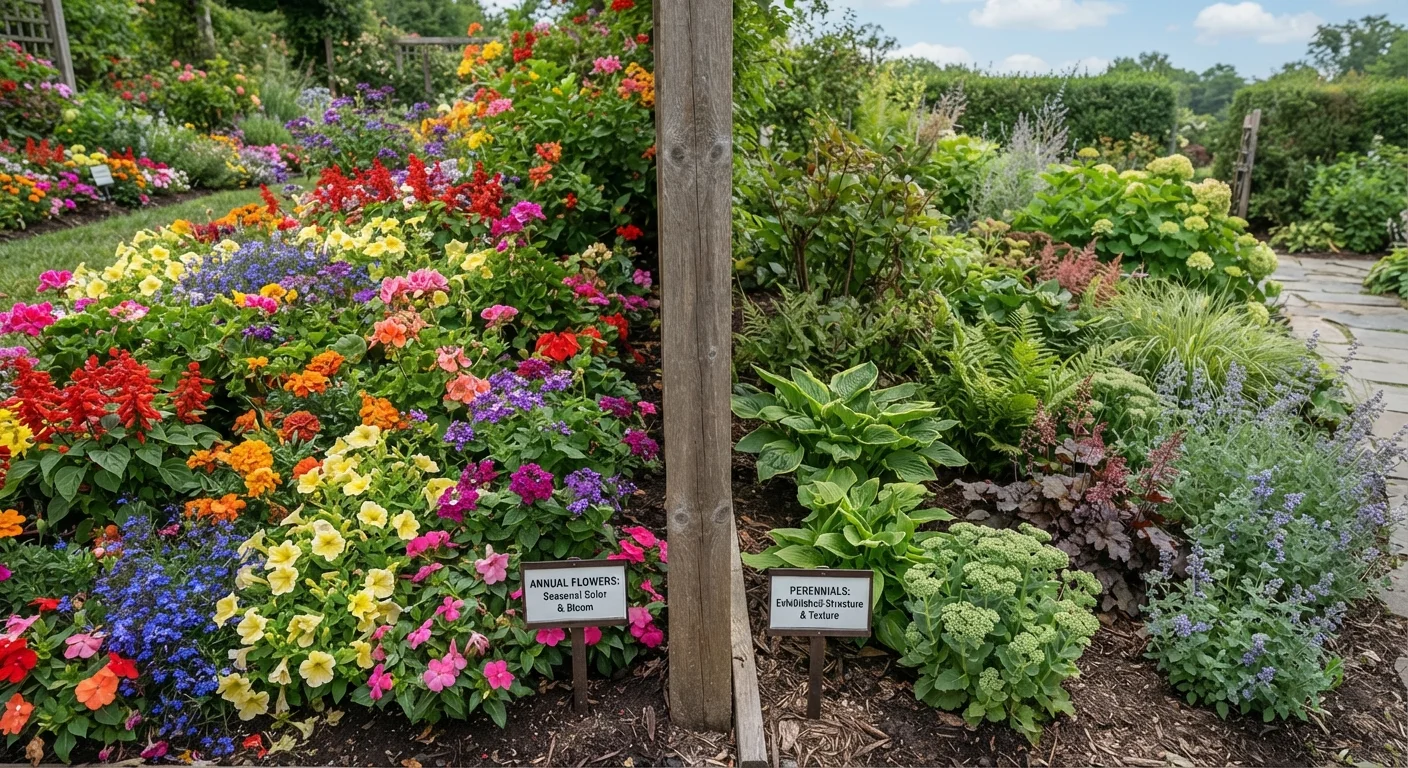
Photo: TotemBuzz.com | Your Lifestyle Companion editorial
Key Takeaways
- Annuals complete their entire life cycle in one growing season and must be replanted each year.
- Perennials die back in winter but regrow from their roots each spring for multiple years.
- Most successful gardens combine both types to balance year-round structure with seasonal color.
- Annuals typically cost less upfront but perennials often cost less over time.
- Your climate and USDA hardiness zone affect which perennials will reliably return in your area.
What Annuals and Perennials Actually Mean
When you browse a garden center, plant tags use the words annual and perennial as shorthand for how long a plant lives — but these terms are often misunderstood by beginners. Getting this distinction right shapes every planting decision you make.
An annual germinates, grows, flowers, sets seed, and dies all within a single growing season. Once frost arrives, the plant is finished. Common examples include marigolds, zinnias, petunias, and basil. You must replant them each spring.
A perennial lives for more than two years. In most of the US, perennials die back to the ground in winter but survive underground through their root systems, re-emerging each spring. Coneflowers, black-eyed Susans, hostas, and lavender are familiar examples. They may take a full season or two to establish, but they reward patience by returning reliably.
A third category worth knowing is biennial — plants that take two years to complete their life cycle, flowering in their second year before dying. Foxglove and hollyhock are common biennials. They behave a bit like perennials at first glance, but don't return indefinitely the way true perennials do.
You can learn more about how these distinctions appear on plant packaging in our guide to reading plant tags and labels.
How Each Type Affects Your Garden Over Time
The most important practical difference between annuals and perennials is not how they look — it is how much ongoing effort and expense each requires.
| Criterion | Annual Plants | Perennial Plants |
|---|---|---|
| Lifespan | One growing season | 3+ years, often indefinitely |
| Replanting required | Every year | Rarely, once established |
| Upfront cost | Generally lower per plant | Generally higher per plant |
| Long-term cost | Higher (annual purchases) | Lower (plants return) |
| Time to first bloom | Fast — same season | Slower — may take 1–2 seasons |
| Design flexibility | High — change each year | Lower — plants stay in place |
| Maintenance level | Moderate seasonal effort | Lower once established |
| Climate sensitivity | Less dependent on zone | Must suit your USDA hardiness zone |
Annuals demand replanting every year, which takes time and money. However, that replanting cycle is also an opportunity: you can change colors, try new varieties, and adapt your garden design each season without being locked in. This flexibility is genuinely valuable when you are still learning what you like and what grows well in your conditions.
Perennials require more patience. Many gardeners note that perennials "sleep, creep, then leap" — their first year they do little, their second year they begin to spread, and by their third year they fill out dramatically. That slow start can be discouraging for beginners expecting instant results, but the long-term payoff in reduced labor and cost is significant.
Soil preparation matters for both, but especially for perennials since they will be living in the same spot for years. Our guide on what soil your garden actually needs explains how to give any plant the best foundation from day one.
3–5 years
Typical time for perennials to fully establish
Horticulture extension programs generally advise gardeners to expect perennials to reach mature size and reliable flowering within three to five growing seasons.
~13,000
Perennial species available to US gardeners
The American Horticultural Society notes that the US market offers an exceptionally wide range of perennial species, giving gardeners in every region strong options.
Building a Garden That Uses Both
Experienced gardeners rarely choose one category over the other — they use both strategically. Think of perennials as your garden's framework and annuals as the seasonal detail layered on top.
A practical starting approach for beginners:
- Choose perennials for your borders and focal points. Plant them where you want lasting structure — along fences, around a patio, or at the back of a bed where taller plants can anchor the design.
- Fill gaps with annuals in early years. Perennials take time to fill in. Annuals planted around them keep the bed looking full and colorful while the perennials establish.
- Swap annual varieties year to year. Once your perennials are established and taking up more space, you will naturally use fewer annuals — but they remain useful for color flexibility.
Timing your planting well makes this combination work smoothly. Our article on reading the seasons for planting and pruning is a helpful companion guide for knowing when to put each type in the ground.
When you are ready to decide whether to start with seeds or young transplants — which applies to both annuals and perennials — see our guide on seeds vs. seedlings for new gardeners.
A Note on Hardiness Zones and Perennials
The content on this site is for informational purposes only and is not a substitute for professional advice. Always consult a qualified professional for guidance specific to your situation.