
What Kind of Soil Does Your Garden Actually Need?

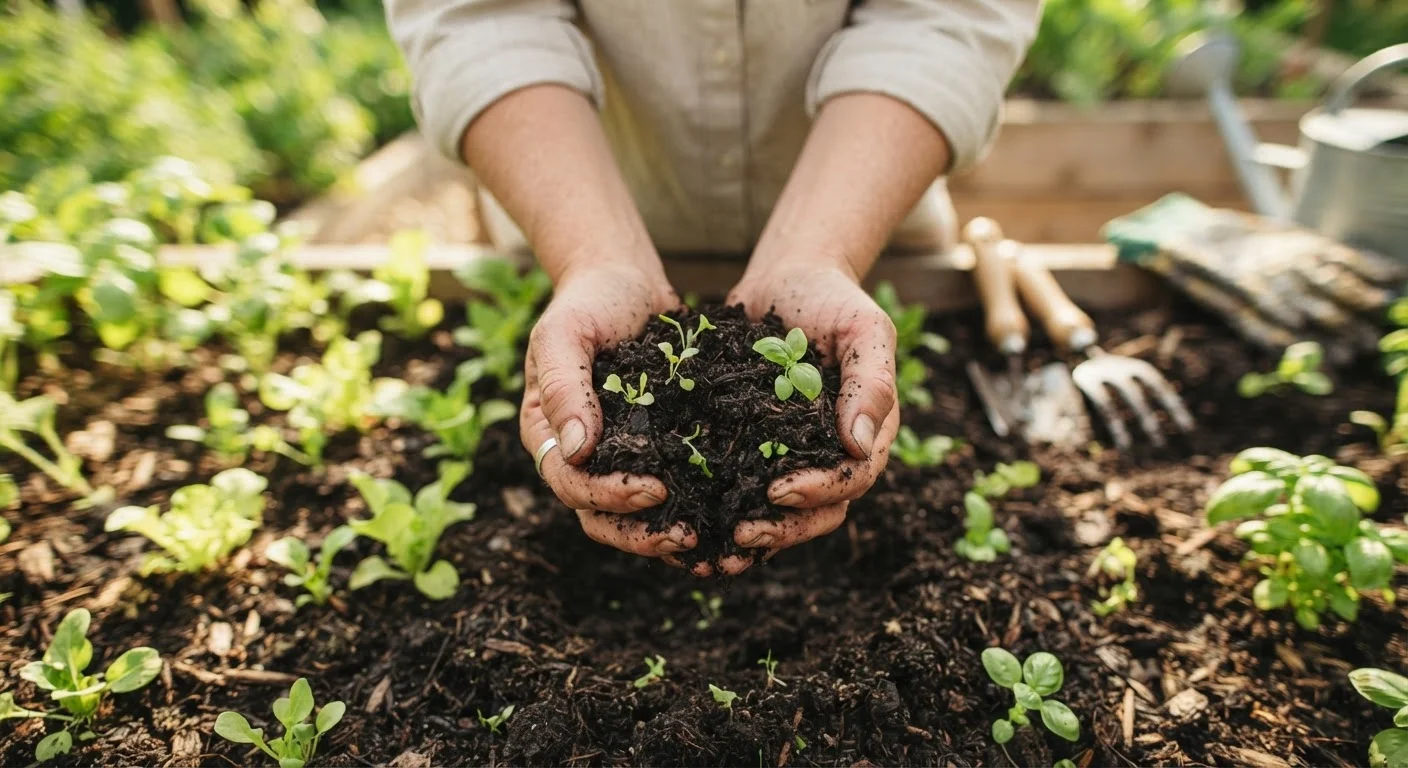
Photo: TotemBuzz.com | Your Lifestyle Companion editorial
Key Takeaways
- The three main soil types are clay, sandy, and loamy — each behaves very differently.
- Most plants thrive in loam, which balances drainage, moisture retention, and nutrients.
- A simple jar test or ribbon test can help you identify your soil type at home.
- Soil pH affects which nutrients plants can absorb, and it can be adjusted over time.
- Adding compost is the most reliable way to improve nearly any soil type.
The Three Main Soil Types Explained
Walk into any garden, and the soil underfoot is telling a story — you just need to learn how to read it. The vast majority of garden soils fall into three broad categories: clay, sandy, and loamy. Each has distinct physical properties that shape how water moves, how roots spread, and how readily nutrients become available to plants.
Clay soil is made up of very fine, tightly packed particles. It holds moisture and nutrients well, but it drains slowly and can become compacted and hard when dry. Working with clay-heavy soil after rain can damage its structure.
Sandy soil has large, loose particles with plenty of air space between them. Water drains through it rapidly, which means nutrients wash away easily and plants can dry out between waterings. It warms up quickly in spring, which can be an advantage for early planting.
Loamy soil sits in the middle — a balanced blend of sand, silt, and clay particles. It drains well without losing moisture too fast, holds nutrients, and is generally easier to dig and work. Most gardening guides treat loam as the gold standard, and with good reason.
Start With What You Have
How to Identify Your Soil Type at Home
You don't need a laboratory to get a useful read on your soil. Two simple DIY tests work well for beginners.
The Ribbon Test
Take a small handful of slightly moist soil and squeeze it firmly in your palm, then try to push it between your thumb and forefinger. If it forms a long, smooth ribbon (more than 2 inches), your soil is clay-dominant. If it falls apart instantly without forming any ribbon, it's sandy. A short ribbon that breaks easily suggests a more balanced, loamy texture.
The Jar Test
Fill a clear glass jar about one-third with soil, add water to nearly the top, screw on the lid, and shake vigorously. Let it settle for 24–48 hours. Sand settles first at the bottom, silt in the middle, and clay (if present) forms the topmost layer. The relative depth of each layer shows you your soil's rough composition.
Understanding your starting point is key before you plant. It's equally important to understand factors like light — see our guide to reading your garden's light for the full picture.
~95%
Of plant problems linked to soil issues
Soil health — including texture, drainage, and nutrient availability — is widely cited by extension horticulturalists as the root cause of the majority of common garden plant failures.
6.0–7.0
Ideal pH range for most vegetables
The USDA and university cooperative extension programs consistently recommend this pH range as optimal for nutrient availability in most vegetable gardens.
2–4 inches
Compost needed per planting season
University extension guides generally recommend incorporating 2–4 inches of compost into garden beds each season to meaningfully improve soil structure and fertility over time.
Soil pH: The Hidden Factor That Affects Every Plant
Beyond texture, soil pH — a measure of how acidic or alkaline your soil is — determines whether nutrients are actually accessible to plant roots, even when those nutrients are physically present. The scale runs from 0 (very acidic) to 14 (very alkaline), with 7 being neutral.
Most common vegetables and flowering plants grow best in a slightly acidic to neutral range, roughly pH 6.0–7.0. Outside that range, certain nutrients become chemically locked up and unavailable, leading to yellowing leaves and stunted growth even in otherwise healthy-looking soil.
Inexpensive pH test kits or strips are available at most garden centers. If your soil is too acidic, adding garden lime can raise the pH over time. If it's too alkaline, sulfur or acidic compost can help bring it down. These adjustments take time — usually one full growing season — so patience is required.
pH Adjustments Take Time
Improving Your Soil: Where Compost Comes In
No matter which soil type you're starting with, compost is the single most effective amendment for the majority of home gardens. It improves drainage in clay soils by opening up particle structure, and it boosts moisture and nutrient retention in sandy soils by adding organic matter. Think of it as a universal upgrade.
Working 2–4 inches of compost into the top 6–8 inches of your existing soil before planting — and adding a fresh layer each season — gradually shifts almost any soil toward the loamy ideal. This is a slower process than buying bags of replacement soil, but it builds lasting structure.
For a deeper look at how compost compares to other soil additions, see our guide to fertiliser vs. compost. And once your soil is sorted, the next step is choosing what to grow — our seeds vs. seedlings guide can help you decide where to begin.
Frequently Asked Questions
The content on this site is for informational purposes only and is not a substitute for professional advice. Always consult a qualified professional for guidance specific to your situation.