
Carry-On vs. Checked Luggage: Deciding What Works for Your Trip

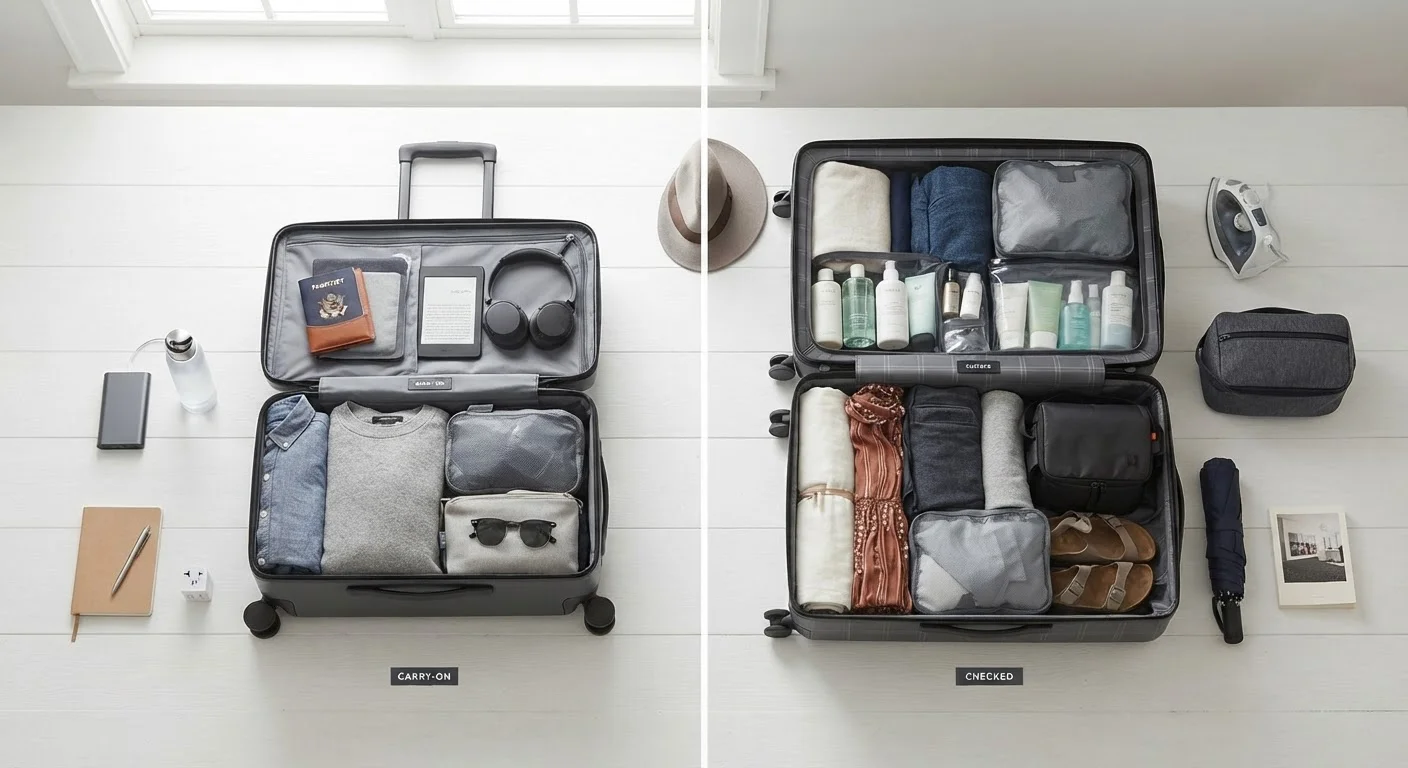
Photo: TotemBuzz.com | Your Lifestyle Companion editorial
Key Takeaways
- Carry-on bags avoid checked baggage fees and eliminate wait time at baggage claim.
- Checked luggage gives you more packing space but adds cost and handling time.
- Airline size and weight limits differ — always verify before you pack.
- Liquid restrictions apply strictly to carry-on bags, not to checked bags.
- Trip length, destination, and activities are the main factors in choosing the right option.
Understanding the Core Difference
When airlines talk about carry-on luggage, they mean a bag small enough to fit in the overhead bin or under the seat in front of you — typically a bag no larger than 22 × 14 × 9 inches, though exact limits vary by carrier. Checked luggage is any bag you hand over at the check-in counter or bag drop; it travels in the plane's cargo hold and is returned to you at baggage claim after landing.
The practical split comes down to three things: cost, convenience, and capacity. Carry-ons are usually free on most domestic US carriers (though basic economy fares sometimes charge even for overhead bins — read your fare rules carefully). Checked bags typically cost between $30 and $40 per bag for the first piece on domestic US flights, with fees rising for additional bags or overweight items.
Before you decide, it helps to have a full picture of your trip. Our pre-trip preparation checklist is a useful starting point for thinking through what you'll actually need to bring.
| Criterion | Carry-On | Checked Luggage |
|---|---|---|
| Typical cost | Usually free (fare-dependent) | $30–$40+ per bag on domestic flights |
| Packing capacity | Limited — roughly 40–45 liters | Generous — 60–100+ liters |
| Liquid rules | TSA 3-1-1 rule applies | Full-size liquids permitted |
| Time at airport | Faster — skip bag drop & claim | Slower — check-in queue & claim wait |
| Risk of loss or delay | Stays with you at all times | Small chance of delay or misrouting |
| Best trip length | 1–5 days | 6+ days or complex itineraries |
| Prohibited items | Sharp tools, oversize liquids, sporting goods | Lithium batteries, e-cigarettes, power banks |
What You Can and Cannot Pack in Each
The TSA enforces strict rules about what can travel in the cabin. The most widely known is the 3-1-1 liquid rule: liquids, gels, and aerosols in carry-on bags must be in containers of 3.4 ounces (100 ml) or less, all fitting inside a single 1 quart-sized clear zip-top bag, with 1 bag per passenger. Full-size toiletries, wine bottles, or large sunscreen tubes must go in your checked bag.
Checked bags have their own restrictions — lithium batteries, e-cigarettes, and spare power banks are prohibited in the cargo hold and must travel in the cabin. Sharp objects like scissors over 4 inches, tools, and sporting goods like golf clubs are generally allowed in checked bags but prohibited in carry-ons. Always verify current rules on the TSA website before travelling, as policies can change.
3.4 oz
Max liquid container size in carry-on
The TSA's 3-1-1 rule limits individual liquid containers to 3.4 ounces (100 ml) for all carry-on bags.
~2.5M
Bags mishandled annually in the US
According to the Department of Transportation's Air Travel Consumer Reports, roughly 2–3 million bags are mishandled each year across US carriers.
If you're still sorting out what to leave at home, why first-time travellers overpack explains the psychology behind overpacking and gives practical strategies for cutting down.
Making the Right Call for Your Trip
No single answer fits every traveller. Think through these questions before you start packing:
- How long is your trip? Up to five days, most travellers can manage with a carry-on. Beyond a week, checked luggage becomes more practical.
- What's your destination's climate? One climate means fewer clothing changes; multiple climates or seasons require bulkier layers.
- Will you be moving around? Hopping between multiple cities makes a lighter carry-on far easier to manage than lugging a large suitcase.
- Are there any prohibited or oversized items? Camping gear, surfboards, or firearms require checked bags by rule, not by preference.
It's also worth noting that some budget airlines charge for overhead bin space, making a personal item (a small backpack or tote that fits under the seat) the only truly free option. Always check your airline's specific baggage policy when planning and booking your trip, since fees and size limits vary significantly.
Budget Airlines and Bag Fees
Finally, consider what happens if things go wrong. Checked bags can be delayed or lost — it happens rarely, but when it does, having essentials like medications, a change of clothes, and valuables in your carry-on protects you. Keep key documents and payment methods in your carry-on regardless of which luggage strategy you choose.
The content on this site is for informational purposes only and is not a substitute for professional advice. Always consult a qualified professional for guidance specific to your situation.