
Why First-Time Travellers Overpack—and What to Do Instead

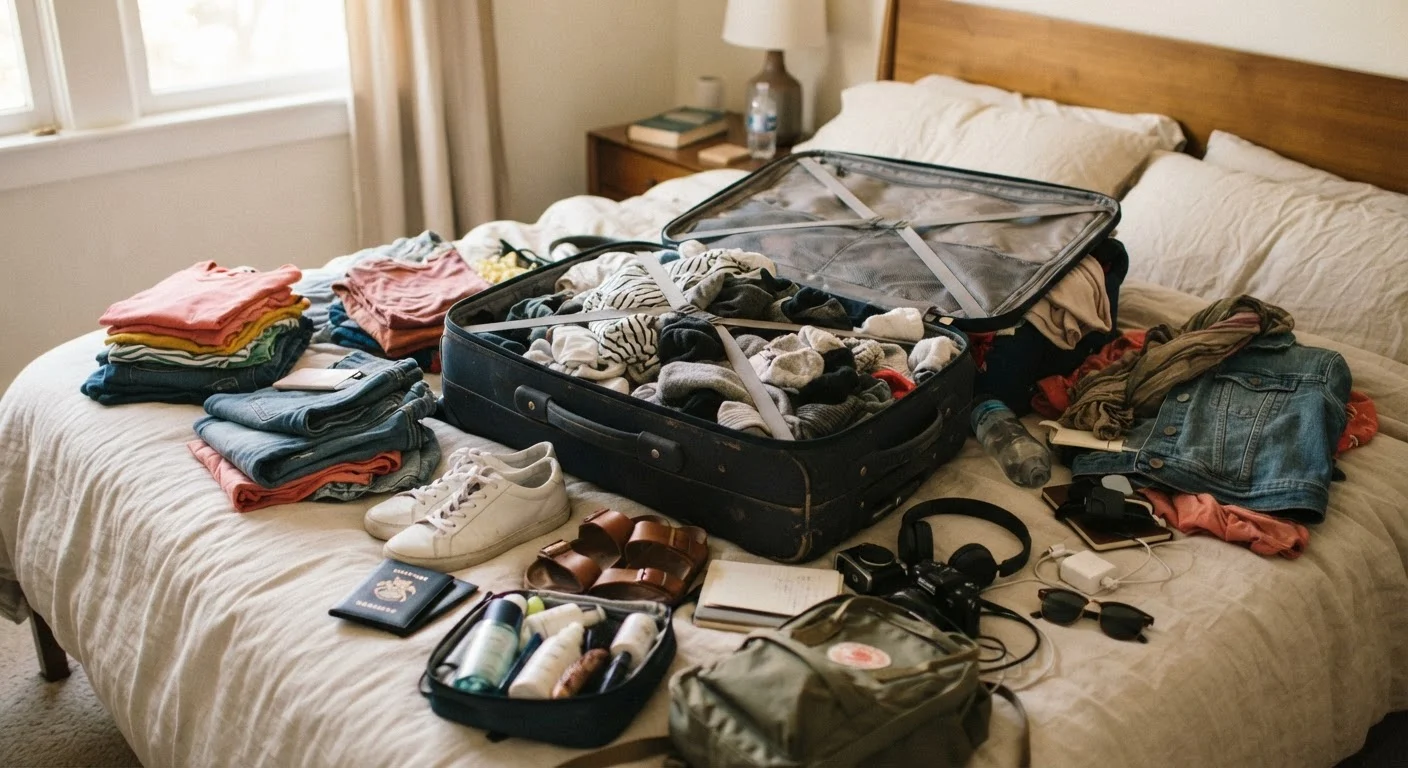
Photo: TotemBuzz.com | Your Lifestyle Companion editorial
Key Takeaways
- Overpacking stems from anxiety, not actual need — understanding the cause helps you fix it.
- Extra luggage costs real money in airline fees and physical energy throughout your trip.
- A packing list built around outfits, not individual items, dramatically reduces what you bring.
- Most destinations have laundry access or shops, so packing for every scenario is unnecessary.
- Choosing carry-on only is achievable for most trips under two weeks with intentional planning.
Why Overpacking Happens to Almost Every First-Timer
Overpacking is rooted in anxiety more than logic. When you haven't traveled much, the unknown feels threatening — what if you need a jacket? What if the hotel doesn't have towels? What if your shoes aren't appropriate? That uncertainty gets translated directly into luggage weight.
The result is a bag stuffed with contingencies for problems that almost never materialize. Understanding this pattern is the first step to breaking it. If you're still in the early stages of planning your first trip, see our foundational guide for first-time international travellers before you start making any reservations.
~50%
Travellers who report overpacking on their first trip
Travel industry surveys consistently find that a majority of first-time travellers say they brought more than they needed and would pack lighter next time.
$60–$80
Typical round-trip checked bag fee on U.S. domestic routes
Based on standard first-bag fees charged by major U.S. carriers; budget airlines and international routes may charge more.
The Real Costs of an Overpacked Bag
Beyond the obvious — a sore back and slow airport navigation — overpacking carries tangible financial costs. Checked baggage fees on U.S. domestic flights typically run $30–$40 per bag each way. On a round trip with two bags, you could spend $120–$160 before touching a single attraction or restaurant.
Airline Baggage Fees Add Up Fast
There's also an opportunity cost. A heavy bag slows you down in transit, limits your ability to use public transportation comfortably, and often means you're too tired to explore freely when you arrive. If you're weighing whether to check a bag at all, our guide on carry-on vs. checked luggage trade-offs can help you decide what actually makes sense for your trip length and destination.
Common Overpacking Mistakes — and How to Avoid Them
Most overpacking comes down to a handful of predictable errors that repeat across nearly every first-time traveller. Recognising them before you start pulling things out of your closet makes all the difference.
Packing individual items instead of complete outfits.
Bringing full-size toiletries and duplicating items already available at the destination.
Ignoring baggage weight limits until check-in.
Overpacking shoes, which are bulky and heavy.
Packing without considering laundry access.
Don't Pack for Worst-Case Scenarios
A More Intentional Approach to Packing
The shift from reactive packing (grabbing things out of fear) to intentional packing (selecting items with purpose) takes practice, but a few structured habits accelerate it considerably.
- Start with a list, not your closet. Write down every item before you touch a piece of clothing. This keeps you in planning mode rather than impulse mode.
- Use the 1-2-3 rule as a starting point: one pair of shoes per activity type, two bottoms, three tops per week — then adjust for your specific destination and activities.
- Do a test pack 48 hours before departure. Leave the bag sitting — you'll almost always find things to remove on second look.
- Remember that almost everything is available at your destination. Forgotten an item? There's likely a pharmacy, market, or shop nearby.
For a comprehensive pre-departure framework that covers documents, medications, and more, work through our pre-trip preparation checklist before you leave.
The content on this site is for informational purposes only and is not a substitute for professional advice. Always consult a qualified professional for guidance specific to your situation.