
The Emotional Benefits of Growing Up With Pets — and the Limits of the Evidence

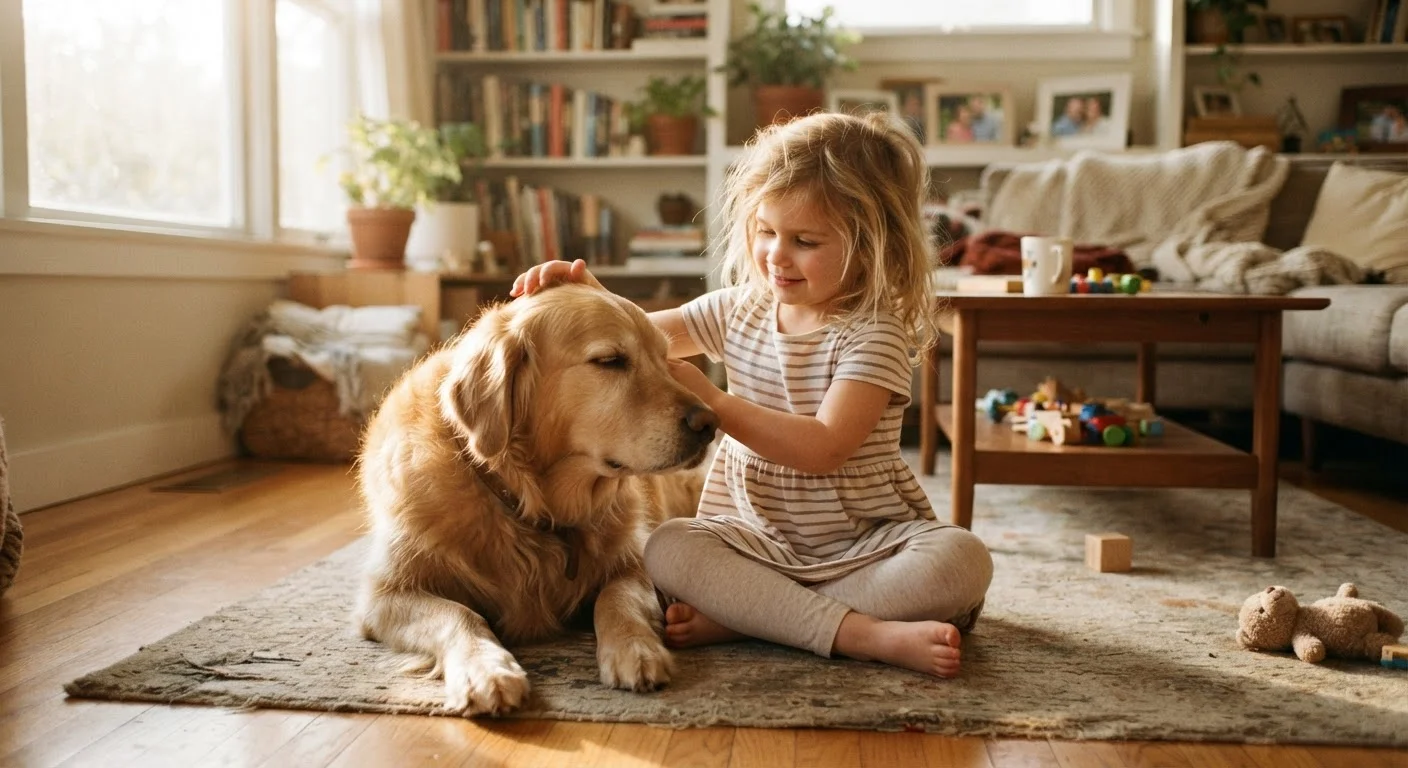
Photo: TotemBuzz.com | Your Lifestyle Companion editorial
Key Takeaways
- Research suggests pets may support empathy and emotional regulation in children, but the evidence has real limitations.
- Correlation between pet ownership and emotional wellbeing does not mean the pet is the cause.
- Children who care for pets often show stronger sense of responsibility, though context matters.
- The quality of adult supervision and the pet's temperament both shape outcomes for children.
- No study conclusively proves pets make children happier — but many families report meaningful bonds.
What the Research Actually Suggests
Ask most parents whether their child's bond with the family dog has done them good, and you'll hear a resounding yes. But what does the science actually say — and where does it fall short?
A meaningful body of research has examined the link between pet ownership and children's social and emotional development. Studies have found associations between growing up with pets and higher levels of empathy, stronger social skills, and better emotional self-regulation. One often-cited area of interest is the way children use pets as "social anchors" — confiding in animals, using them for comfort, and practicing nurturing behaviors that may translate into how they relate to other people.
Animal-assisted interventions in clinical settings — where trained therapy animals work alongside mental health professionals — have shown encouraging results for children experiencing anxiety, trauma responses, or social communication differences. But it's important to note that these structured programs are quite different from having a pet at home.
~67%
US households with a pet
According to the American Pet Products Association's National Pet Owners Survey, roughly two-thirds of American households include at least one pet.
Modest positive
Association between pets and child empathy scores
A 2017 review in PLOS ONE found associations between pet ownership and social development in children, though researchers emphasized that confounding factors limit firm conclusions.
Mixed
Evidence quality across key studies
Systematic reviews of child-pet research consistently note that study designs are heterogeneous and many rely on self-reported or parent-reported outcomes.
The honest takeaway is that the associations are real and often meaningful — but they don't yet constitute rock-solid proof that pets cause emotional growth. They may simply reflect something about families that choose pets, or how those families engage with their children overall.
Why the Evidence Has Real Limits
Understanding what the research can't tell us is just as important as knowing what it suggests. Most studies in this area rely on parent-reported outcomes, which introduces bias — parents who love their pets may naturally view their children's experiences more positively. Many studies are also cross-sectional, meaning they capture a single snapshot in time rather than tracking children over years.
Controlling for confounding variables is another challenge. Families that own pets may differ from non-pet-owning families in income, housing stability, parenting style, or time availability — all factors that independently influence a child's development. Separating the "pet effect" from these broader conditions is genuinely difficult.
A Note on Study Design
This doesn't mean the research is worthless — far from it. It means we should hold the findings with appropriate curiosity rather than treating them as certainties. The associations are consistent enough to be interesting, and the absence of proof isn't proof of absence.
If you're curious about the broader picture of what changes when a pet joins the family, our guide on family life with a new pet covers the real-world adjustments involved.
What Families Can Reasonably Expect
Even with those caveats in place, there are some well-grounded reasons to feel positive about children growing up alongside animals. The daily routine of caring for a pet — feeding, grooming, noticing when an animal seems unwell — gives children a consistent framework for attending to another living thing's needs. This is the kind of practice that supports empathy and responsibility in a hands-on, low-stakes way.
Pets also offer something uniquely comforting: non-judgmental presence. Children who are navigating social difficulty at school or feeling stressed often gravitate toward their pet for comfort. Whether or not that comfort produces measurable developmental outcomes, it's real and it matters.
Make Pet Care a Shared, Guided Experience
How families structure that relationship makes a significant difference. Children who are given age-appropriate pet care responsibilities tend to engage more meaningfully with the animal — and those interactions are where the potential developmental benefits are most likely to emerge.
Safety and supervision are also foundational. The emotional benefits of pet ownership can only flourish in a home where both the child and the animal feel safe and respected. Our overview of pets and young children living together is a solid place to start building that foundation.
This article is for general informational and educational purposes only. It is not a substitute for professional advice from a qualified child development specialist, pediatrician, or mental health professional. If you have concerns about your child's emotional wellbeing, please consult a qualified professional.
Frequently Asked Questions
The content on this site is for informational purposes only and is not a substitute for professional advice. Always consult a qualified professional for guidance specific to your situation.