
Safe Spaces and Enrichment: What Mental Stimulation Means for Pets

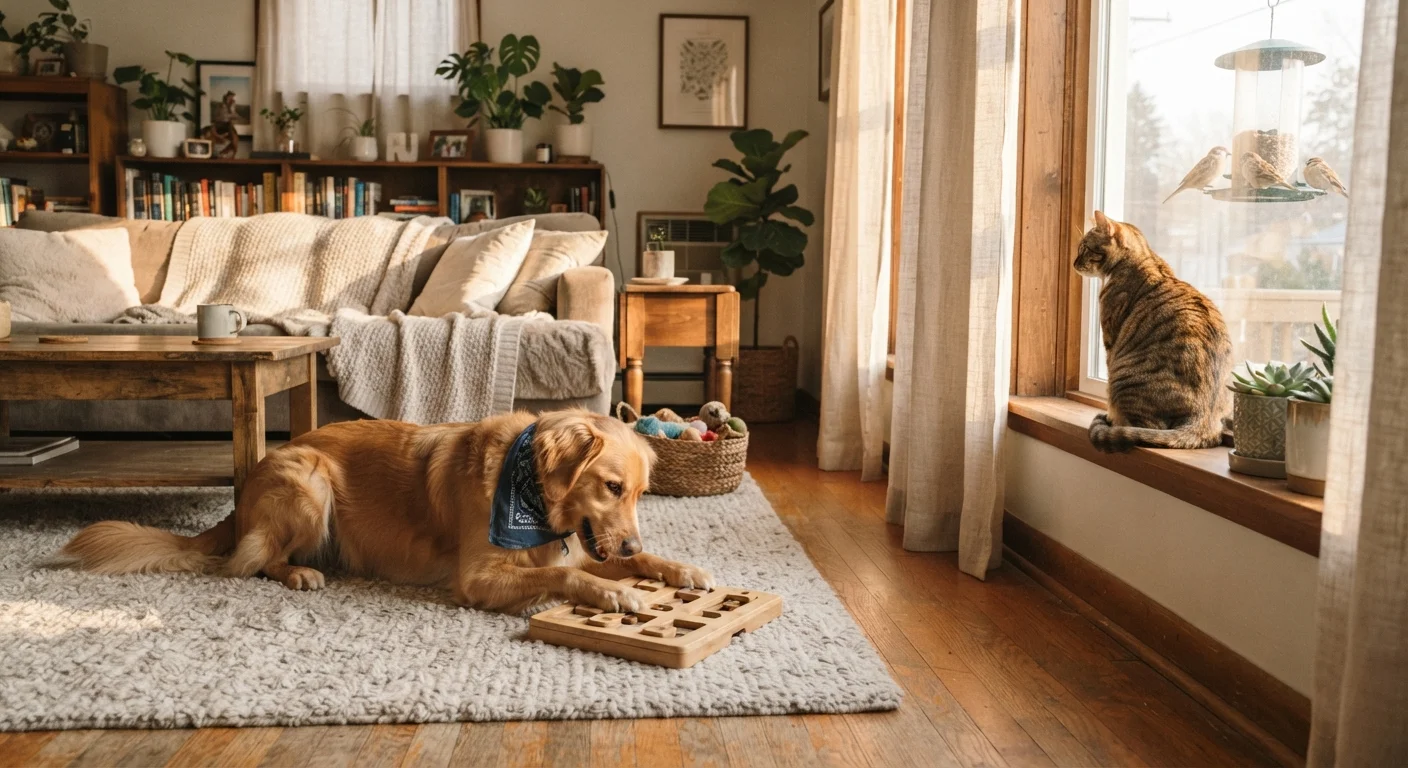
Photo: TotemBuzz.com | Your Lifestyle Companion editorial
Key Takeaways
- Boredom in pets can lead to destructive behaviors, anxiety, and physical health decline.
- Enrichment includes any activity that engages your pet's natural instincts and curiosity.
- Simple, low-cost options — like food puzzles or window perches — can make a real difference.
- Dogs, cats, birds, and small mammals all benefit from enrichment tailored to their species.
- Enrichment works best when combined with consistent daily routines and social interaction.
Why Boredom Is a Bigger Deal Than It Sounds
Most new pet owners focus on the basics: food, water, vet visits, and a safe place to sleep. All of that matters enormously. But there's a piece that often gets overlooked until something goes wrong — and that's mental stimulation.
Animals in the wild spend most of their waking hours hunting, foraging, exploring, and navigating social dynamics. When a pet lives in a home environment without outlets for those drives, boredom sets in quickly. And boredom isn't just a mood — it can show up as chewed furniture, incessant barking, over-grooming, or a pet that seems listless and withdrawn.
Research in veterinary behavioral science consistently links inadequate enrichment to elevated stress hormones, increased aggression, and reduced immune function in companion animals. In other words, a mentally understimulated pet isn't just unhappy — they may be less physically healthy too.
40%
Dogs showing anxiety-related behaviors from boredom
Veterinary behaviorists estimate that a substantial proportion of behavioral complaints brought to clinics are rooted in insufficient mental stimulation rather than medical causes.
5
Core enrichment categories recognized by veterinary behaviorists
Sensory, cognitive, social, physical, and feeding-based enrichment each address distinct aspects of an animal's behavioral and psychological needs.
10 min
Minimum daily focused enrichment many small pets need
Even brief, consistent enrichment sessions are associated with measurable reductions in stress indicators in companion animals, according to applied animal behavior literature.
If you're building a daily routine for your pet, weaving in enrichment activities is one of the highest-value things you can add.
The Five Flavors of Enrichment
Enrichment isn't one thing — it's a whole menu. Veterinary behaviorists generally group it into five categories, and understanding them helps you make sure you're covering your bases:
- Sensory enrichment engages smell, sight, sound, and touch. Think: letting your dog sniff their way through a walk rather than rushing, or placing a bird feeder outside a cat's favorite window.
- Cognitive enrichment involves problem-solving. Puzzle feeders, treat-dispensing toys, and hide-and-seek games all fall here. The pet has to think to get the reward.
- Social enrichment includes interaction with people, other animals, and new environments. Supervised playdates, training sessions, and even a calm cuddle session count.
- Physical enrichment means more than exercise — it also includes changes to the environment itself, like climbing structures for cats or digging boxes for dogs.
- Feeding enrichment transforms mealtime into a mini-adventure. Scatter feeding, lick mats, and slow feeders all make eating a mentally engaging activity rather than a 30-second vacuum job.
Start Simple and Rotate Often
You don't have to do all five every day. Rotating through different types across the week keeps things fresh and prevents your pet from habituating to the same routine.
Species-Specific Ideas You Can Try Today
Enrichment looks different depending on who you're caring for. Here's a quick breakdown by animal type:
- Dogs
- Sniff walks (where they lead the nose), stuffed frozen Kongs, basic trick training, cardboard box foraging, and safe socialization with other dogs.
- Cats
- Window perches with outdoor views, paper bag tunnels, wand toy play sessions, cat trees, and food puzzles. Rotating toys in and out keeps curiosity alive.
- Birds
- Foraging opportunities (hiding food in paper cups or wrapping it in paper), novel perches, safe household sounds, and appropriate out-of-cage time with supervision.
- Small mammals (rabbits, guinea pigs, hamsters)
- Tunnels, digging boxes filled with hay or safe substrate, and varied textures and hiding spots within their enclosure.
Many of these ideas cost little or nothing. A cardboard box, a muffin tin with tennis balls over kibble, or ten minutes of focused play can genuinely shift your pet's day. Enrichment also creates opportunities for bonding — and that connection pays dividends for both of you, something explored in depth in our piece on the emotional benefits of growing up with pets.
Building Enrichment Into Real Life
The most sustainable enrichment isn't a complicated setup — it's small, consistent habits layered into your existing routine. Hiding part of your dog's kibble around the living room before you leave for work takes 60 seconds. Giving your cat a new paper bag to investigate costs nothing. Letting your rabbit explore a new cardboard maze while you watch TV adds variety without adding stress to your schedule.
Involving your kids is also a wonderful option. Under adult supervision, even young children can scatter treats for a sniff game or roll a treat ball across the floor. Check out our guide on age-appropriate pet care responsibilities for children for ideas that grow with your family.
Finally, remember that enrichment is one layer of overall care. Pair it with regular grooming, health check-ins, and a predictable daily schedule, and you're building an environment where your pet can genuinely thrive — not just survive.
“An animal's behavior is the window into its welfare. When we enrich the environment, we're not just entertaining a pet — we're honoring the biology they were born with.”
— Dr. Karen Overall, Veterinary behaviorist and applied animal behavior researcher
This article is for general informational purposes only and is not a substitute for professional veterinary advice. If your pet is showing significant behavioral changes, please consult a licensed veterinarian or veterinary behaviorist.
Frequently Asked Questions
The content on this site is for informational purposes only and is not a substitute for professional advice. Always consult a qualified professional for guidance specific to your situation.