
The Envelope Method: What It Is and How People Use It Today

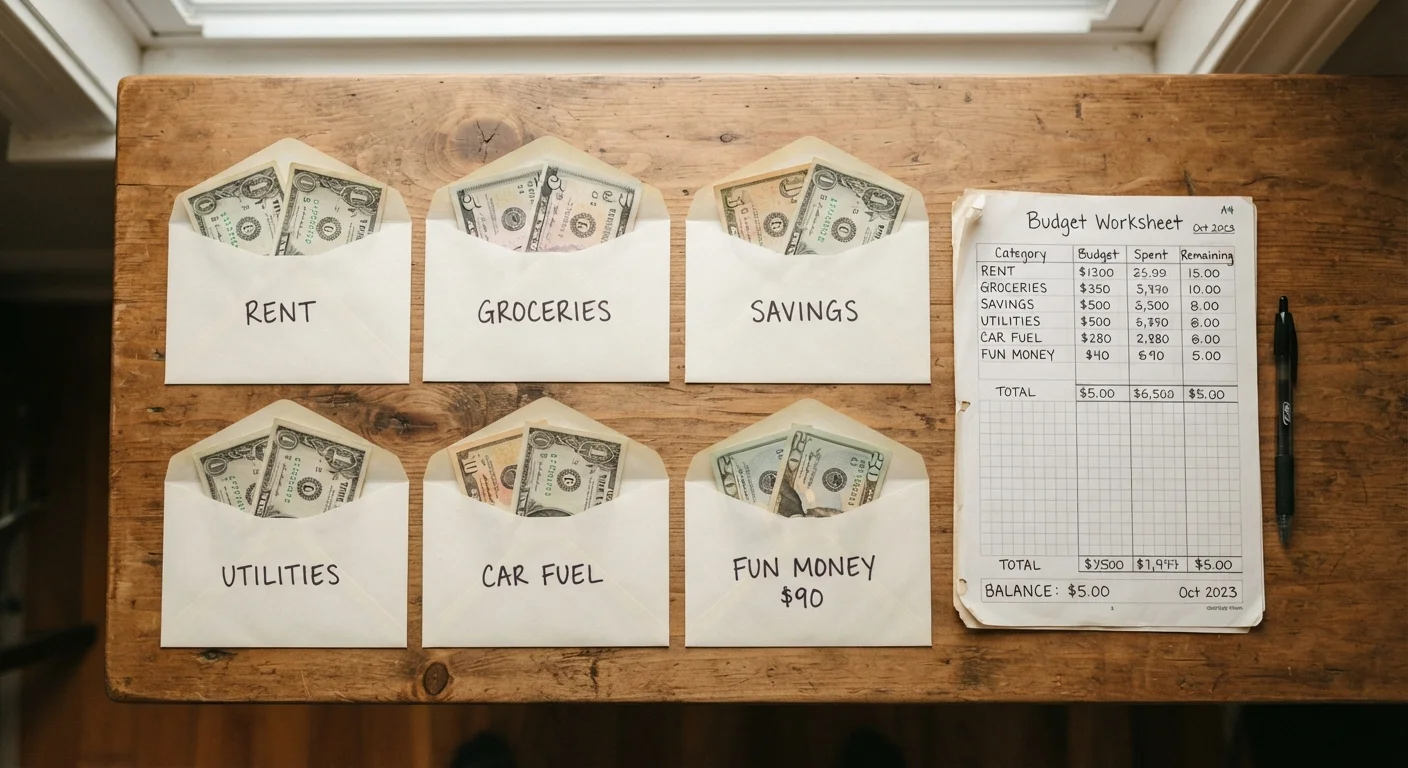
Photo: TotemBuzz.com | Your Lifestyle Companion editorial
Key Takeaways
- Each envelope holds only the cash budgeted for one spending category — when it's gone, spending stops.
- The physical act of handling cash makes overspending immediately visible in a way that card transactions often don't.
- Digital and app-based versions replicate the envelope concept without requiring actual cash.
- The method works best for variable, discretionary expenses rather than fixed bills paid automatically.
- Beginners often find envelope budgeting easier to stick to than spreadsheet-based systems.
Where the Envelope Method Comes From
The envelope method has roots in an era when most Americans were paid in cash and banks were not a universal fixture of daily life. Households would literally place portions of a paycheck into labeled envelopes — one for rent, one for food, one for utilities — and manage the month from those stacks of bills. Financial educators popularized the approach throughout the twentieth century as a practical remedy for overspending.
Today it is most often associated with personal finance instruction broadly, though the core principle — assign money to a category before you spend it — predates any single teacher or book. Understanding what a personal budget really is helps put the envelope method in context: it is one tool for executing a budget, not a budget philosophy on its own.
How It Works in Practice
The mechanics are straightforward. At the start of each pay period, you:
- List your variable spending categories (groceries, gas, dining, entertainment, etc.).
- Decide how much you can responsibly spend in each category this period.
- Withdraw that total amount in cash and physically divide it into labeled envelopes.
- Spend only from the relevant envelope for each purchase.
- When an envelope reaches zero, spending in that category stops until you refill next period.
Fixed bills — rent, mortgage, loan payments, insurance — are generally handled separately via check or autopay. The envelope system focuses attention where discretionary decisions are made most often.
Start With Just Two or Three Envelopes
If you want a structured starting point for your categories, the spending categories every personal budget should include article walks through the buckets beginners most frequently underestimate.
Why the Method Is Psychologically Effective
Research in behavioral economics suggests that paying with cash creates a measurable "pain of paying" — a psychological friction that card transactions largely bypass. When you hand over physical bills, the cost of a purchase registers more acutely than when you tap a card or click "buy." The envelope method harnesses that effect deliberately.
Seeing an envelope grow thin also provides real-time feedback. There is no end-of-month statement surprise: the remaining cash in front of you tells you exactly where you stand. This visibility is one reason many people who struggle with abstract spreadsheet budgets find the envelope approach easier to sustain in the early months of building financial habits.
“A budget is telling your money where to go instead of wondering where it went.”
— Dave Ramsey, Personal finance author and radio host, known for popularizing the envelope budgeting system for a modern American audience
Modern Digital Alternatives
Carrying envelopes of cash is impractical for many people today — not everyone shops at stores that accept cash, and keeping large sums at home carries its own risks. Digital equivalents preserve the envelope concept while fitting modern spending habits:
- Budgeting apps: Some apps allow users to create virtual "envelopes" or spending pots that draw down as transactions are imported or entered manually.
- Bank sub-accounts: Certain banks and credit unions allow customers to create multiple labeled savings pockets within a single account, each capped at a set amount.
- Spreadsheets: A simple spreadsheet with one column per category can replicate the envelope logic digitally — you manually record each purchase and watch the remaining balance fall.
Each approach has trade-offs in visibility, convenience, and effort. For a side-by-side look at tracking tools, see spreadsheet vs. app vs. paper ledger.
36%
Americans who track spending with a detailed budget
According to a Gallup survey, only about one-third of U.S. adults report maintaining a detailed household budget, suggesting most people could benefit from a structured system like envelope budgeting.
~18%
Reduction in impulse spending linked to cash payment
Studies in behavioral economics, including research published in the Journal of Consumer Research, have found that consumers tend to spend less impulsively when paying with cash compared to card payment methods.
Envelope Budgeting vs. Other Approaches
The envelope method is one of several structured budgeting systems beginners can explore. It differs from percentage-based frameworks in that it is granular and hands-on rather than high-level. The 50/30/20 rule tells you how to divide income broadly; the envelope method tells you how to control the spending that happens within those divisions.
It also differs from zero-based budgeting in its tactile emphasis. Zero-based budgeting assigns every dollar on paper or in a spreadsheet; envelope budgeting enforces those assignments through the physical or digital act of separating funds before they are spent. Many people find that combining a zero-based allocation plan with envelope-style execution gives them the best of both approaches.
This article is for general informational and educational purposes only and does not constitute personalized financial advice. Consult a qualified financial professional for guidance tailored to your individual circumstances.
Frequently Asked Questions
The content on this site is for informational purposes only and is not a substitute for professional advice. Always consult a qualified professional for guidance specific to your situation.