
Zero-Based Budgeting vs. the 50/30/20 Rule

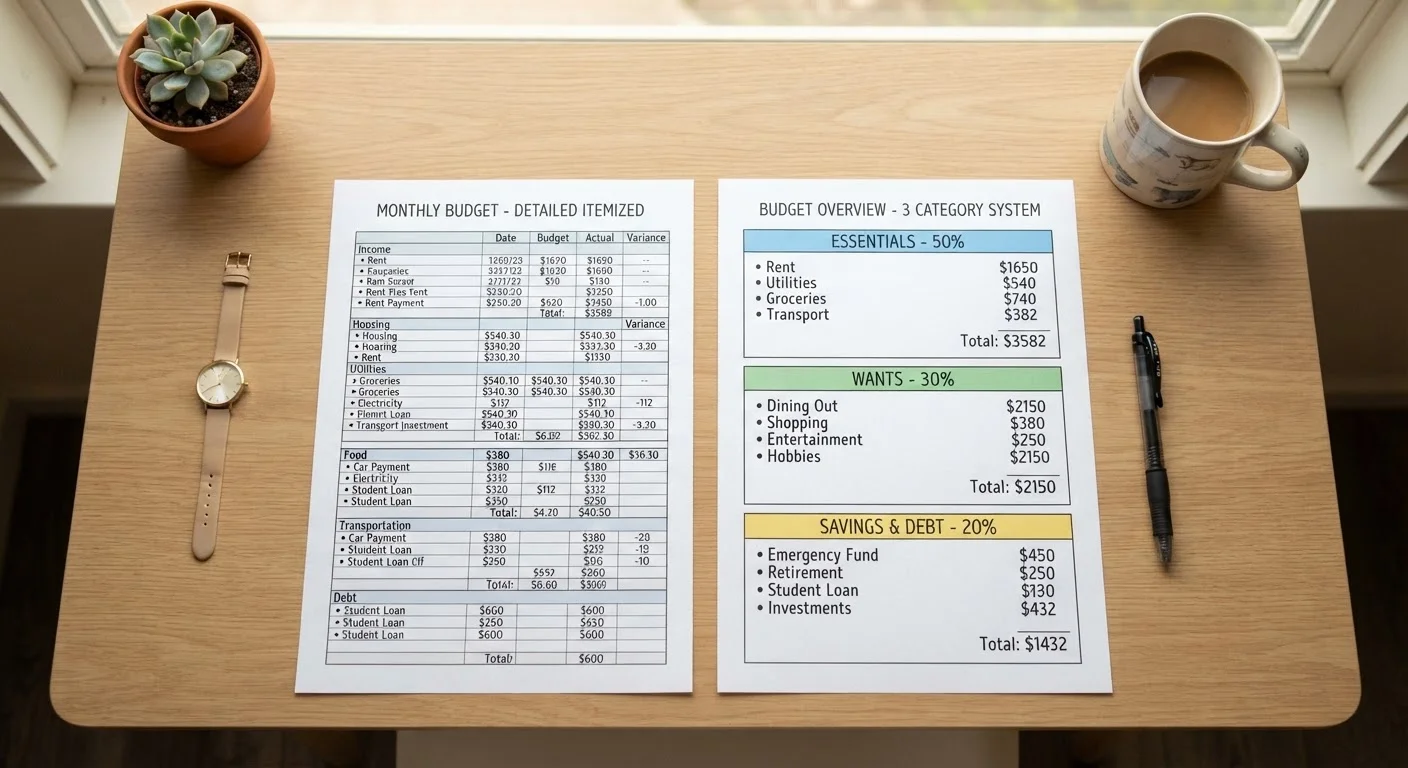
Photo: TotemBuzz.com | Your Lifestyle Companion editorial
Key Takeaways
- Zero-based budgeting assigns a specific purpose to every dollar of income, leaving a zero balance at month's end.
- The 50/30/20 rule splits income into three broad buckets: 50% needs, 30% wants, and 20% savings or debt repayment.
- Zero-based budgeting demands more time and attention but offers granular control over spending.
- The 50/30/20 rule is easier to start with but may not catch small spending leaks as effectively.
- Neither method guarantees financial outcomes — consistent use of either framework is what builds results over time.
- Your income variability, financial goals, and available time all influence which approach fits your life better.
What Each Method Actually Means
Before comparing the two, it helps to understand exactly what each framework asks of you — because the gap is wider than most beginners expect.
Zero-based budgeting starts with your total monthly income and works downward until every dollar has a specific destination: rent, groceries, utilities, subscriptions, savings, and so on. The goal is for income minus expenses to equal zero — not because you have spent everything, but because you have given every dollar a deliberate assignment, including money earmarked for savings or investments. This approach was popularized in corporate finance before personal-finance educators adapted it for household use.
The 50/30/20 rule, attributed to U.S. Senator Elizabeth Warren and her daughter Amelia Warren Tyagi in their 2005 book All Your Worth, divides after-tax income into three percentages: roughly 50% toward needs (housing, utilities, groceries, minimum debt payments), 30% toward wants (dining out, entertainment, hobbies), and 20% toward savings and debt repayment above minimums. The simplicity is the point — you do not need to track 20 separate line items. For a deeper look at how those three buckets work in practice, see our full explainer on the 50/30/20 rule.
| Criterion | Zero-Based Budgeting | 50/30/20 Rule |
|---|---|---|
| Setup complexity | High — requires listing every expense | Low — three categories only |
| Time commitment | 30–60 min/month plus check-ins | Minimal after initial setup |
| Spending visibility | Very granular, line by line | Broad buckets, less detail |
| Flexibility for variable income | High — rebuilt each month | Lower — percentages assume stable income |
| Best for beginners | Moderate — steeper learning curve | Yes — simple to start immediately |
| Goal-specific saving | Easy — savings is a named line item | Possible within the 20% bucket |
| Adaptability mid-month | Requires manual reallocation | Easier — just watch category totals |
Where Each Method Shines — and Struggles
Zero-based budgeting excels when you need precision. If you are trying to pay off debt aggressively, build an emergency fund quickly, or simply stop wondering where your money went, line-item clarity helps. The trade-off is time: you will typically spend 30 to 60 minutes rebuilding or reviewing your budget at the start of each month, plus occasional check-ins during the month.
It can also feel rigid. If an unexpected expense hits mid-month, you need to go back and reallocate other categories — which some people find empowering and others find exhausting. The case for and against strict budgeting explores this tension in detail if you want to think it through further.
The 50/30/20 rule shines in its accessibility. Someone who has never tracked spending before can adopt it within an afternoon. Its weakness is resolution: lumping all "wants" into a single 30% bucket means a creeping restaurant habit or a string of impulse purchases can consume the entire category without triggering an obvious alarm. People with high fixed costs — particularly in expensive housing markets — may also find that needs routinely exceed 50%, making the framework harder to apply without adjustment.
A Common Misconception Worth Clearing Up
This article is for general informational and educational purposes only and does not constitute personalized financial advice. Consider consulting a qualified financial professional for guidance specific to your circumstances.
Choosing the Right Fit for You
Neither method is universally superior. The right choice depends on a few personal factors:
- Income stability: Variable or freelance income pairs naturally with zero-based budgeting, since you rebuild the plan around actual earnings each month rather than assumed percentages.
- Financial goals: Vague goals like "save more" can work with either method, but specific targets — such as saving $5,000 by a set date — are easier to engineer inside a zero-based framework where you control every line.
- Available time: If monthly budget sessions feel burdensome, the 50/30/20 rule's lighter administrative load may mean you actually stick with it longer — and consistency beats theoretical precision every time.
- Spending awareness: If you genuinely do not know where your money goes, zero-based budgeting's forced accounting is often an eye-opening first exercise, even if you later switch to a simpler method.
Some people start with the 50/30/20 rule to build the habit, then graduate to zero-based budgeting once they want more control. Others use zero-based budgeting for six months to identify spending patterns, then relax into a percentage approach once their habits are calibrated. Both paths are reasonable. For a broader comparison that also includes the pay-yourself-first strategy, savings strategies compared is worth reading alongside this article.
If you have never built a budget of any kind before, the start-to-finish budget walkthrough is a practical next step — it walks through the mechanics regardless of which method you choose.
~74%
Americans living paycheck to paycheck
A 2023 LendingClub report found approximately 74% of U.S. consumers described themselves as living paycheck to paycheck, underscoring why a deliberate budgeting framework — of any kind — can matter.
20%
Recommended savings rate in 50/30/20 rule
The 50/30/20 rule designates 20% of after-tax income for savings and debt repayment beyond minimum payments, aligning with guidance often cited by consumer finance educators.
The content on this site is for informational purposes only and is not a substitute for professional advice. Always consult a qualified professional for guidance specific to your situation.