
Renting vs. Buying: How to Think Through the Decision

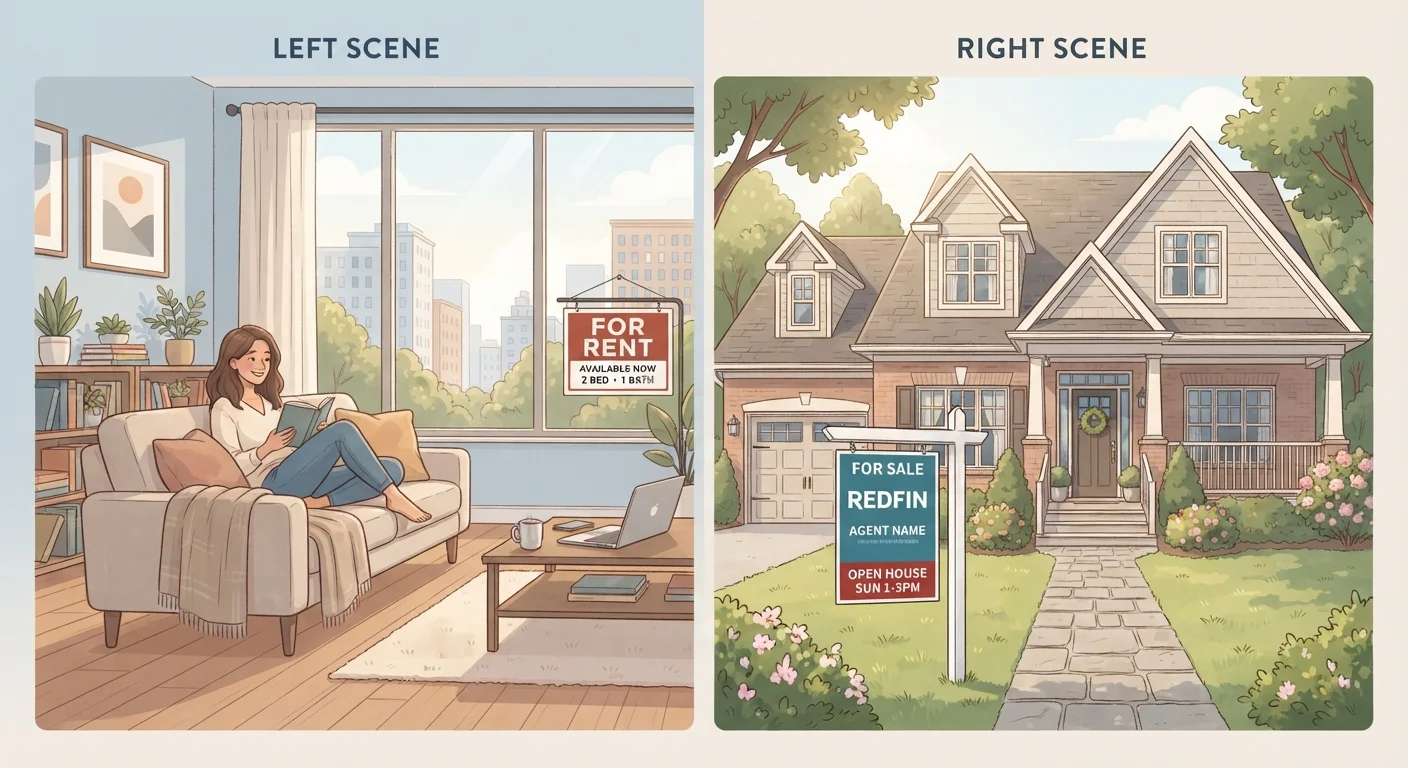
Photo: TotemBuzz.com | Your Lifestyle Companion editorial
Key Takeaways
- Renting offers flexibility and lower upfront costs but builds no ownership equity.
- Buying involves significant purchase and ongoing costs beyond just the mortgage payment.
- Your timeline, savings, job stability, and local market all shape which option makes more sense.
- Neither renting nor buying is universally superior — it depends on personal and financial circumstances.
- Hidden costs of homeownership, like maintenance and insurance, can add up quickly.
- Renting can be a smart financial choice, not simply a fallback while saving to buy.
Why This Decision Is Rarely Straightforward
Most people treat renting versus buying as a simple financial question: which one costs less? But the honest answer is that it depends on where you live, how long you stay, what you can afford upfront, and what you want your life to look like in five years. There's no formula that works for everyone.
One persistent myth worth clearing up early: renting is not "throwing money away." When you rent, you're paying for housing — a real service. When you buy, you pay interest, maintenance costs, insurance, and property taxes, none of which build equity either. Our guide on common property myths digs into this in more detail. The goal here is to help you think clearly about both paths before deciding.
| Criterion | Renting | Buying |
|---|---|---|
| Upfront costs | Security deposit + first month | Down payment + closing costs |
| Monthly predictability | Stable, but rent can increase | Fixed mortgage; taxes/insurance vary |
| Equity building | None | Yes, over time |
| Maintenance responsibility | Usually landlord's responsibility | Owner's full responsibility |
| Flexibility to move | High — move at lease end | Low — selling takes time and money |
| Freedom to customize | Very limited by lease terms | Full control within local codes |
| Risk exposure | Landlord could sell or not renew | Market value can fall; repair costs unpredictable |
The Real Costs on Each Side
Renting typically requires a security deposit (usually one to two months' rent) and your first month's payment upfront. After that, your monthly costs are predictable: rent, and usually utilities. A broken appliance? That's generally your landlord's problem, not yours.
Buying is a different story. The purchase price is just the starting point. You'll also face a down payment (often 3–20% of the purchase price), closing costs, home inspection fees, property taxes, homeowner's insurance, and ongoing maintenance. A commonly cited rule of thumb is to budget around 1% of your home's value annually for maintenance, though costs vary widely by property age and condition. For a fuller breakdown, see our piece on the hidden costs of buying a home.
~43%
Share of US households that rent
According to US Census Bureau data, roughly 43% of American households are renter-occupied, reflecting how common renting is as a long-term housing choice.
1–5%
Typical closing cost range as share of purchase price
The Consumer Financial Protection Bureau notes that closing costs generally run between 1% and 5% of the loan amount, adding thousands to what buyers pay upfront.
5+ years
Typical break-even horizon for buying
Many housing economists suggest buyers generally need to stay in a home at least five years to recoup transaction costs through appreciation and equity buildup.
If you're buying a condo or townhouse, you'll also want to understand strata or homeowner association fees. Our article on strata and body corporate ownership explains how those fees work and what they cover.
Flexibility vs. Stability: The Lifestyle Trade-Off
Renting gives you mobility. If your job changes, your relationship changes, or you simply want to try a new neighborhood, you can move when your lease ends — typically with 30 to 60 days' notice. That flexibility has real value that doesn't show up on a spreadsheet.
Ownership ties you to a location in a way renting doesn't. Selling a home takes time and money — real estate commissions alone often run 5–6% of the sale price. If you buy and need to move within a year or two, you may end up selling at a loss once those costs are factored in.
That said, ownership does bring stability of its own kind: you can't be given notice by a landlord, your monthly payment on a fixed-rate mortgage won't change the way rent can, and you're free to make the space genuinely yours. For guidance on what renters can and can't change in their homes, see renting and decorating tips. And if you reach the point of buying, understanding fixed vs. variable mortgage rates is one of the first practical decisions you'll face.
First-Time Buyer Programs Exist in Most States
Questions to Ask Yourself Before You Decide
Rather than hunting for a single right answer, it helps to honestly assess your own situation. A few questions worth sitting with:
- How long do I expect to stay? Most financial models suggest you need to stay in a purchased home at least five years to break even after transaction costs.
- How stable is my income? A mortgage is a long-term legal obligation. If your income is irregular or your employment uncertain, that's worth weighing carefully.
- Do I have enough saved? Beyond the down payment, do you have reserves for moving costs, immediate repairs, and an emergency fund?
- What does the local market look like? In some cities, purchase prices are so high relative to rents that buying doesn't make financial sense for many people — even people who could technically afford it.
If you do decide to buy, working with a professional can help you navigate what's ahead. Our article on what a real estate agent actually does is a useful starting point. And if you're earlier in the process of understanding property ownership structures, our guide on freehold vs. leasehold ownership explains a distinction that matters more than many first-timers realize.
This article is for general informational purposes only and does not constitute financial, legal, or real estate advice. Please consult a qualified professional for guidance tailored to your personal circumstances.
The content on this site is for informational purposes only and is not a substitute for professional advice. Always consult a qualified professional for guidance specific to your situation.