
Adhesives, Anchors, and Fixings: Matching the Right Fastener to the Job

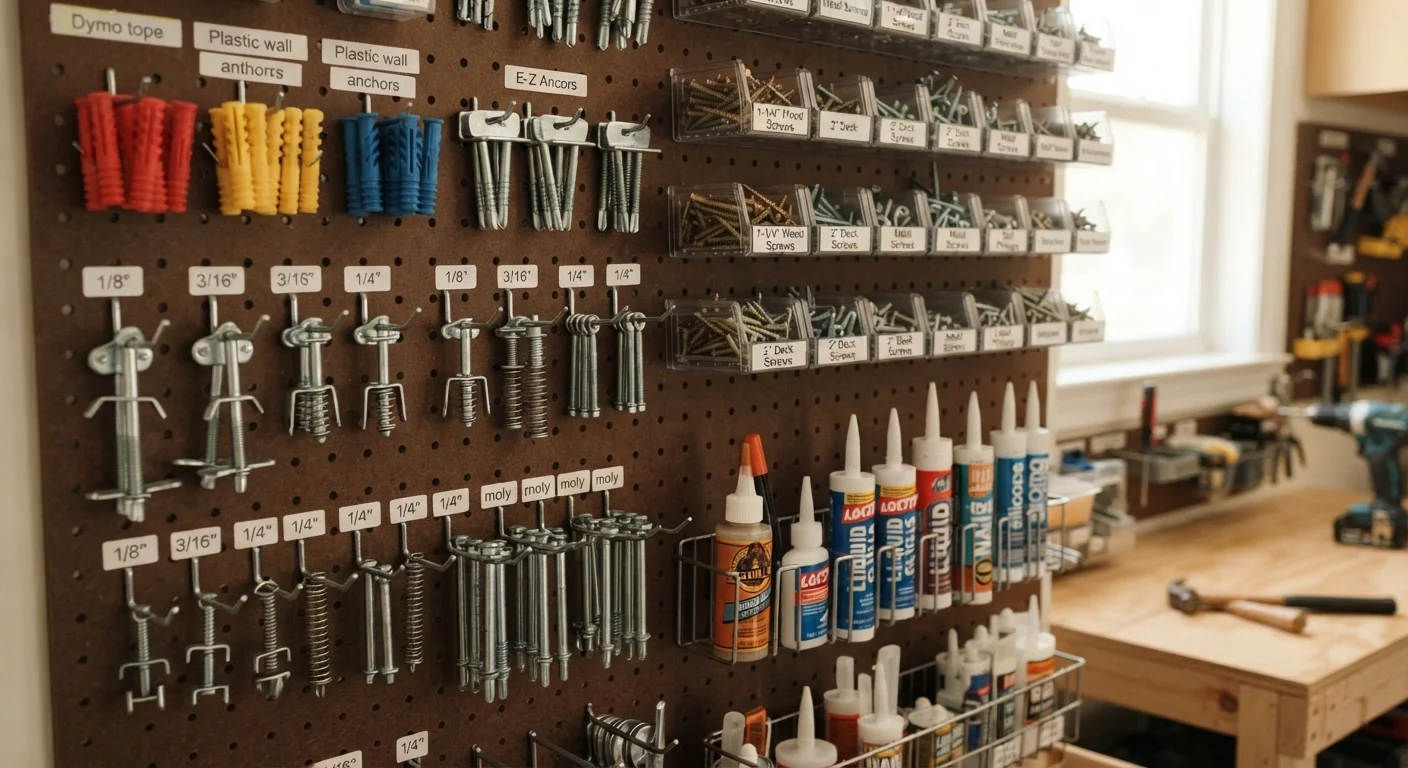
Photo: TotemBuzz.com | Your Lifestyle Companion editorial
Why Matching the Fixing to the Surface Matters
A shelf that pulls free from the wall—or a curtain rod that takes a chunk of drywall with it—usually isn't a strength problem. It's a matching problem: the wrong fastener for the surface. Using a standard nail in hollow drywall, for example, gives it almost nothing to grip. Understanding what your wall is made of, and how much weight your fixing must bear, is the essential first step before you buy a single anchor or squeeze a tube of adhesive.
This guide works as a quick-reference lookup: find your surface, find your load, and pick the right fastener. If you're still building out your tool collection, see our guide to essential home repair tools to make sure you have what you need to install fixings correctly.
Toggle bolt
A two-part wall anchor consisting of a machine screw and a spring-loaded metal wing. Once pushed through a hole in hollow drywall, the wings spring open and press flat against the back of the wall, distributing the load across a wider area.
Plug anchor (Rawlplug)
A cylindrical plastic or fiber insert pushed into a pre-drilled hole in masonry or solid walls. When a screw is driven into it, the plug expands outward and grips the surrounding material.
Molly bolt
A hollow-wall anchor with a threaded bolt inside a metal sleeve. As the bolt is tightened, the sleeve collapses and flattens behind the wall surface, spreading the load. Useful for thin or hollow surfaces.
Chemical anchor
A heavy-duty fixing system using a resin or epoxy injected into a drilled hole. The resin bonds to both the masonry and the bolt after curing, providing very high load capacity. Typically used for structural or outdoor applications.
Shear load
Force acting downward along a wall surface—the direction in which most shelf and picture-hanging loads act. Anchors are generally strongest in shear and weaker under direct pull-out force.
Stud
A vertical timber or metal framing member hidden inside a finished wall. Screwing directly into a stud is the strongest way to hang heavy items on interior walls without specialty anchors.
Wall Anchors: A Surface-by-Surface Breakdown
Wall anchors are designed to spread load behind a surface that a screw alone cannot grip. The key variables are wall type and load weight.
| Anchor for hollow drywall, light load | Plastic expansion anchor (up to ~20 lb) |
| Anchor for hollow drywall, medium load | Toggle bolt or molly bolt (20–50 lb) |
| Anchor for solid masonry | Plug anchor or sleeve anchor (requires hammer drill) |
| Strongest interior fixing | Screw driven directly into a wall stud |
| No-drill option for smooth surfaces | Removable adhesive strips (typically up to 5 lb per strip) |
| Surface prep for adhesive strips | Clean with rubbing alcohol; wait full cure time before loading |
Hollow Drywall (the most common interior wall)
- Light loads (under 20 lb): Plastic expansion anchors work for small hooks and picture frames. Drill a pilot hole, tap the anchor flush, then drive the screw in to expand the wings behind the board.
- Medium loads (20–50 lb): Toggle bolts (sometimes called butterfly anchors) are the reliable choice for shelving brackets and mirrors. Once through the wall, the spring-loaded wings open flat against the back of the drywall.
- Heavy loads or close to a stud: Always try to locate a stud first using an inexpensive stud finder. Driving a screw directly into a wood stud is stronger than any drywall anchor.
Brick, Concrete, and Masonry
Solid masonry requires a masonry drill bit and a hammer drill to create a clean hole. Plug anchors (also called Rawlplugs) are pushed into the hole; as the screw is driven in, the plug expands and grips the masonry tightly. For very heavy loads—outdoor fittings, overhead brackets—a sleeve anchor or chemical anchor provides significantly more holding power. Chemical anchors use a resin injected into the hole that bonds to both the screw and the masonry after curing.
Hollow-Core Doors and Thin Panels
These surfaces have very little material to anchor into. Use molly bolts (also called hollow-wall anchors), which spread load across a wider area behind the panel. Keep loads very light and consider whether adhesive hooks might be a safer option.
Adhesives and Adhesive Hooks: When Not to Drill
Modern construction adhesives and removable adhesive strips have made it genuinely practical to hang items without making a hole—provided you stay within the product's stated weight rating and follow surface-preparation instructions closely.
When Adhesive Is Not Enough
Construction Adhesive
Used for bonding timber, baseboards, paneling, and similar building materials rather than for hanging items. It creates a near-permanent bond and is not the right choice when you might need to remove something later. Apply to clean, dry surfaces and allow full curing time before adding stress to the joint.
Removable Adhesive Strips and Hooks
These work well on smooth, painted, or tiled surfaces for lightweight items—typically under 5 lb per strip, though ratings vary. The critical steps are cleaning the surface thoroughly with rubbing alcohol before application and waiting the full bonding time (usually 1 hour) before hanging anything. Removing them by pulling the tab slowly and straight down—not outward—is what prevents paint damage. They are not suitable for textured, rough, or freshly painted walls (less than four weeks old), or for humid surfaces like the inside of a shower.
Planning a gallery wall? Removable strips can work well for lighter frames. Our gallery wall planning guide covers layout strategies before you commit to any holes.
Quick Decision Guide and Common Mistakes
Before picking up any fastener, run through three questions: What is the wall made of? How heavy is the load? Is this permanent? Answering these narrows your choice quickly.
Common First-Timer Mistakes
- Using a plastic expansion anchor in drywall without backing. Standard expansion anchors need solid material to push against. In hollow drywall, they spin or pull through. Use a toggle or molly bolt instead.
- Overloading adhesive strips. Each strip has a maximum weight rating. Stacking items or hanging something heavier than rated causes delayed failure—often days after installation.
- Skipping the pilot hole in masonry. Forcing a screw into brick without drilling cracks the masonry and gives a weak hold. Always drill first.
- Ignoring load direction. Many anchors are rated for downward (shear) loads but are much weaker under outward (pull-out) force. A towel bar, for instance, gets pulled outward every time it is used.
If a fixing does fail and leave a hole behind, our article on patching drywall holes walks through repairs from small nail pops to larger gaps.
16 inches
Standard spacing between wall studs in US homes
Most US residential construction uses studs spaced 16 inches on center, making a stud finder a worthwhile investment for frequent DIYers.
1 hour
Minimum bonding time for most adhesive strips
Many removable adhesive strip manufacturers recommend waiting at least one hour after application before hanging any weight.
This article provides general home improvement information only. For work involving structural walls or load-bearing elements, consult a qualified contractor. Always verify local building code requirements before beginning any renovation project.
The content on this site is for informational purposes only and is not a substitute for professional advice. Always consult a qualified professional for guidance specific to your situation.