Photo: TotemBuzz.com | Your Lifestyle Companion editorial
Before you buy a single seed, use this checklist to assess your space, soil, time, and goals — and set your garden up to succeed.
Key Takeaways
Assessing your site's sunlight and soil before planting prevents the most common first-year mistakes.
Matching plant choices to your available time and space sets realistic expectations from the start.
Soil preparation is often more important than which seeds you choose.
A simple watering and maintenance plan prevents gaps that can derail a new garden quickly.
Understanding your USDA hardiness zone and local frost dates guides nearly every timing decision.
Why Planning Before Planting Pays Off
Most first-season gardeners lose enthusiasm not because gardening is hard, but because they skipped a few foundational steps at the start. They plant tomatoes in a shady corner, buy more seedlings than their schedule allows, or skip soil testing and wonder why nothing thrives. This checklist addresses all of that — before you spend a dollar or dig a single hole.
Think of it as a quick audit of your space, your time, and your goals. Work through each section at a relaxed pace. If you're starting completely from scratch, pair this checklist with our complete first-timer's walkthrough for deeper context on each step.
Site Assessment
Track sunlight across your intended garden area at three points during the day — morning, midday, and late afternoon — to determine whether you have full sun (6+ hours), partial sun, or shade.Must
Check drainage by observing whether water pools in your chosen spot after rain; standing water for more than an hour can indicate drainage issues that need to be corrected before planting.Must
Measure your available planting area so you can match the number and size of plants to your actual space, not just your wishlist.Must
Identify any nearby structures, trees, or fences that might cast shade, compete for root space, or block wind — all of which affect plant health.Should
Soil Preparation
Collect a small soil sample and submit it to your local Cooperative Extension Service for a basic test that reveals pH and nutrient levels — this inexpensive step prevents guesswork.Must
Amend your soil based on test results; most vegetable gardens thrive in a slightly acidic to neutral pH range of roughly 6.0 to 7.0.Must
Work in compost or aged organic matter to improve soil structure, drainage, and nutrient content regardless of what the test shows.Should
Clear the area of weeds, grass, and debris before any planting so you start with a clean growing bed rather than competing with established root systems.Must
Plant Selection and Timing
Look up your USDA Plant Hardiness Zone and note your average last spring frost and first fall frost dates, which determine your safe growing window.Must
Choose plants suited to the sunlight and soil conditions you documented in your site assessment — resist the urge to plant what looks appealing if your conditions don't support it.Must
Start with a short, focused plant list of five or fewer varieties for your first season; a smaller, successful garden teaches more than an ambitious, overwhelmed one.Should
Confirm whether your chosen plants should be direct-seeded outdoors or started indoors several weeks before the last frost date, and note those dates on a calendar.Should
Watering and Maintenance Planning
Identify your water source and determine how you'll deliver water consistently — a nearby outdoor tap with a soaker hose or drip line is more reliable than relying solely on rainfall.Must
Estimate how many hours per week you can realistically commit to garden care, including watering, weeding, and checking for pests, and select plant types that match that commitment.Must
Plan for a 2–3 inch layer of mulch around plants to reduce weeding time, retain moisture, and moderate soil temperature throughout the season.Should
Create a simple weekly garden log — even a few handwritten notes — to track what you planted, when, and how it performed, so you can improve next season.Nice to have
Safety and Practical Logistics
Call 811 (the national dig-safe hotline) before breaking ground in any new area to have underground utility lines marked at no cost.Must
Check whether any plants on your list are toxic to children or pets if your household includes either, and plan accordingly.Must
Verify HOA rules or local ordinances if you plan to install raised beds, fencing, or a water feature — some jurisdictions require permits for structural garden elements.Should
Stock basic protective gear — gloves, eye protection, and sunscreen — and establish a habit of using them each time you garden.Should
Tools and Resources You'll Want Nearby
You don't need much to run through this checklist — most of it is observation and note-taking. But a few basic tools will help you gather the information you need accurately.
Required
Soil test kit or Cooperative Extension submission box
Determines your soil's pH and nutrient levels so you can amend accurately rather than guessing.
Required
Measuring tape
Lets you accurately size your planting area so you can plan spacing without overcrowding.
Optional
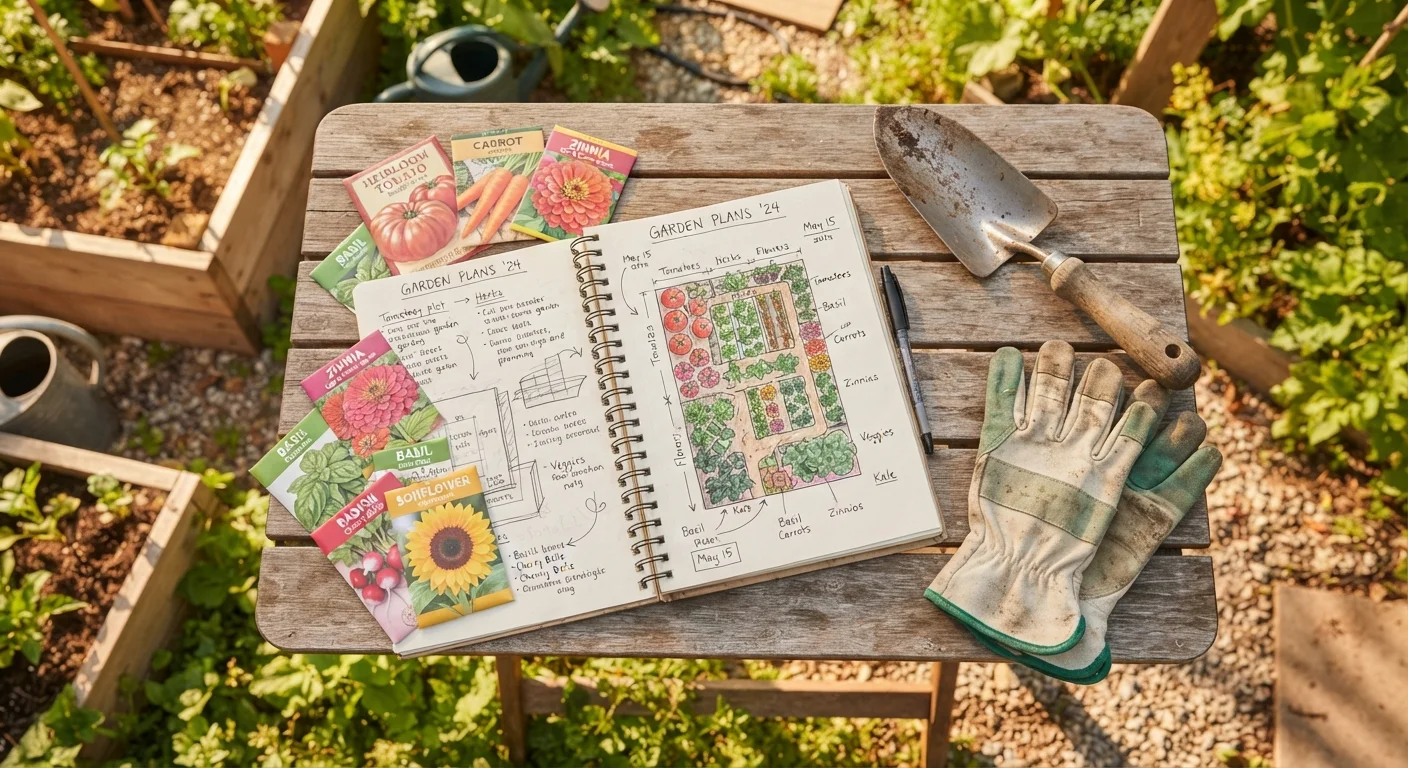
Garden journal or notebook
Used to record plant selections, dates, observations, and lessons that improve future seasons.
Optional
Compass app (smartphone)
Helps you quickly identify which direction your garden faces, which affects morning vs. afternoon sun exposure.
Required
Compost or bagged aged compost
Improves soil structure and organic matter content during bed preparation.
If you're working with a small outdoor space or no yard at all, our guide on container gardening without the frustration covers how to adapt most of these planning steps to pots and balconies.
Don't Skip the 811 Call
Before you dig any new garden bed — even one that seems shallow — call 811 to have underground utility lines marked. This free service is available across the US and takes only a few days. Striking a buried gas, water, or electrical line while digging is a serious safety hazard and can result in costly repairs.
Timing: The Factor Most Beginners Underestimate
Even a perfectly planned garden can struggle if timing is off. Planting cool-season crops like lettuce or spinach too late in spring, or starting warm-season vegetables before frost risk has passed, are among the most common early mistakes. Your local Cooperative Extension Service office — often run through your state's land-grant university — is one of the most reliable free resources for region-specific planting calendars.
For a deeper look at how seasonal rhythms should guide your garden tasks throughout the year, see our article on reading the seasons. Getting comfortable with seasonal cues will serve you well beyond just the first year.
Frost Dates Are Not Guarantees
Average last frost dates are historical estimates, not certainties. Local microclimates, elevation, and year-to-year weather variation mean that late frosts can and do occur after the listed date in your area. For tender transplants, keep an eye on the nightly forecast for the first several weeks after planting and have row cover or old bedsheets ready to protect plants if temperatures are expected to dip near freezing.
Home & Garden Editorial Team is the collective byline for our editorial team and contributor network. Articles published under this byline or an editorial pen name are researched, written, and reviewed according to our editorial standards for clarity, consistency, and independence before publication.
The content on this site is for informational purposes only and is not a substitute for professional advice. Always consult a qualified professional for guidance specific to your situation.