
Composting Explained: Turning Kitchen Scraps Into Garden Gold

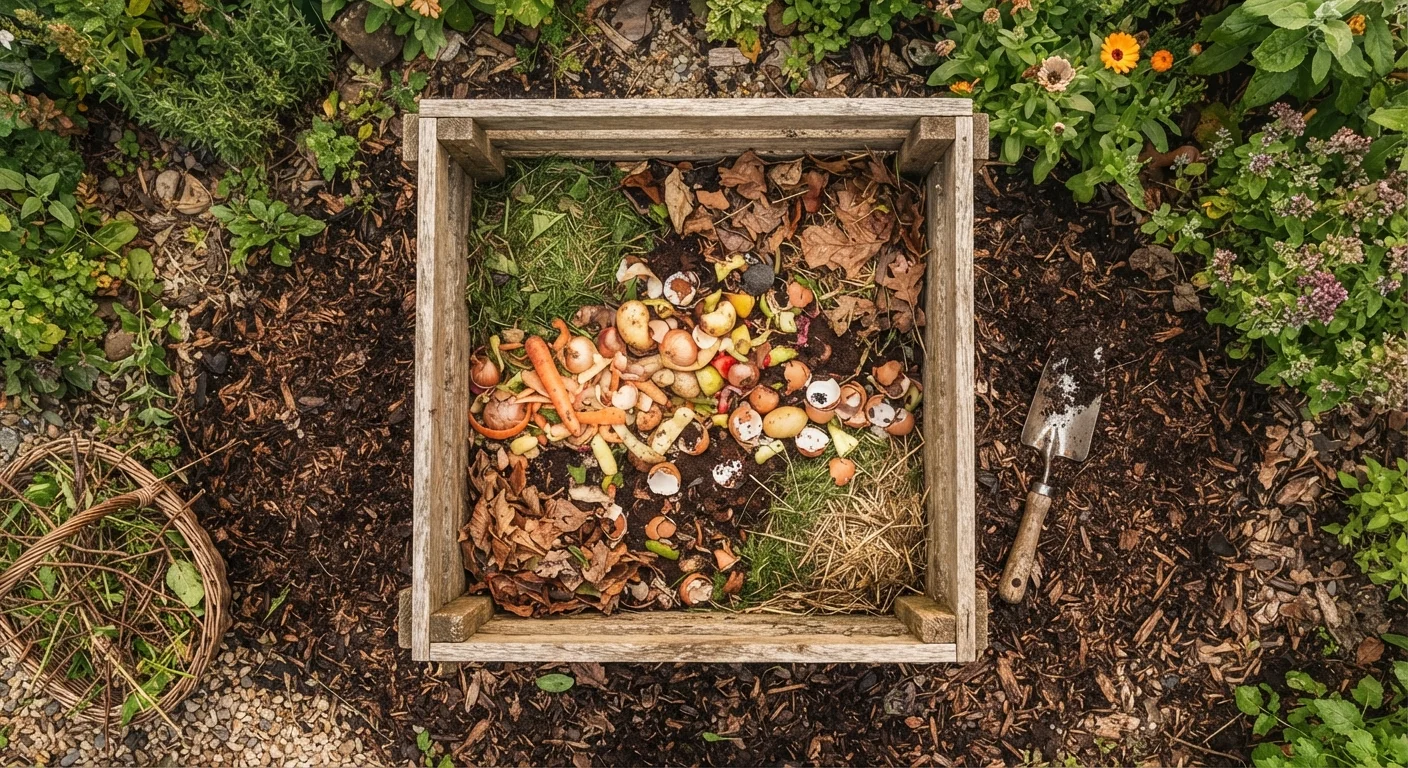
Photo: TotemBuzz.com | Your Lifestyle Companion editorial
Key Takeaways
- Compost is made by decomposing organic kitchen and yard waste into nutrient-rich soil amendment.
- A healthy compost pile needs a balance of 'browns' (carbon) and 'greens' (nitrogen), plus moisture and air.
- Most food scraps can be composted, but meat, dairy, and oily foods are generally best avoided in home bins.
- Finished compost can take anywhere from two months to a year depending on your method and maintenance.
- Compost improves soil structure and supports plant health differently from synthetic fertilisers.
What Composting Actually Is (and Why It Matters)
At its core, composting is controlled decomposition. Organic materials break down through the action of bacteria, fungi, and small organisms like worms and insects. The end result — finished compost — looks like dark, crumbly soil and smells faintly of earth. When mixed into garden beds, it improves soil texture, helps soil hold moisture, and feeds the microorganisms that keep plant roots healthy.
For beginners building their first garden, understanding compost is foundational. It's one of the most cost-effective ways to improve poor soil, and it diverts food waste from the landfill at the same time. If you're just getting started with gardening overall, our complete first-timer's walkthrough covers how compost fits into the bigger picture of setting up a garden from scratch.
~30%
Of household waste that could be composted
The U.S. Environmental Protection Agency estimates that food and yard waste together make up roughly 30% of what Americans throw away.
6–8 weeks
Minimum time for hot composting
An actively managed hot compost pile, turned regularly and kept moist, can produce usable compost in as little as six to eight weeks under ideal conditions.
1 billion+
Microbial organisms per gram of compost
Finished compost teems with microbial life — university soil science programs note that healthy compost can contain over one billion microorganisms per gram.
The Two Ingredients Every Compost Pile Needs
Successful composting relies on balancing two categories of organic material:
- Browns (carbon-rich materials): Dry leaves, cardboard, newspaper, straw, paper bags, and wood chips. These give microorganisms energy and prevent the pile from becoming a soggy, smelly mass.
- Greens (nitrogen-rich materials): Vegetable and fruit scraps, coffee grounds, fresh grass clippings, and plant trimmings. These supply the protein that microorganisms need to reproduce and do their work.
A commonly cited guideline is to aim for roughly two to three parts browns for every one part greens by volume — though this doesn't need to be precise. If your pile smells like ammonia, add more browns. If it's dry and not breaking down, add more greens or a splash of water.
Shred or Chop Materials Before Adding
Moisture matters too. The pile should feel about as damp as a wrung-out sponge. Turning it every week or two introduces oxygen, which speeds up decomposition and prevents the anaerobic (oxygen-free) conditions that cause unpleasant odors.
What to Add and What to Leave Out
Most plant-based kitchen waste is fair game: fruit peels, vegetable trimmings, eggshells, coffee grounds, and tea leaves. From the yard, add grass clippings, fallen leaves, and small plant cuttings.
Items to avoid in a standard home compost bin include:
- Meat, fish, and bones — attract rodents and create odors
- Dairy products and oily foods — decompose slowly and can turn rancid
- Pet waste — may contain pathogens not eliminated by home composting temperatures
- Diseased plants — can spread plant disease through finished compost
- Treated wood or glossy paper — may introduce unwanted chemicals
Municipal Composting Programs Vary
It's worth knowing that many gardening myths circulate about what belongs in a compost pile — coffee grounds being too acidic, or citrus scraps being harmful, for instance. Our article on gardening myths that trip up new growers separates evidence from folklore on questions like these.
Choosing a Composting Method That Fits Your Space
There's no single correct composting setup — what works depends on your space and how much time you want to invest.
Outdoor Pile or Bin
The simplest approach: designate a corner of your yard, or use an open-bottomed bin placed on soil. This is a low-effort, passive method. It takes longer but requires minimal management.
Compost Tumbler
A sealed rotating drum that speeds up decomposition by making it easy to turn the contents. Good for smaller yards where tidiness matters.
Vermicomposting (Worm Bin)
Red wiggler worms process food scraps in a compact indoor or outdoor container. This is a great option for apartment dwellers or anyone with limited outdoor space. If you're already growing vegetables in a small space, a worm bin can supply a steady stream of nutrient-rich castings for your containers.
Once compost is finished — dark, earthy-smelling, and no longer recognisable as its original ingredients — work it into garden beds, use it as a top dressing around plants, or mix it into potting soil. For a deeper look at how compost compares to and complements fertilisers, see our guide on fertiliser vs. compost.
Frequently Asked Questions
The content on this site is for informational purposes only and is not a substitute for professional advice. Always consult a qualified professional for guidance specific to your situation.