
Why 'Sale' Pricing Deserves Healthy Scepticism

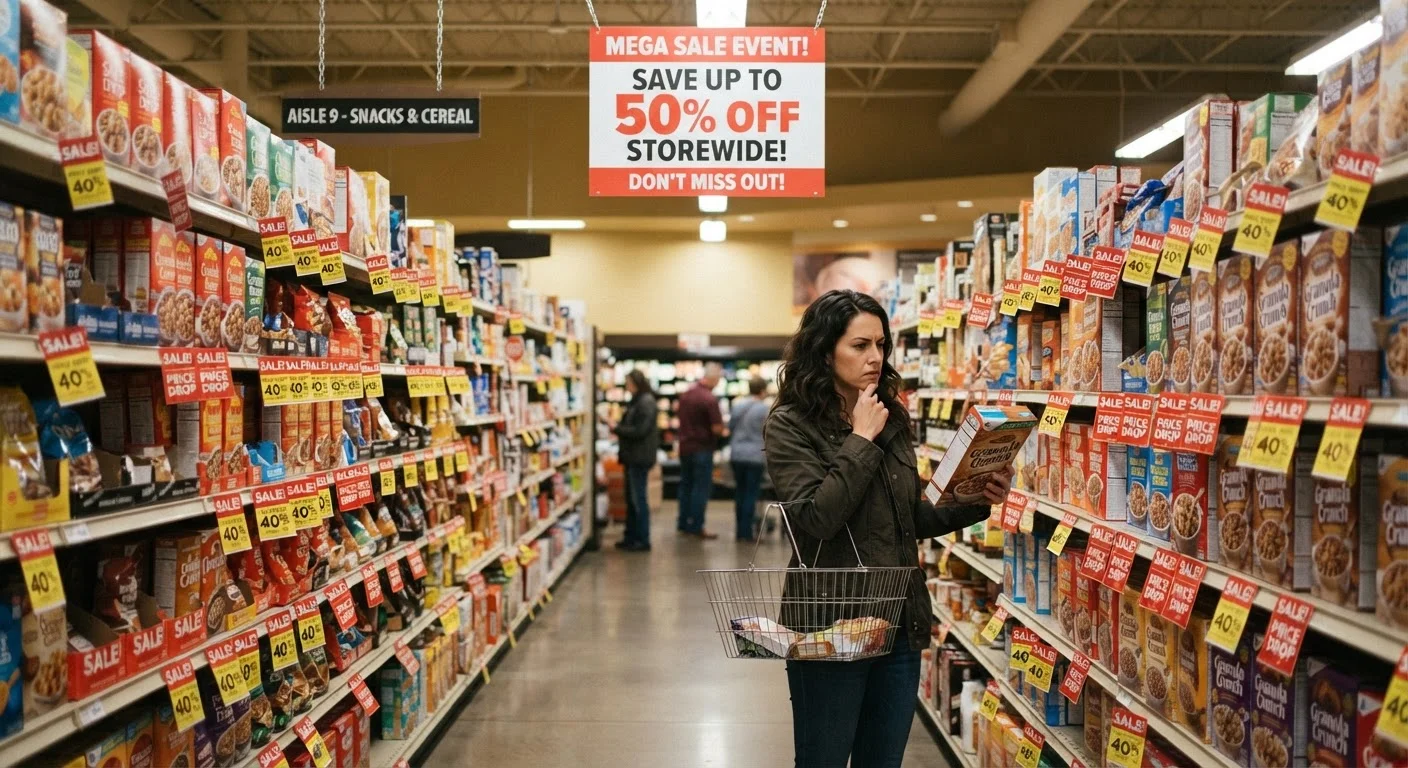
Photo: TotemBuzz.com | Your Lifestyle Companion editorial
Key Takeaways
- Reference prices shown next to sale prices are not always independently verified or consistently applied.
- Inflated 'original' prices can make a modest discount look far more significant than it really is.
- US consumer protection laws address deceptive pricing, but enforcement varies by state and retailer.
- Comparing a product's current price across multiple sellers is more reliable than trusting a single sale claim.
- Urgency language like 'today only' is a common retail technique, not an accurate signal of real scarcity.
What Reference Pricing Actually Is
When you see a product listed at $79.99 crossed out next to a bold $39.99, you're looking at reference pricing — a practice where a retailer displays a higher 'was' or 'original' price alongside the current selling price to frame the deal. The implied message is clear: you're saving half. But where did that original number come from, and how long was the item actually sold at it?
In many cases, reference prices reflect a manufacturer's suggested retail price (MSRP), a price briefly offered before a promotion, or a figure that few or no customers ever paid. Federal Trade Commission (FTC) guidelines in the US state that a former price used as a reference should be a genuine price at which the item was openly offered for a reasonable period. However, 'reasonable' is interpreted broadly, and retailers have significant latitude in practice.
Understanding this mechanism doesn't mean every sale is misleading — genuine discounts exist. It means asking one simple question before getting excited: what was this item actually selling for, consistently, before today?
Common Myths About Sale Pricing
Several persistent beliefs make it harder for shoppers to evaluate discount claims clearly. The myth-and-fact pairs below address the most common ones.
Myth
If the original price is shown crossed out, it must have been the real selling price.
Fact
Reference prices are not independently audited and may reflect an MSRP, a brief historical price, or a figure rarely charged to actual customers.
Retailers set their own reference prices in most cases. A crossed-out figure might be the manufacturer's suggested retail price, a price the item held for just a few days, or even a price charged only on a single channel. The FTC requires former prices to be genuine, but defining and enforcing 'genuine' at scale is difficult. The crossed-out price is a marketing signal, not an independently verified benchmark.
Myth
Major sale events like holiday weekends always feature the lowest prices of the year.
Fact
Research by consumer organizations has consistently found that many 'sale event' prices are matched or beaten at other points in the year.
Price tracking data from major retail platforms shows that items promoted heavily during high-profile shopping periods are often priced the same — or even higher — than at other times of year. Some prices are temporarily raised before a sale event to make the subsequent discount appear larger. Shopping outside peak sale windows, or tracking prices over time, often reveals better or comparable deals.
Myth
A bigger percentage discount always means a better deal.
Fact
Percentage discounts are only meaningful if the starting price is accurate, and a large percentage off a high reference price may still leave you overpaying.
A 60% discount sounds dramatic, but if the reference price was inflated or never widely charged, the 'discounted' price may be close to or above what competitors regularly charge. Focus on the actual price you'll pay and what that price looks like across the market — not on the percentage figure used to frame the promotion. Our guide on assessing true value explains how to evaluate deals beyond the headline number.
Myth
'Limited time only' means you genuinely need to act fast to get the price.
Fact
Urgency language is a standard retail technique; many 'limited time' promotions are extended, repeated, or replaced by equivalent offers.
Urgency messaging is designed to shorten your decision window and reduce comparison shopping. In practice, promotional prices are often extended when they expire, repeated in the next sale cycle, or matched by a competitor without a countdown timer. Feeling rushed into a purchase is a reason to pause — not to accelerate. If a deal disappears and doesn't return, that's informative; if it keeps appearing, the urgency framing was largely rhetorical.
Myth
Online prices are more transparent and reliable than in-store prices.
Fact
Online retailers use dynamic pricing algorithms, meaning the same product can display different prices to different users or at different times of day.
Dynamic pricing — where prices adjust automatically based on demand signals, browsing history, location, or time — is widely used by major e-commerce platforms. This means two people viewing the same listing may see different prices. It also means a sale price shown one hour may change the next. Using a private or incognito browser window, or a price-tracking tool, can give you a clearer picture of where a price actually sits in its range. For more on understanding what you're actually paying for in digital contexts, see our overview of subscription traps.
How to Check Whether a Discount Is Real
The most reliable tool available to everyday shoppers is price history. Several browser extensions and third-party websites track how a product's price has changed over time on major retail platforms. If an item's 'original' price only appeared briefly the week before a sale event, that context tells you a lot.
~33%
Of 'Black Friday' deals priced higher beforehand
Consumer advocacy research has found that a significant portion of items promoted during major sale events were cheaper or the same price at other times in the preceding months.
90 days
Reference price window required in California
California law requires that a 'former price' used in advertising reflect the prevailing market price within the 90 days preceding the sale claim.
A few other practical habits help:
- Search the same product on multiple retail sites before purchasing. If the 'sale' price matches what others charge regularly, the discount framing is mostly cosmetic.
- Use unit pricing when comparing packaged goods — see our guide to unit pricing for how this works across product categories.
- Ignore urgency language like 'ends tonight' or 'only 3 left' unless you can independently confirm stock levels or the promotion end date.
- Check return and price-match policies. Retailers with strong price-match guarantees are often incentivized to price accurately from the start.
For a broader look at evaluating what you're actually getting for your money, see our piece on understanding value beyond the price tag.
Urgency and Scarcity Claims Deserve Scrutiny
Your Rights and What Regulators Cover
Deceptive pricing isn't just a consumer frustration — it can be a legal issue. The FTC's guidelines on deceptive pricing have been in place for decades, and several states have additional statutes that regulate how reference prices must be substantiated. California, for instance, has specific rules requiring that a former price be the prevailing market price within the preceding 90 days.
If you believe you've encountered genuinely misleading pricing, you can file a complaint with the FTC at reportfraud.ftc.gov or contact your state attorney general's consumer protection office. These reports help regulators identify patterns across retailers.
It's worth noting that voluntary industry standards and self-regulatory bodies also play a role, though their enforcement power is limited. Your most effective tool as a consumer remains informed comparison — not relying on a retailer's framing alone. For related tactics retailers use to increase your spend, the upsell playbook article covers common patterns worth recognizing.
This article is for general informational and educational purposes only and does not constitute legal or financial advice. Consumer protection laws vary by state and situation; consult a qualified professional or your state attorney general's office for guidance specific to your circumstances.
The content on this site is for informational purposes only and is not a substitute for professional advice. Always consult a qualified professional for guidance specific to your situation.