
Unit Pricing: The Supermarket Skill That Travels to Every Aisle

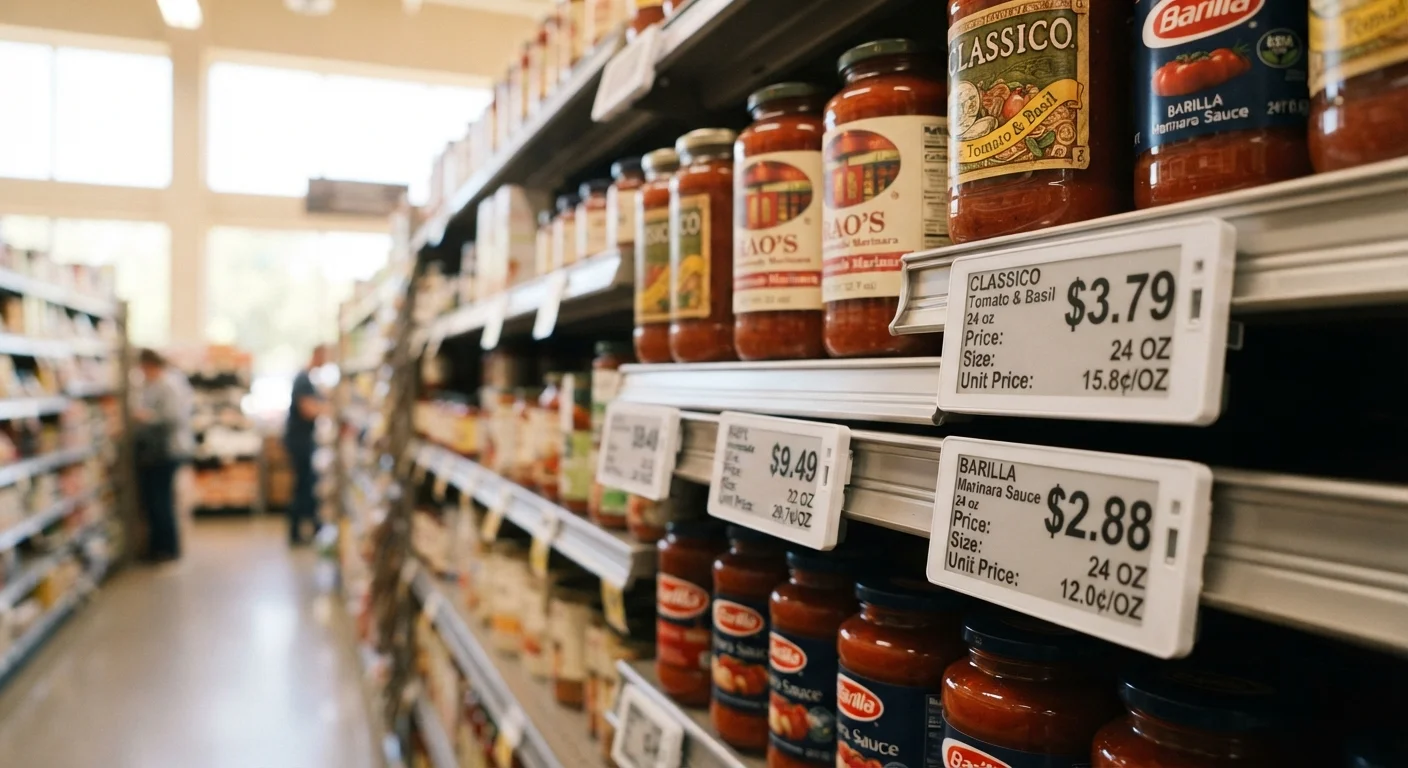
Photo: TotemBuzz.com | Your Lifestyle Companion editorial
Key Takeaways
- Unit pricing converts any product's total price into a cost per standard measure, enabling fair comparison.
- Most US grocery stores are required to display unit prices on shelf tags, though formats vary.
- The skill applies beyond groceries — to household goods, personal care products, and more.
- Bigger packages don't always offer a lower unit price; always check before assuming.
- Combining unit pricing with quality awareness leads to smarter decisions than price alone.
What Unit Pricing Actually Tells You
Unit pricing is a method of expressing a product's cost in terms of a standard, comparable measure — typically per ounce, per pound, per liter, or per individual item. Rather than comparing a $3.49 bottle against a $5.29 bottle and assuming the cheaper one is the better value, unit pricing lets you see what each product actually costs per equivalent amount.
The concept is straightforward: it removes the packaging variable. Manufacturers set their own pack sizes, and those sizes are rarely designed for easy consumer comparison. Unit pricing levels the field.
In the United States, many states have regulations requiring grocery stores to display unit prices on shelf tags, though the format and consistency of labeling varies. Outside grocery stores, unit pricing information may be absent entirely — which is when the ability to calculate it yourself becomes especially useful.
Bigger Packaging Is Not Automatically Cheaper
This skill pairs naturally with broader shopping habits. If you're working toward a consistent approach to purchases, shopping with a budget offers practical principles that complement unit pricing well.
How to Use Unit Pricing Step by Step
What you will need
Smartphone calculator
Divide total price by quantity or weight to calculate unit price on the spot.
Notepad or notes app
Record unit prices across stores or product categories for later comparison.
Locate the unit price on the shelf label
In most US states, grocery stores are required to display a unit price alongside the total retail price on shelf tags. The unit price is typically printed in smaller text and expressed as a cost per ounce, per fluid ounce, per count, per pound, or per 100 milliliters — depending on the product category.
Look for a label format like $0.18/oz or $1.24 per 100g. It is usually in the lower left or right corner of the shelf tag. If no unit price is shown, move to Step 2.
Calculate the unit price manually when needed
If the shelf tag doesn't show a unit price — or if you want to verify the displayed figure — divide the total price by the total quantity.
Formula: Unit Price = Total Price ÷ Total Quantity
Example: A 32 oz bottle costs $4.48. Divide $4.48 by 32 = $0.14 per ounce. A 12 oz bottle costs $2.16. Divide $2.16 by 12 = $0.18 per ounce. The larger bottle is cheaper per ounce in this case.
Compare products using the same unit of measure
Unit pricing only works as a comparison tool when both products are measured in the same units. If one label shows price per ounce and another shows price per pound, convert: there are 16 ounces in a pound, so multiply the per-ounce price by 16 to get the per-pound equivalent.
This step is especially important in personal care and cleaning aisles, where package sizes vary widely and labels are less standardized than in the food section.
Factor in quality and usability alongside unit price
A lower unit price is only a genuine saving if the product meets your actual needs. A concentrated cleaner with a lower price per fluid ounce may require less product per use than a diluted version — making a comparison of raw unit prices misleading.
Similarly, a food product with a low cost per ounce may require larger serving sizes to be effective, or may be lower quality in a way that affects satisfaction. Unit pricing is a strong starting point, not the whole picture. See how to assess true value beyond price for a fuller framework.
Apply the same method in non-grocery aisles
Unit pricing transfers directly to any category where products come in measurable quantities: laundry detergent (per load or per ounce), paper towels (per sheet), bottled water (per fluid ounce), vitamins (per tablet), and pet food (per pound) are all fair game.
In hardware and home goods, the same logic applies to paint (per square foot of coverage), batteries (per unit), or trash bags (per bag). Any time you see two products with different pack sizes or volumes, unit pricing can neutralize the packaging difference.
Sale Prices and Unit Price Consistency
Unit Measures Aren't Always Standardized
Common Situations Where This Pays Off
Once the habit is in place, unit pricing surfaces value differences that are otherwise invisible. Some of the most common situations where it makes a measurable difference:
- Multipacks vs. singles: A six-pack of canned goods may or may not cost less per can than buying individually — check before loading up.
- Store brand vs. name brand: Store brands frequently win on unit price, but not always, particularly when name-brand products are on promotion.
- Concentrated products: Cleaning sprays, detergents, and shampoos marked 'concentrated' or '2x formula' require smaller volumes per use, which affects what the real unit cost is relative to a standard version.
- Seasonal or promotional sizing: Holiday gift packs and limited-run sizes are often priced at a premium per unit despite their larger appearance.
The goal isn't to optimize every single purchase to an extreme degree — it's to build a reliable default habit that prevents systematic overpayment on items you buy regularly.
The content on this site is for informational purposes only and is not a substitute for professional advice. Always consult a qualified professional for guidance specific to your situation.