
Small Pets for Families With Children: Rabbits, Guinea Pigs, and Beyond

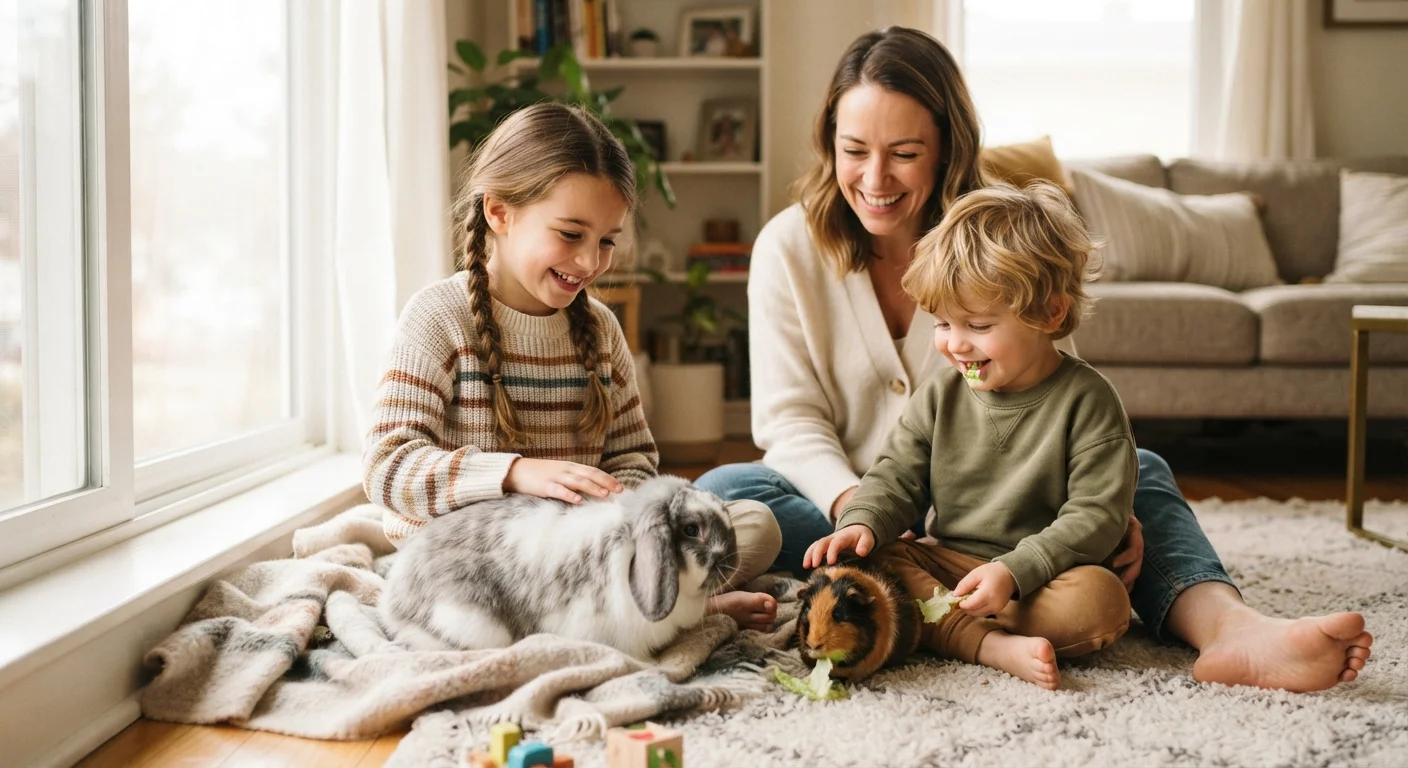
Photo: TotemBuzz.com | Your Lifestyle Companion editorial
Key Takeaways
- Small pets are not automatically low-maintenance — each species has specific daily care requirements.
- Rabbits and guinea pigs are social animals that thrive with gentle, consistent handling from older children.
- Supervision is essential whenever young children interact with any small animal.
- Some small pets, like hamsters, are nocturnal and may not suit families expecting daytime interaction.
- A veterinarian familiar with small mammals (an exotic vet) is an important resource before and after adoption.
Are Small Pets the Right Fit for Your Family?
Small mammals often feel like a natural first step for families curious about pet ownership — they take up less space than a dog, seem less demanding than a cat, and genuinely charm children on first meeting. But smaller doesn't always mean simpler. Each species comes with its own social needs, housing requirements, and health considerations that are worth understanding before bringing anyone home.
This list walks through the most popular small pets for families with children, giving you an honest picture of what daily life actually looks like. If you're weighing small pets against larger companions, our guide to dogs versus cats for families offers a useful contrast. And for broader preparation, understanding what changes when a pet joins your household is a great place to start.
Allergies Are Worth Checking First
Small Pets Worth Knowing About
Guinea Pigs
Guinea pigs are frequently recommended by veterinarians and animal welfare organizations as one of the more child-friendly small mammals. They are active during the day, rarely bite when properly handled, and communicate expressively with a range of vocalizations — a feature children tend to love. They are social creatures who generally do better in pairs, so plan on housing at least two together.
Their enclosures need to be spacious (the Humane Society suggests a minimum of 7.5 square feet for two guinea pigs), and they require fresh hay, leafy greens, and vitamin C daily. They can live six to eight years, so this is a genuine long-term commitment.
Guinea pigs are daytime animals with expressive personalities — a genuinely good match for school-age children.
Rabbits
Rabbits are intelligent, affectionate, and capable of forming real bonds with their families — but they are also frequently misunderstood. They are prey animals, which means sudden grabs or being held insecurely can cause significant stress and, in extreme cases, injury from struggling. For that reason, they tend to suit families with children aged eight and older who can learn calm, floor-level interaction rather than constant picking-up.
Rabbits need substantial space, daily exercise outside their enclosure, and a hay-heavy diet. They can live eight to twelve years and benefit from spaying or neutering. For a fuller picture of rabbit care realities, our beginner's look at small pet life is worth reading.
Rabbits bond deeply with patient families but are better suited to older children who can interact calmly.
Hamsters
Hamsters are among the most popular small pets for children, largely due to their compact size and relatively low housing costs. However, there's an important mismatch that families often discover after the fact: hamsters are nocturnal. They sleep through much of the school day and become active in the evening hours, which can lead to frustration for children hoping to play with them in the afternoon.
They are also solitary animals — most species should be housed alone — and some individuals can be nippy if startled or woken abruptly. They tend to suit slightly older children (eight and up) who can handle them gently and understand the animal's schedule rather than their own.
Hamsters are nocturnal, which can disappoint children expecting a daytime playmate — worth knowing upfront.
Rats
Domestic rats are often underestimated as family pets. They are highly intelligent, trainable, and genuinely enjoy human interaction — traits that make them surprisingly engaging companions for children. Unlike hamsters, rats are active during the day and evening, making them easier to connect with on a family schedule. They also rarely bite when socialized from a young age.
Like guinea pigs, rats are social and should be housed in same-sex pairs or groups. They have a shorter lifespan than other small mammals — typically two to three years — which is worth discussing with children honestly before adoption. Their enclosure needs to be roomy and enriched with climbing opportunities and hiding spaces.
Domestic rats are intelligent, trainable, and far more social than their reputation might suggest.
Chinchillas
Chinchillas have velvety soft fur and lively personalities, and they can live fifteen years or more — making them one of the longest commitments in the small pet category. They are crepuscular (most active at dawn and dusk), sensitive to heat, and require dust baths rather than water baths to keep their dense coats healthy.
Chinchillas can be affectionate with patient owners, but they are quick-moving and not always comfortable being held, which makes them a better fit for families with older children who are happy to let the animal set the pace for interaction. They are also more expensive to house and feed than many other small mammals.
Chinchillas can live fifteen-plus years — one of the longest commitments among popular small pets.
Gerbils
Gerbils are curious, active, and entertaining to watch — they dig, burrow, and explore with remarkable energy. They are naturally social and do well in same-sex pairs. Unlike hamsters, gerbils are active throughout the day as well as at night, making interactions more naturally timed with family life.
They are small and fast, which means young children may find them difficult to handle safely without close adult supervision. They tend to suit families who enjoy observing animal behavior as much as hands-on interaction, since watching a pair of gerbils navigate a well-set-up habitat can be genuinely fascinating for curious kids.
Gerbils are active during the day and entertaining to observe — a great fit for naturally curious kids.
Visit an Exotic Vet Before You Adopt
Setting Everyone Up for Success
Whichever small pet your family chooses, a few principles apply across the board. Teach children how to approach animals calmly, read body language, and understand that small animals can feel stressed by sudden movements or loud noise. Supervision during handling — especially for children under seven — isn't optional; it protects both the child and the animal.
For a deeper look at how kids and pets can safely share a home, our guide to pets and young children living together covers the foundational principles clearly. And when the big day arrives, thoughtful introduction strategies can make those first meetings calm and positive for everyone in the room.
This article is for general informational purposes only. For health concerns about your pet, always consult a qualified veterinarian, and for questions about children's safety and wellbeing, consult an appropriate healthcare professional.
The content on this site is for informational purposes only and is not a substitute for professional advice. Always consult a qualified professional for guidance specific to your situation.