
Building a Family Routine That Actually Sticks

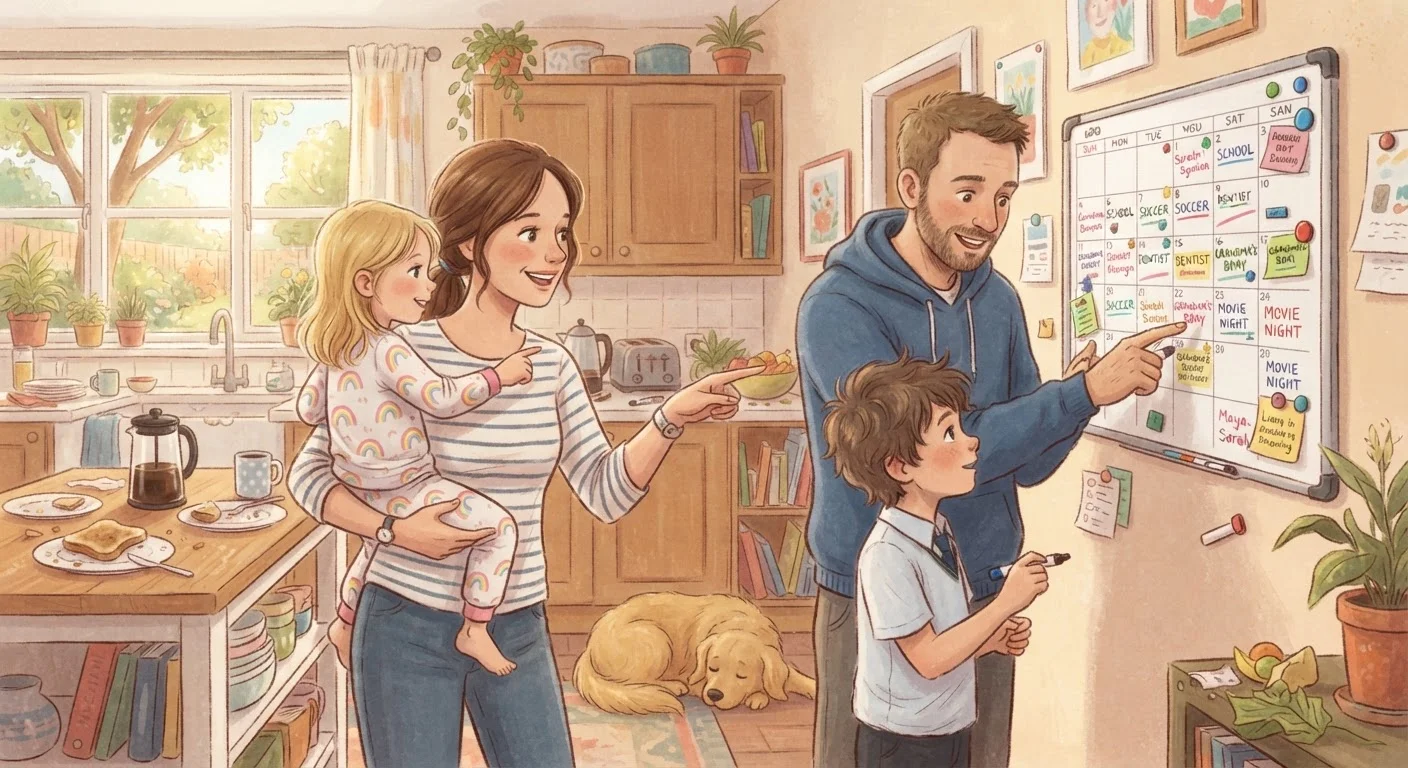
Photo: TotemBuzz.com | Your Lifestyle Companion editorial
Key Takeaways
- Most family routines fail because they're too rigid or built without everyone's input.
- Starting with one or two anchor habits is more effective than overhauling everything at once.
- Visual cues and environmental design — not willpower alone — sustain routines long-term.
- Regular short check-ins help families adjust before small frustrations become big breakdowns.
- Intentional flexibility makes a routine more durable, not less structured.
Why Family Routines Fall Apart (And What to Do Differently)
Most family routines don't fail because the people involved are lazy or disorganized. They fail because the routine was built on wishful thinking — an idealized version of your household rather than the messy, real one. Parents design a beautiful color-coded schedule over the weekend, everyone agrees to it with genuine enthusiasm, and by Wednesday it's quietly abandoned.
The two most common culprits are over-engineering and top-down design. An over-engineered routine tries to schedule every minute of every day, leaving zero room for a slow morning, a cranky toddler, or a last-minute work call. A top-down routine is created by one parent and handed to everyone else — without buy-in, without negotiation, and without accounting for what different family members actually need.
The good news is that neither problem is hard to fix once you recognize it. If you're also wondering whether a strict schedule or a looser framework suits your family better, our piece on structured schedules vs. flexible routines digs into exactly that question.
Start Smaller Than You Think You Should
Before You Start: What Your Family Actually Needs
A useful routine is built around your family's real constraints — not an imaginary household with no traffic, no homework meltdowns, and infinite patience. Before writing a single schedule, spend a few minutes mapping your family's genuine non-negotiables: school start times, work shifts, nap windows, and the activities that already feel relatively smooth.
Then identify the two or three pain points causing the most daily friction. Is it mornings? The after-school crash hour? Bedtime? Focus your first routine effort there rather than trying to fix everything simultaneously. For targeted help with one of the trickiest windows of the day, see our guide to morning routines for families with young children.
It also helps to think about who needs to be involved in shaping the routine. Children who feel heard — even in small ways, like choosing whether bath time happens before or after dinner — are far more likely to cooperate. For strategies on strengthening this kind of family communication, family meetings are worth the awkward first attempt.
What you will need
Step-by-Step: Building a Routine That Holds
With your family's real picture in mind, use the steps below to build something practical. Move at a pace that suits your household — there's no deadline here.
Identify your anchor points
Anchor points are the fixed moments your day already organizes itself around — wake-up, school drop-off, dinner, bedtime. List them out. These become the skeleton of your routine; everything else hangs off them rather than being invented from scratch.
Pick one problem area to tackle first
Resist the urge to fix mornings, evenings, and weekends all at once. Choose the single time of day causing the most household friction and design a simple sequence for it. Once that sequence feels automatic — usually after two to four weeks — you can add another.
Involve every family member in the design
Hold a short family conversation — ten minutes is plenty — where everyone can name one thing that feels hard about the current day and one thing they'd like to protect. Children as young as four or five can participate meaningfully when questions are concrete: "Should we pack bags the night before or in the morning?"
Make the routine visible
A routine that lives only in one parent's head isn't a family routine — it's a personal expectation. Write or draw the sequence somewhere everyone can see it: a whiteboard in the kitchen, a printed checklist on the fridge, or a simple chart on each child's bedroom door. Visual cues reduce the need for reminders and arguments.
Run a two-week trial before judging it
Any new routine will feel awkward and effortful at first — that's not a sign it's wrong, it's a sign it's new. Commit to following the plan as written for two weeks before making changes. This gives everyone enough time to move past the novelty and see what the routine actually feels like once the initial friction settles.
Schedule a regular review
At the end of your two-week trial, sit down as a family for a brief review. What felt smooth? What was consistently skipped or resisted? Adjust one or two things based on real feedback — not hypothetical improvements — and run another trial. Iteration is how routines become genuinely personal to your household.
Keeping the Routine Alive Over Time
Even a well-designed routine needs maintenance. Children grow, seasons change, school years start and end, and what worked beautifully in September can feel strained by February. Rather than letting a struggling routine quietly collapse, build in a monthly five-minute check-in where the family can flag what's working and what isn't. This doesn't need to be formal — dinner table conversation works fine.
When disruptions happen (and they will), treat them as data rather than failures. A vacation that throws everything off isn't a sign the routine is broken; it's a normal interruption. Returning to familiar anchors — the same bedtime, the same morning sequence — after a disruption actually reinforces the habit rather than undermining it.
Shared meals are one of the most powerful and flexible anchors a family can have. If you'd like to understand why they matter so much, the role of shared meals in family wellbeing is a great next read. And if your evenings feel chaotic, consider pairing your new routine with a calmer wind-down — our overview of building a wind-down routine that actually supports sleep offers a simple framework.
Routines Should Reduce Stress, Not Add It
The content on this site is for informational purposes only and is not a substitute for professional advice. Always consult a qualified professional for guidance specific to your situation.