
Tile vs. Laminate Flooring: What First-Timers Need to Know Before Choosing

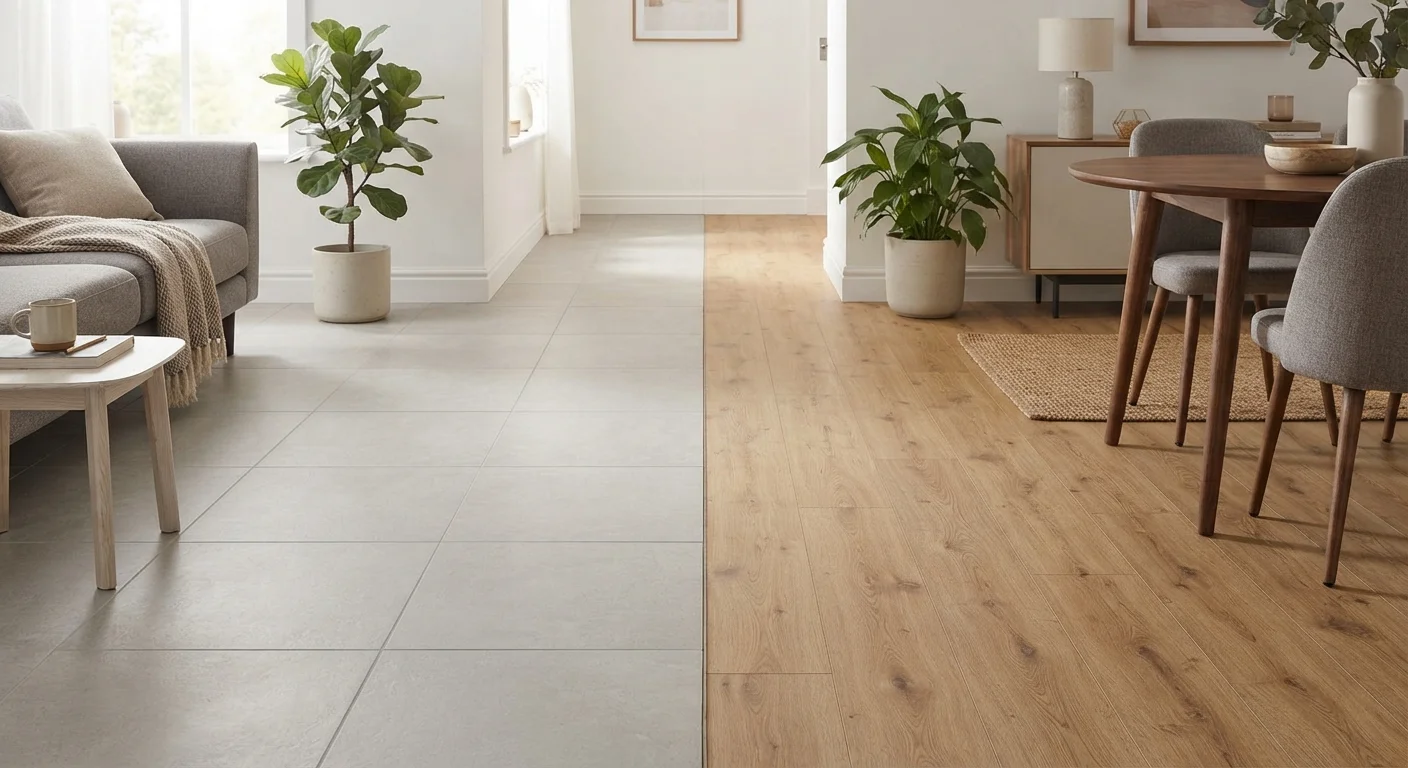
Photo: TotemBuzz.com | Your Lifestyle Companion editorial
Key Takeaways
- Tile handles moisture far better than laminate, making it the safer choice for bathrooms and kitchens.
- Laminate is generally easier and faster for first-timers to install, using a floating click-lock system.
- Tile installation requires more tools, patience, and subfloor preparation than laminate.
- Laminate can swell or warp if exposed to standing water, so placement matters significantly.
- Both options vary widely in cost depending on material quality and whether you hire help.
- Your subfloor condition, room function, and comfort goals should drive the final decision.
How Each Floor Type Actually Works
Understanding what these materials are made of helps explain their real-world strengths and limits.
Tile flooring — typically ceramic or porcelain — is made from fired clay. Each tile is adhered to the subfloor using thinset mortar, and the gaps between tiles are filled with grout. The result is a rigid, stone-like surface that is highly resistant to water, stains, and heavy wear. Porcelain tiles are denser than ceramic, making them even more moisture-resistant, though harder to cut.
Laminate flooring is a synthetic, multi-layer product. Its core is usually high-density fiberboard (HDF), topped with a photographic layer that mimics wood or stone, and finished with a clear protective coating. Planks snap together using a click-lock system and float freely over the subfloor without glue or fasteners. The core material, however, is wood-based — meaning prolonged water exposure can cause swelling and warping.
For a closer look at the finishing touches that go alongside tile work, our guide to caulk vs. grout explains which sealant belongs where around tiles and fixtures.
Installation: What First-Timers Should Realistically Expect
Installation difficulty is often the deciding factor for first-time DIYers, and the two materials are notably different in this respect.
| Criterion | Tile Flooring | Laminate Flooring |
|---|---|---|
| DIY Difficulty | Moderate to challenging | Beginner-friendly |
| Moisture Resistance | Excellent (fully waterproof when sealed) | Poor to moderate (avoid wet rooms) |
| Comfort Underfoot | Hard, cold | Warmer, slight give |
| Typical Lifespan | 20–50+ years | 10–25 years |
| Repairability | Single tiles replaceable | Damaged planks replaceable if matching stock available |
| Tools Required | Wet saw, trowel, spacers, grout float | Basic saw, tape measure, pull bar |
| Best Room Types | Bathrooms, kitchens, entryways | Living rooms, bedrooms, hallways |
Laminate is widely considered one of the most beginner-accessible flooring options. Most products use a click-lock edge system that requires no adhesive. You measure, cut with a basic saw, and snap planks together row by row. The main preparation steps are ensuring the subfloor is clean, flat, and dry, and laying an underlayment foam sheet for cushion and moisture protection. A motivated first-timer can typically floor a single room over a weekend.
Tile installation demands more preparation and patience. The subfloor must be extremely flat and structurally solid — any flex can crack grout or tiles over time. You'll need thinset mortar, tile spacers, a notched trowel, and a tile cutter or wet saw. After setting the tiles, you must allow mortar to cure before grouting. Grouting itself adds another day, and applying a sealer after that is recommended for longevity. For complex rooms or large areas, many first-timers find tile installation is best started small — a backsplash or small bathroom — to build skill before tackling large floors. If you're unsure whether to attempt it yourself, our framework for deciding between DIY and a tradesperson can help you weigh the decision honestly.
Moisture, Durability, and Long-Term Performance
Where your floor will live is arguably the most important factor in this decision.
20–50+ yrs
Typical lifespan of well-installed tile flooring
Industry estimates from flooring trade associations suggest properly installed porcelain or ceramic tile can last several decades with routine maintenance.
10–25 yrs
Average lifespan of laminate flooring
Laminate longevity varies by wear-layer thickness (measured in AC ratings) and exposure to moisture; thicker wear layers generally outlast thinner ones.
~48 hrs
Minimum cure time before grouting tile
Most thinset mortars require at least 24–48 hours to cure before grout is applied, a step first-timers often underestimate in their project timeline.
Tile holds a clear edge in wet environments. When installed with proper mortar and sealed grout, tile creates a surface that water simply cannot penetrate. This is why tile has dominated bathrooms and kitchens for generations. Individual tiles can crack under heavy impact, but the surrounding tiles remain unaffected — and a cracked tile can often be replaced individually.
Laminate performs well in dry conditions but is genuinely vulnerable to water. Even small amounts of standing water seeping into seams can cause planks to swell and buckle. Some laminate products now advertise water-resistant cores, which improve short-term spill tolerance, but no standard laminate should be considered equivalent to tile in a bathroom or kitchen.
For durability in dry spaces, quality laminate holds up well to everyday foot traffic, furniture, and pet activity. Its wear layer resists surface scratches better than soft hardwood, though deep gouges cannot be sanded out the way real wood can.
Subfloor Condition Matters for Both
Cost, Comfort, and Practical Trade-Offs
Neither option is universally cheaper — costs depend heavily on material grade, room size, and whether installation is DIY or professional.
As a general guide, standard ceramic tile materials tend to cost more per square foot than entry-level laminate, though high-end laminate and budget tile can overlap in price. Where costs diverge significantly is labor: professional tile installation is among the more expensive flooring services due to skill and time involved, while laminate installation labor costs are generally lower — and skippable entirely if you DIY.
On comfort: tile feels hard and cold underfoot, which some find unpleasant in bedrooms or living areas, especially in winter. Radiant floor heating can address this but adds cost and complexity. Laminate, by contrast, has a slight give underfoot and feels warmer, particularly with a cushioned underlayment.
Maintenance is straightforward for both. Tile requires periodic grout resealing (roughly every one to three years in wet areas) to prevent staining and moisture intrusion. Laminate simply needs regular sweeping and damp — never soaking wet — mopping.
The content on this site is for informational purposes only and is not a substitute for professional advice. Always consult a qualified professional for guidance specific to your situation.