
Open Shelving vs. Closed Cabinets: What Works Better in Living Spaces

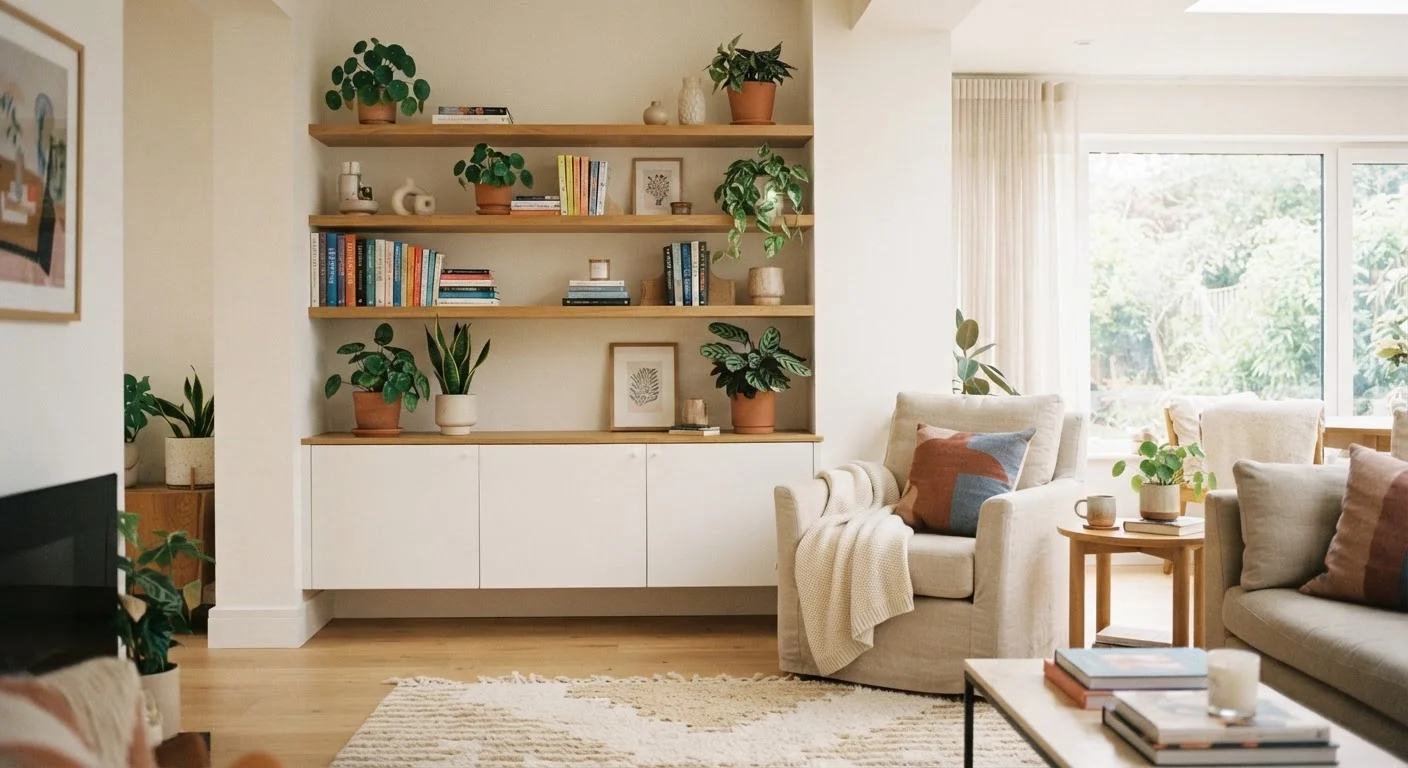
Photo: TotemBuzz.com | Your Lifestyle Companion editorial
Key Takeaways
- Open shelving adds personality but demands consistent tidying and tolerates dust accumulation faster.
- Closed cabinets conceal clutter effortlessly and protect contents from dust, moisture, and light.
- The right choice depends on your household habits, the room's purpose, and your visual style preferences.
- Many living spaces benefit from combining both approaches for flexibility and visual balance.
- Before committing to either, assess your room's structural layout and natural light conditions.
What Each Storage Style Actually Offers
When it comes to organizing a living space, open shelving and closed cabinets represent two genuinely different philosophies — not just different looks. Understanding what each one actually delivers day-to-day is the starting point for making a confident choice.
Open shelving keeps items visible and accessible. There are no doors to open, no guessing where something lives. Shelves mounted on a wall or fitted into an alcove can display books, baskets, houseplants, framed photos, and decorative objects simultaneously. That accessibility comes with a trade-off: everything on those shelves is always on show, which means tidiness isn't optional — it's part of the design.
Closed cabinets prioritize concealment. Doors — whether hinged, sliding, or push-to-open — hide contents entirely, letting the front face of the cabinet read as a clean surface. This is especially valuable in multi-use living rooms where remotes, board games, chargers, and paperwork tend to accumulate. Cabinets also protect contents from dust, sunlight, and in humid areas, from moisture damage over time.
Before committing to either, it helps to read the room carefully — understanding your wall types and layout will determine what can actually be installed safely.
| Criterion | Open Shelving | Closed Cabinets |
|---|---|---|
| Visual effect | Airy, open, personality-driven | Clean, unified, understated |
| Dust accumulation | Higher — items fully exposed | Lower — contents enclosed |
| Tidiness required | High — clutter is always visible | Low — mess hidden behind doors |
| Accessibility | Instant — no doors to open | Slight barrier — door required |
| Works well in small rooms | Yes — feels lighter visually | Can feel heavier if overdone |
| Installation complexity | Moderate — wall anchoring needed | Moderate to high — heavier units |
| Cost range (general) | Often lower starting cost | Often higher, varies widely |
The Real-Life Trade-Offs: Dust, Maintenance, and Daily Habits
Dust is the detail most people overlook when choosing open shelving. Every surface that is exposed to air will collect particles over time, and open shelves collect them faster than enclosed ones. If your shelves hold many small decorative items — ceramics, figurines, layered books — dusting becomes a more involved weekly task rather than a quick wipe-down.
Closed cabinets largely sidestep this issue. The interior stays cleaner between deep-clean sessions, and the exterior front panels are straightforward to wipe down. For households with allergy sufferers, this alone can be a decisive factor.
~60%
US adults cite clutter as a daily stress source
A survey by the National Association of Professional Organizers found that a majority of Americans feel their home organization needs significant improvement.
Weekly
Recommended dusting frequency for open shelves
Home cleaning guidelines generally suggest open surfaces in living areas should be dusted at least once per week to prevent buildup.
Maintenance aside, consider how your storage will interact with your daily routine. Open shelving rewards people who naturally put things back where they belong and who enjoy the ritual of arranging a shelf. If your household tends toward organized chaos — things piled wherever they land — open shelves will visually amplify that clutter rather than contain it. Closed cabinets, by contrast, offer a forgiving reset: shut the door, and the room looks composed regardless of what is inside.
There is also a practical middle path: many designers recommend using open shelving for intentional display items (books you love, a few plants, one or two meaningful objects) and closed cabinets for functional storage (linens, games, electronics). This hybrid approach lets each format do what it does best.
Style, Space, and Making the Final Call
Aesthetically, open shelving tends to make a room feel larger and less enclosed. When shelves are styled thoughtfully — using varied heights, a mix of textures, and deliberate negative space — they add visual interest without weighing down a room. This is especially useful in smaller living areas where solid cabinet fronts might feel heavy or imposing.
Closed cabinets, on the other hand, offer a quieter backdrop. A wall of closed cabinetry can anchor a room and provide a unified surface that lets other design elements — a rug, an art piece, a statement sofa — take center stage. They also tend to photograph more neutrally, which matters to those who value a certain interior aesthetic.
Your final decision will be shaped by three practical questions: How often are you willing to tidy? How dusty is your environment? And how much do you want your storage to contribute to your room's visual identity? There is no universally correct answer — both approaches have been used effectively in living rooms of every size and style.
If you find that your household's daily rhythms influence this choice significantly, it may be worth thinking about how structured versus flexible household routines affect how you manage shared spaces generally. Storage decisions rarely exist in isolation from the habits of the people using the room.
A Note on Wall-Mounted Shelf Safety
The content on this site is for informational purposes only and is not a substitute for professional advice. Always consult a qualified professional for guidance specific to your situation.