
Feeding Your Pet Well: Portion Sizes, Schedules, and Label Reading

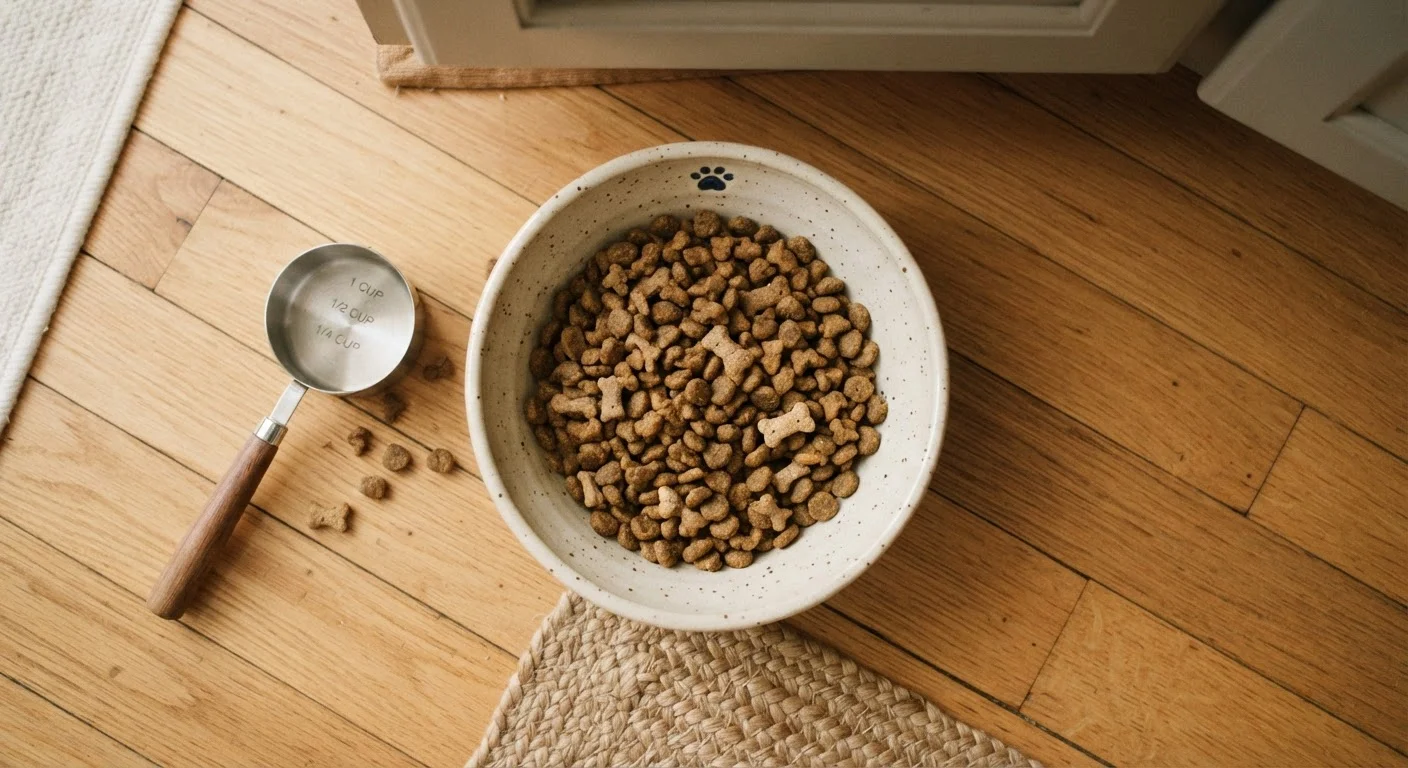
Photo: TotemBuzz.com | Your Lifestyle Companion editorial
Key Takeaways
- Feeding guidelines on pet food labels are starting points, not fixed rules — adjust based on your pet's weight and activity.
- Scheduled meals generally work better than free-feeding for monitoring appetite and maintaining a healthy weight.
- The guaranteed analysis panel tells you protein, fat, fiber, and moisture content at a glance.
- Life stage matters: puppy, adult, and senior formulas have meaningfully different nutrient profiles.
- Your vet is the best resource for fine-tuning portion sizes to your individual pet.
Why Getting Feeding Right Actually Matters
For first-time pet owners, mealtime can feel deceptively simple — fill the bowl, done. But consistent overfeeding is one of the most common contributors to pet obesity, which veterinary guidelines link to joint problems, diabetes, and shortened lifespan. Under-feeding brings its own risks, particularly for growing puppies and kittens. The good news is that a little foundational knowledge goes a long way.
If you're still in the early settling-in phase, our guide to the first weeks at home covers the bigger picture of new-pet adjustment. This article zooms in specifically on food: reading the bag, measuring correctly, and building a schedule your pet can rely on.
What you will need
How to Read a Pet Food Label
Pet food sold in the US is regulated by the Association of American Feed Control Officials (AAFCO), whose standards govern what manufacturers must disclose. Here's where to look first:
- Nutritional adequacy statement: This line tells you whether the food is formulated for a specific life stage (puppy/kitten, adult, senior, or all life stages) and whether it meets AAFCO's nutrient profiles. Look for the phrase "complete and balanced."
- Guaranteed analysis: Lists minimum crude protein, minimum crude fat, maximum crude fiber, and maximum moisture. These are minimum or maximum values, not exact figures, but they're useful for comparing foods side by side.
- Ingredient list: Ingredients appear in descending order by pre-cooking weight. A named protein source ("chicken," "salmon") appearing first is generally a positive sign. Be aware that moisture content affects where ingredients land on the list.
- Feeding guidelines: Typically shown as a chart correlating your pet's weight to a daily cup or ounce amount. Treat this as a starting point — individual metabolism, activity level, and whether your pet is spayed or neutered all shift actual needs.
Want to explore how food format affects these numbers? Our dry food vs. wet food breakdown explains what the moisture difference means in practice. And if popular label claims like "grain-free" catch your eye, it's worth checking out common pet nutrition myths before making a switch.
Check the Life Stage Claim First
Measuring Portions: The Step-by-Step Process
The single most effective habit you can build is measuring every meal. Eyeballing kibble consistently leads to overfeeding — studies in veterinary nutrition suggest owners regularly underestimate poured volumes by 10–80%. Here's how to approach it correctly.
Weigh your pet
Feeding guidelines are always based on body weight, so you need a reasonably current number. For small dogs or cats, hold your pet while standing on a bathroom scale, then weigh yourself alone and subtract. For larger dogs, many vet clinics will let you drop in for a quick weigh-in between appointments.
Find the feeding chart on the label
Locate the feeding guidelines table, which matches weight ranges to daily serving amounts. Find the row that corresponds to your pet's weight. Note whether the amount listed is for the entire day or per meal — this distinction trips up many new owners.
Measure with a proper tool
Use a dry-measuring cup (the kind used for baking, not a drinking cup) or a kitchen food scale. Pour kibble into the measuring cup and level it off — don't heap or pack it. For wet food, use a kitchen scale to weigh out the portion in ounces or grams as the label specifies.
Divide into meals and serve
Split the total daily amount across however many meals fit your pet's life stage (see the schedule section below). For example, if the label says 1 cup per day for an adult dog and you feed twice daily, serve ½ cup at each meal.
Adjust based on body condition over time
After 2–3 weeks at the new portion, assess your pet's body condition. Gently run your hands along their sides — you should feel ribs without pressing hard, but they shouldn't be visually prominent. Adjust daily portions in small increments (about 10% at a time) and re-assess before making further changes.
Once you've established a baseline, monitor your pet's body condition every few weeks. You should be able to feel (not see) their ribs with light finger pressure. If ribs are invisible and hard to find, reduce portions slightly; if ribs are prominently visible, consider increasing them. Your vet can walk you through a body condition score chart at your next visit.
Building a Feeding Schedule
Scheduled meals — rather than leaving food out all day — make it much easier to notice when your pet's appetite changes, which is often an early health signal. General guidance by life stage:
- Puppies and kittens (under 6 months): Three to four small meals per day to support rapid growth and stable blood sugar.
- Adult dogs and cats (1–7 years): Two meals per day, roughly 8–12 hours apart, works well for most.
- Senior pets (7+ years): Two meals per day remains a good default, though some seniors do better with smaller, more frequent servings — ask your vet.
Consistency matters as much as frequency. Feeding at the same times each day supports digestive regularity and helps with house-training in younger animals. If your schedule is unpredictable, an automatic timed feeder can maintain consistency without requiring you to be home at exact hours.
Learning to read your pet's signals — like lingering by the bowl, pawing, or unusual lethargy — is easier when you have a baseline routine. Our plain-English body language guide can help you interpret what those cues actually mean.
Treats Count Toward Daily Calories
This article is for general informational purposes and is not a substitute for personalized veterinary advice. Always consult your veterinarian with questions about your individual pet's nutritional needs.
The content on this site is for informational purposes only and is not a substitute for professional advice. Always consult a qualified professional for guidance specific to your situation.