
Dry Food vs. Wet Food: What the Difference Actually Means for Your Pet

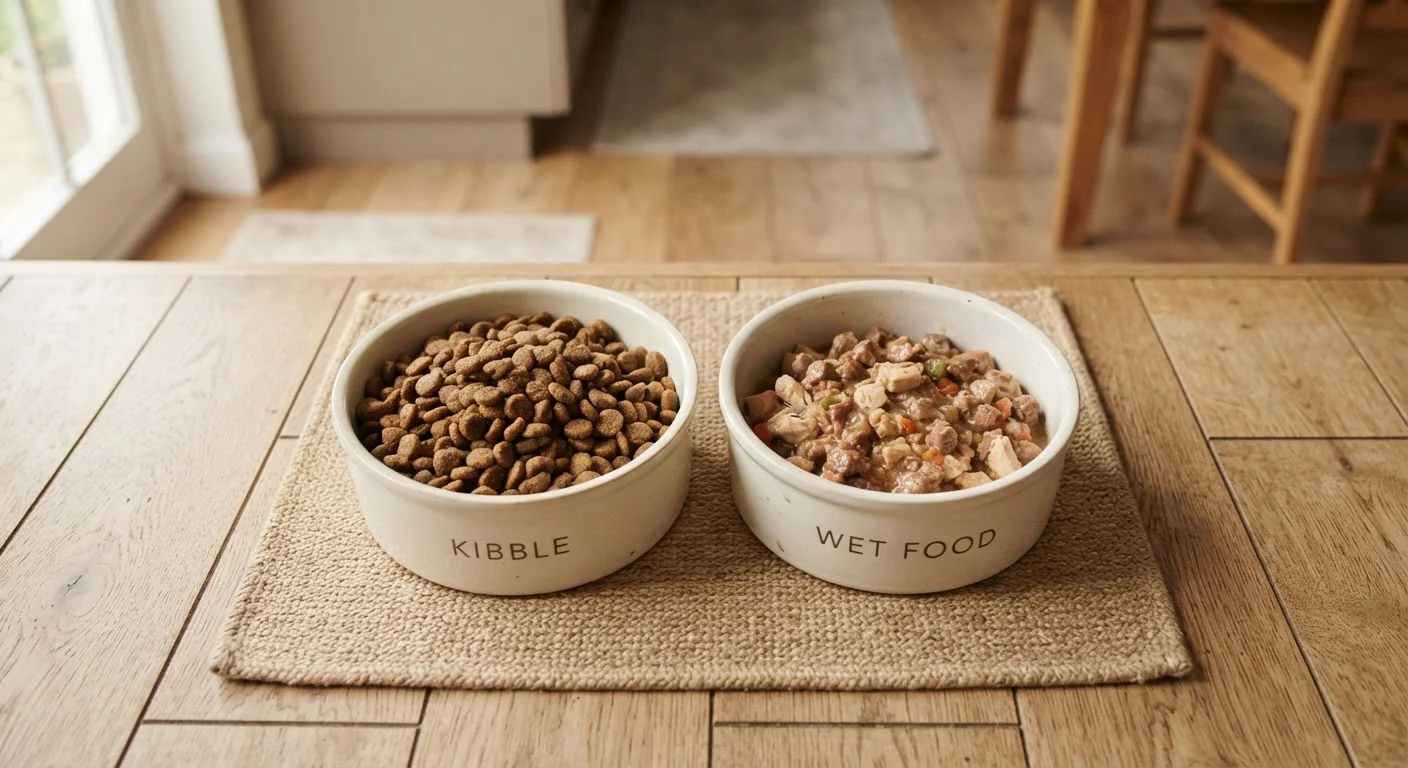
Photo: TotemBuzz.com | Your Lifestyle Companion editorial
Key Takeaways
- Wet food contains significantly more moisture than dry food, which can support urinary tract health in cats.
- Dry food is generally more calorie-dense per ounce, making portion control especially important.
- Neither format is universally superior — your pet's age, health, and preferences all matter.
- Many veterinarians support feeding a combination of both formats when appropriate.
- Always consult your vet before making major changes to your pet's diet.
The Core Difference: It's Mostly About Water
The most fundamental difference between dry and wet pet food is moisture content — and the gap is surprisingly large. Dry kibble typically contains around 6–10% moisture, while canned wet food generally sits between 70–80% moisture. That single fact influences everything from how many calories are packed into each bite to how well your pet stays hydrated throughout the day.
Because wet food is mostly water by weight, you'll often need to feed a noticeably larger volume to deliver the same calories as a smaller portion of kibble. This can be a helpful natural appetite satisfier for some pets — but it also means the price-per-calorie is typically higher for wet food. For pet owners working through food budgets, this is a real consideration.
For cats in particular, moisture content isn't just a preference detail — it's genuinely relevant to health. Cats evolved as desert animals and have a naturally low thirst drive, so many don't drink enough water on their own. Wet food can help fill that gap. Your vet is the best person to advise whether this matters for your specific cat. Check out our guide to common pet nutrition myths for more context on how hydration fits into the bigger picture.
| Criterion | Dry Food (Kibble) | Wet Food (Canned) |
|---|---|---|
| Moisture content | 6–10% | 70–80% |
| Calorie density (per ounce) | Higher | Lower |
| Storage convenience | Room temp, long shelf life | Refrigerate after opening, use within 1–2 days |
| Typical cost per calorie | Generally lower | Generally higher |
| Palatability for picky eaters | Moderate | Often higher |
| Dental chewing action | Mild mechanical effect | Minimal |
| Works with auto-feeders | Yes | Generally no |
| Hydration support | Low | High |
Nutrition, Dental Health, and Practical Reality
From a pure nutrition standpoint, both formats can be complete and balanced — what matters is the specific formula and whether it meets AAFCO nutritional standards for your pet's life stage. The format alone doesn't determine quality. A well-formulated kibble and a well-formulated canned food can both provide everything your pet needs.
Where the formats do diverge is dental health. The chewing action required for dry kibble may offer some mild mechanical cleaning of tooth surfaces — but it's important not to overstate this benefit. Most veterinary dental organizations note that kibble alone is not a substitute for regular tooth brushing or professional dental cleanings. Wet food does not provide the same chewing action, so owners feeding primarily wet food may want to discuss dental hygiene routines with their vet.
~70–80%
Moisture content in typical wet pet food
Compared to roughly 6–10% in dry kibble, this difference directly affects how much water a pet gets through their meals.
~50%
Cat owners who feed a mix of wet and dry food
Survey data from the American Pet Products Association suggests a large share of cat owners use both formats rather than one exclusively.
On the practical side, dry food wins on convenience: it stores easily, doesn't require refrigeration after opening, and works with timed feeders. Wet food, once opened, needs to be refrigerated and used within a day or two. That said, many owners find that combining both formats — sometimes called mixed feeding — gives their pets the palatability boost of wet food with the convenience and dental benefits of dry. See our portion and schedule guide for practical help setting up a feeding routine that works.
When to Ask Your Vet About Food Format
This article is for general informational purposes only and is not a substitute for professional veterinary advice. Always consult a qualified veterinarian before making significant changes to your pet's diet, especially if your pet has an existing health condition.
The content on this site is for informational purposes only and is not a substitute for professional advice. Always consult a qualified professional for guidance specific to your situation.