
Screen Time Assumptions That Most Parents Get Wrong

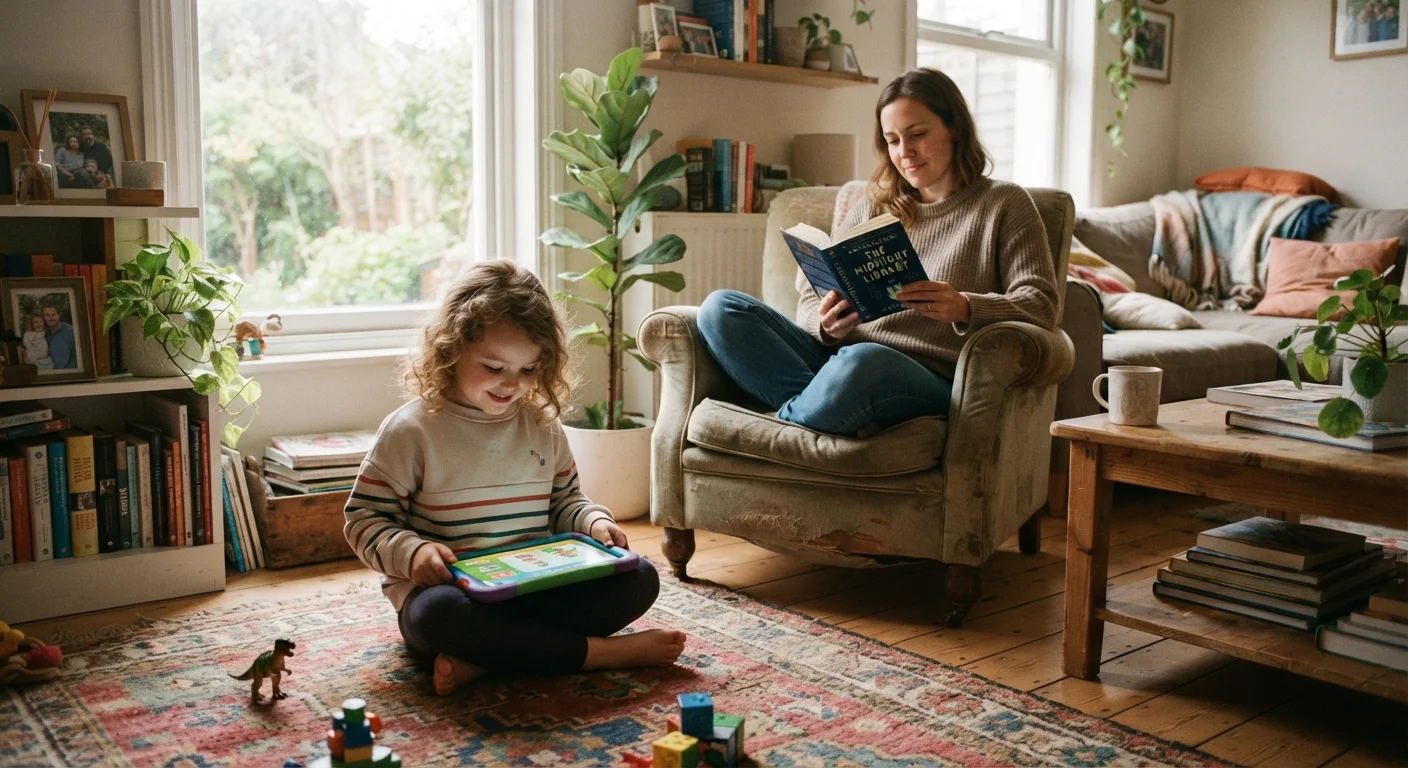
Photo: TotemBuzz.com | Your Lifestyle Companion editorial
Key Takeaways
- Not all screen time is equal — content type and context matter as much as duration.
- The American Academy of Pediatrics has updated its guidance to move beyond simple hour-based limits.
- Co-viewing and conversation can turn passive screen time into a meaningful learning experience.
- Screens close to bedtime can disrupt sleep regardless of the content being watched.
- Children under 18 months benefit most from video chat rather than passive screen viewing.
Why Screen Time Myths Are So Sticky
Screen time is one of those parenting topics where strong opinions travel fast and nuance gets left behind. A headline says screens harm children's brains; another says technology is the future and kids need it early. Both overstate what the research actually shows, and most families end up navigating by rules of thumb that were never quite as simple as they seemed.
The good news: child development researchers and pediatric organizations have produced genuinely useful guidance — it's just more layered than a single number. Understanding what the evidence does (and doesn't) say can help families make more confident, personalized decisions.
Myth
Two hours of screen time per day is the universal safe limit for all children.
Fact
The American Academy of Pediatrics (AAP) moved away from a strict two-hour cap and now emphasizes quality, context, and balance rather than a single number for most school-age children.
The oft-quoted "two hours max" rule came from earlier AAP guidance, but the organization revised its approach around 2016 to reflect how much the digital landscape had changed. For children ages 6 and older, the current AAP framework encourages families to ensure screens don't crowd out sleep, physical activity, homework, and face-to-face interaction — rather than counting minutes. That said, stricter limits still apply to younger children: no screen time other than video chatting for children under 18 months, and just one hour per day of high-quality programming for children ages 2 to 5.
Myth
All screen time is equally harmful — a cartoon is the same as a video call with grandma.
Fact
Content type, interactivity, and social context make a substantial difference in what children get out of screen experiences.
Passive consumption of fast-paced or purely entertainment-focused content is a very different experience from a video call that exercises real conversation skills, or an educational app that requires active problem-solving. Researchers distinguish between what they call "educational," "interactive," and "passive" screen use — and the developmental outcomes can differ meaningfully. Co-viewing, where a parent watches alongside a child and discusses what they're seeing, can further shift a passive experience into an active learning opportunity.
Myth
If educational content is on the screen, there's no need to worry about duration.
Fact
Even high-quality educational programming can displace other important activities if it runs too long, and young children still learn better from hands-on experience than from screens.
Educational labels don't make screen time unlimited. Young children, in particular, learn language and concepts more effectively through real-world interaction and play than through video, a phenomenon researchers sometimes call the "video deficit." Toddlers and preschoolers tend to transfer what they see on a screen to real life less efficiently than they transfer what they learn through direct experience. Quality content is a plus — but it works best in moderation and paired with in-person conversation and exploration.
Myth
Giving a child a device to keep them calm is always a harmless parenting shortcut.
Fact
Using screens primarily as an emotional regulator can interfere with a child's development of their own self-soothing skills over time.
There's nothing wrong with an occasional screen break when you need a moment — every parent needs tools in their toolkit. However, when devices become the default response to boredom, frustration, or distress, children may have fewer opportunities to practice tolerating uncomfortable feelings and finding their own ways to self-regulate. Building a varied set of calming strategies — breathing exercises, quiet play, talking through feelings — supports emotional resilience in the long run. Building healthy family routines, like those outlined in our age-appropriate chores guide, can also give kids a productive sense of purpose and engagement away from screens.
Myth
Teenagers are old enough to manage their own screen time without parental involvement.
Fact
Adolescent brains are still developing impulse control and are particularly susceptible to the reward-seeking loops built into many apps and platforms.
The prefrontal cortex — the part of the brain responsible for impulse control and long-term decision-making — isn't fully developed until the mid-twenties. Many social media platforms and games are designed to maximize engagement, and teenagers are not fully equipped neurologically to resist those pulls on their own. Research has linked heavy social media use in adolescence with disrupted sleep and increased social comparison, though experts note this relationship is complex and varies by individual. Keeping open, judgment-free conversations going — similar to the approach described in our guide to talking with children about big changes — tends to be more effective than hard bans.
Building Healthier Screen Habits Without the Guilt
Ditching rigid rules doesn't mean anything goes. A useful reframe is to think of screen time as you would any other activity: context, content, and balance all matter. Ask whether a screen session is displacing sleep, movement, or connection — if not, it may be perfectly fine.
Screens in the Bedroom Can Quietly Undermine Sleep
Creating a loose family media plan — something the AAP offers a tool for — can help make these decisions explicit rather than reactive. Think about screen-free zones (like the dinner table), screen-free times (like the hour before bed), and what kinds of content feel in line with your family's values.
This Is General Information, Not Medical Advice
The goal isn't perfection. Families who use screens together, talk about what they're watching, and stay curious about their kids' digital lives tend to do well — much like the engaged, communicative approach that pays off in so many other areas of family life, from teaching kids to care for pets to navigating big emotional moments. If you're building routines that work, screens can be part of a balanced, healthy childhood rather than something to fear.
This article is for general informational and educational purposes only and is not a substitute for advice from a qualified pediatrician or child development professional. If you have concerns about your child's screen habits or development, please consult a healthcare provider.
8+ hrs
Average daily screen time for US teens
According to Common Sense Media's research on media use among American teenagers, daily recreational screen time commonly exceeds eight hours for older adolescents.
Under 18 mo
Age below which AAP discourages most screen use
The American Academy of Pediatrics recommends avoiding screens for children younger than 18 months, with the exception of live video chatting with family members.
1 hour/day
AAP-guided limit for ages 2–5
For children ages 2 through 5, the AAP suggests limiting screen use to one hour per day of high-quality, age-appropriate programming.
The content on this site is for informational purposes only and is not a substitute for professional advice. Always consult a qualified professional for guidance specific to your situation.