
How Saving Habits and Credit Health Reinforce Each Other

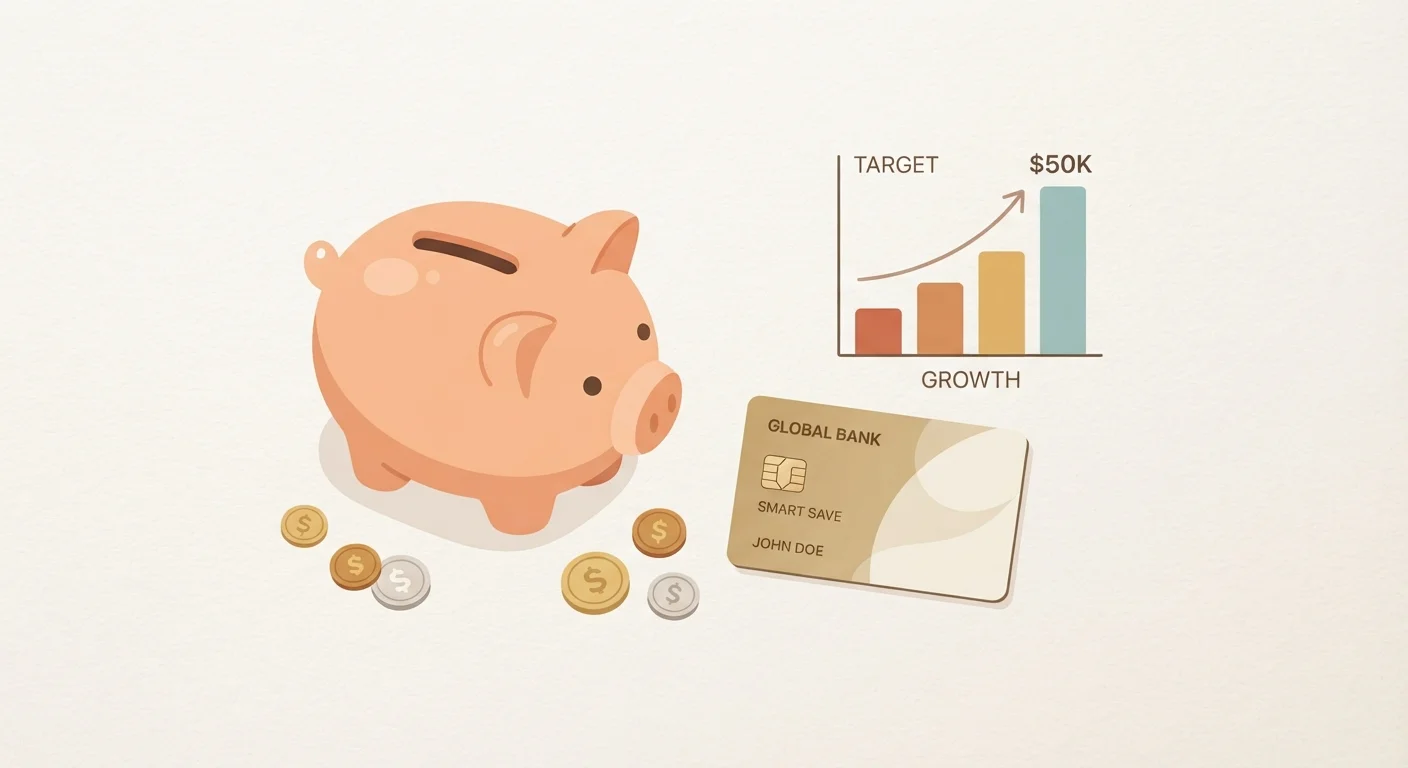
Photo: TotemBuzz.com | Your Lifestyle Companion editorial
Key Takeaways
- A cash reserve reduces the risk of missing payments, which directly protects your credit score.
- A stronger credit score typically means lower interest rates, freeing up more money to save.
- Credit utilisation — how much of your available credit you use — drops when you rely less on credit for everyday expenses.
- Small, consistent saving deposits build the same psychological muscle as consistent on-time payments.
- Reviewing both your savings progress and credit report annually helps you catch problems early.
Why These Two Pillars Are Connected
At first glance, a savings account and a credit score seem like entirely separate financial tools. One sits in a bank; the other exists as a number generated by a credit bureau. But the behaviours behind each — consistency, restraint, forward planning — overlap almost completely.
Your credit score is shaped largely by how reliably you meet financial obligations over time. Your savings balance reflects how much of your income you've protected from immediate spending. Both outcomes depend on the same underlying discipline. When that discipline strengthens in one area, it tends to spill over into the other — and when it breaks down, both usually suffer together.
Understanding this relationship gives you a more powerful lens for managing your finances. Rather than treating saving and credit as two separate goals to juggle, you can treat them as one reinforcing system. Improving one creates conditions that make improving the other easier. Start with the fundamentals of budgeting if you're not yet tracking where your money goes — that foundation supports both habits.
35%
Share of FICO score from payment history
According to FICO, payment history is the single largest component of a standard credit score.
30%
Share of FICO score from credit utilisation
FICO's published scoring model weights amounts owed — primarily utilisation — as the second largest factor.
~40%
U.S. adults unable to cover a $400 emergency
The Federal Reserve's Report on the Economic Well-Being of U.S. Households has documented this vulnerability across multiple survey years.
How Savings Protect Your Credit Score
The most direct link between savings and credit runs through what financial educators call a buffer. When an unexpected expense arrives — a car repair, a medical bill, a temporarily reduced paycheck — a person without savings often reaches for a credit card. That increases their credit utilisation ratio (the percentage of available credit currently being used), which is one of the most influential factors in a credit score. The full picture on credit utilisation is worth understanding in depth.
A savings cushion — even a modest one — absorbs those shocks without touching credit. The utilisation ratio stays low, and the score stays stable. Beyond emergencies, consistent savers are also less likely to carry revolving balances month to month, which reduces the interest accumulating on credit card debt and keeps payments manageable.
On-time payment history is the single largest component of a FICO score. Savers who have money set aside for bills are less likely to miss due dates, even in difficult months. That reliability compounds over time into a meaningfully stronger credit profile.
Keep your credit utilisation below 30% as a general guideline, but borrowers with excellent scores typically stay under 10%. The gap between those two thresholds is where meaningful score improvement often lives.
Label your savings accounts by purpose — 'Emergency Fund,' 'Car Repair,' 'Annual Bills' — rather than keeping everything in one pot. This mental separation makes it easier to leave emergency funds untouched.
How Good Credit Supports Your Ability to Save
The relationship flows in both directions. A stronger credit score earns better terms on borrowing — lower interest rates on auto loans, mortgages, and credit cards. Those lower rates translate directly into smaller monthly payments, which leave more disposable income available to redirect into savings.
Consider a simple example: a borrower with a lower credit score may pay a materially higher interest rate on a car loan than a borrower with an excellent score. Over a multi-year loan term, that difference adds up to hundreds or even thousands of dollars — money that a borrower with good credit can instead deposit into a savings account.
Good credit also provides access to financial products that can make saving easier, such as cards with no annual fees or accounts that require lower minimum balances. The habits that support long-term credit health are worth building precisely because their benefits ripple outward into the rest of your finances.
The Reinforcing Cycle in Practice
Once both habits are in motion, they create a compounding loop. More savings means less reliance on credit for daily expenses. Less reliance on credit keeps utilisation low and payments on time. On-time payments and low utilisation push credit scores higher. Higher scores reduce borrowing costs. Lower borrowing costs leave more money available to save. And so on.
This cycle does not require large sums to start. Research consistently suggests that even a small emergency fund — enough to cover one or two unexpected bills — meaningfully reduces the probability of a missed payment. The approach to saving even on a stretched income is a practical starting point for anyone who feels the cycle is out of reach.
“The best financial habit you can build is one that runs automatically — because discipline alone is finite, but a system keeps working even on your worst days.”
— Consumer Financial Protection Bureau, U.S. federal consumer finance agency, guidance on building financial resilience
Common Pitfalls That Break the Cycle
Understanding the reinforcing loop also means recognising what disrupts it. A few of the most common patterns:
- Treating savings as a last priority. When saving happens only with what's left after all spending, it rarely happens consistently. This leaves no buffer for emergencies and increases the odds of credit reliance.
- Carrying high revolving balances. Even if minimum payments are made on time, high utilisation suppresses credit scores. The traps that quietly damage your credit score often include this one.
- Ignoring the credit report. Errors on a credit report can unfairly lower a score and may go unnoticed for years. Knowing what a credit report contains and how to read it is a basic protective step.
- Conflating saving with investing. These serve different purposes and different time horizons. Saving vs. investing is a distinction worth clarifying early.
Don't Let Credit Myths Derail Your Progress
Building Both Habits at the Same Time
You do not need to master one before starting the other. In fact, working on both simultaneously tends to produce better outcomes than sequential approaches, because the habits reinforce each other from the beginning.
A practical starting framework:
- Automate a small, fixed savings deposit each payday — even $25 or $50 creates a growing buffer that protects credit from emergency spending.
- Set up autopay for at least the minimum payment on every credit account. This protects payment history regardless of what else is happening in your budget.
- Check your credit report annually for free through official channels, and review your savings progress at the same time. The annual financial health check is a useful structured exercise for this.
- Understand the five factors shaping your score. The five factors that shape your credit score give you a clear map of where to focus effort.
Financial confidence builds incrementally. Each small improvement in saving behaviour and credit health makes the next step easier. The cycle, once started, tends to sustain itself.
This article is for general informational and educational purposes only and does not constitute personalised financial, investment, tax, or legal advice. Consult a qualified financial professional for guidance tailored to your individual circumstances.
The content on this site is for informational purposes only and is not a substitute for professional advice. Always consult a qualified professional for guidance specific to your situation.