
Credit Scores Explained: What the Number Actually Means

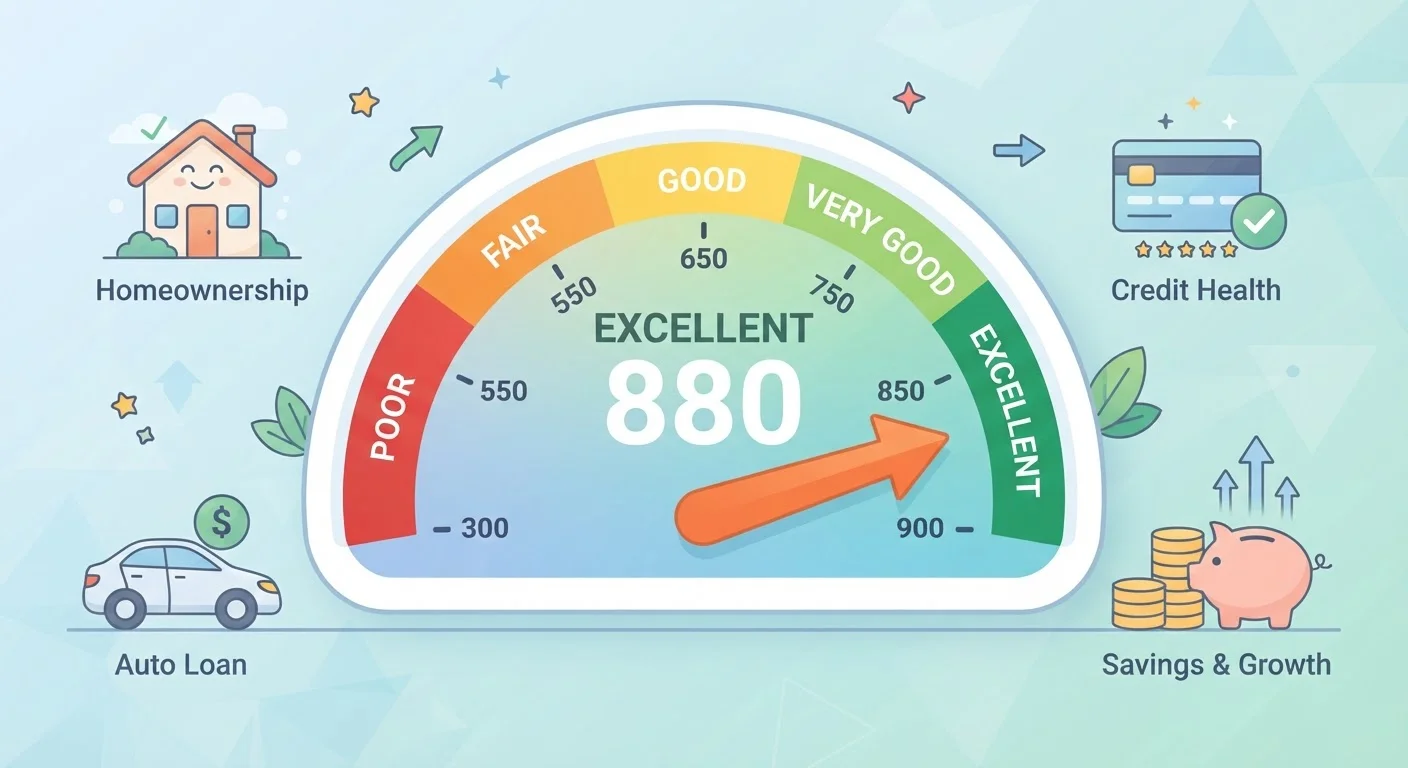
Photo: TotemBuzz.com | Your Lifestyle Companion editorial
Key Takeaways
- A credit score ranges from 300 to 850 and reflects your history of managing debt.
- Lenders use your score to decide whether to approve loans and at what interest rate.
- Scores are calculated from information in your credit report, not from your income.
- Consistent on-time payments are the single most powerful driver of a strong score.
- You can check your own credit score without it negatively affecting your rating.
What a Credit Score Actually Represents
Think of your credit score as a financial report card — one that lenders consult in seconds to decide whether to trust you with borrowed money. The number itself doesn't represent your wealth, your income, or your savings balance. Instead, it reflects one specific thing: how consistently you've handled credit and debt obligations in the past.
Scoring models analyze the data sitting inside your credit report — a detailed record maintained by the three major credit bureaus (Equifax, Experian, and TransUnion). That report captures things like whether you pay bills on time, how much of your available credit you're using, how long your accounts have been open, and how recently you've applied for new credit. To understand what's inside that report in detail, see our guide on what a credit report contains and how to read it.
300–850
Standard credit score range in the U.S.
Both FICO and VantageScore, the two dominant U.S. scoring models, use this scale.
~57%
Americans with a "good" score or higher
According to Experian's State of Credit report, a majority of U.S. consumers score 670 or above.
35%
Weight of payment history in FICO scoring
FICO publicly discloses that payment history is the single largest component of its score calculation.
How the Number Is Calculated
Credit scores aren't random — they're the output of a mathematical formula applied to your credit file. While the exact algorithms are proprietary, credit bureaus and scoring companies have publicly disclosed the general categories of information they weigh. Payment history carries the heaviest influence, followed by how much of your available credit limit you're actively using (known as your credit utilization ratio), the age of your accounts, your credit mix, and recent applications for new credit.
Each of these factors interacts with the others, which is why a single missed payment can have a noticeably different impact depending on the rest of your credit profile. For a plain-language breakdown of each factor and how much it matters, our article on the five factors that shape your credit score walks through each one. One factor that surprises many beginners is utilization — learn more in our piece on why your credit utilization ratio matters more than you think.
Check Your Score Regularly — It's Free
Why Lenders Care About Your Score
When you apply for a mortgage, car loan, or credit card, the lender faces a fundamental question: will this person pay us back? Your credit score gives them a standardized, data-backed answer. A higher score signals lower risk, which typically translates into easier approval and lower interest rates. A lower score signals higher perceived risk, which can mean higher rates, stricter terms, or outright denial.
The financial stakes are real. On a 30-year mortgage, even a half-percentage-point difference in interest rate — often tied directly to credit score brackets — can add up to tens of thousands of dollars over the life of the loan. This is why understanding and gradually improving your score is worth the effort, even if you don't plan to borrow money in the immediate future.
Building and Protecting Your Score Over Time
Your credit score isn't fixed. It responds — gradually — to the financial habits you practice consistently. Paying every bill on or before its due date is the single most effective action you can take. Keeping your credit card balances well below their limits, avoiding unnecessary applications for new credit, and letting older accounts remain open are all habits that support a healthy score over the long run.
It's also worth separating fact from fiction. Many people avoid checking their own scores for fear of damaging them, or close old credit cards thinking it will help — neither belief is accurate. Our article on credit score myths that could be costing you covers the most common misconceptions. For a practical overview of sustainable credit habits, see habits that support long-term credit health.
This article is for general informational and educational purposes only and does not constitute personalized financial or legal advice. For guidance specific to your situation, consult a licensed financial professional.
Your Score May Vary by Bureau and Model
Frequently Asked Questions
The content on this site is for informational purposes only and is not a substitute for professional advice. Always consult a qualified professional for guidance specific to your situation.