
Needs vs. Wants: Drawing the Line in Your Own Budget

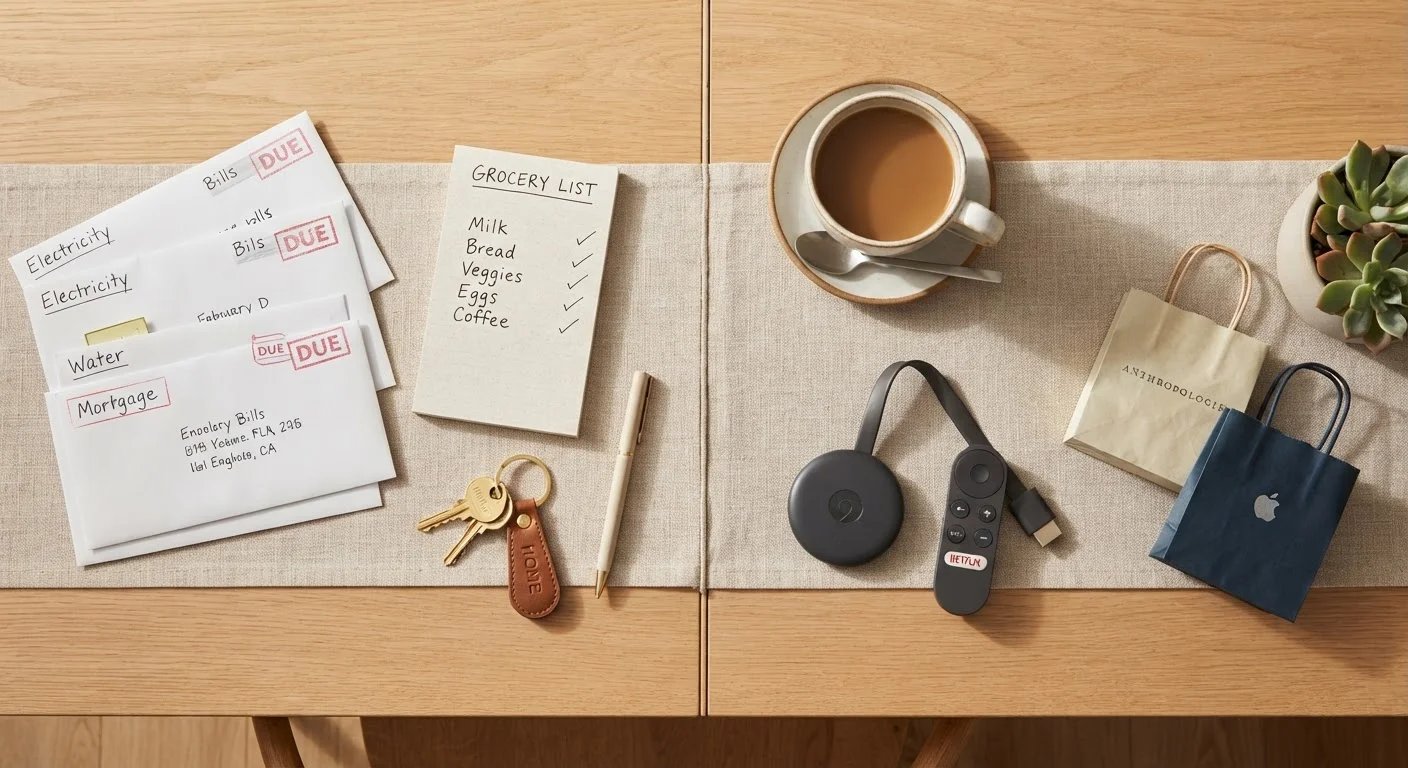
Photo: TotemBuzz.com | Your Lifestyle Companion editorial
Key Takeaways
- Needs are expenses required for basic health, safety, and the ability to earn income.
- Wants improve your lifestyle but can be reduced or removed without immediate serious consequences.
- Many expenses — like a phone plan — fall into a gray zone and require honest self-assessment.
- The needs-versus-wants distinction helps you prioritize spending when money is tight.
- Context matters: what counts as a need can differ based on your location, job, or health situation.
Why the Distinction Matters More Than You Think
At first glance, separating needs from wants sounds straightforward: food is a need, new sneakers are a want. But in everyday spending, the line blurs quickly. Is your gym membership a need if exercise manages a health condition? Is a car a need if public transit is theoretically available but impractical for your job? These questions don't have universal answers — and that's exactly why understanding the distinction is a foundational budgeting skill.
When you draw this line clearly in your own budget, you gain a decision-making framework that works in real time. Instead of second-guessing every purchase, you know which categories get funded first and where you have genuine flexibility. Learn what a personal budget really is and why it matters before you try to categorize what goes inside one.
Defining Needs: What Actually Qualifies?
A need is an expense that, if unmet, would create a direct threat to your health, safety, or ability to earn income. Think of it this way: what happens if this bill goes unpaid for one month? If the answer involves losing housing, going without food, missing work, or losing health coverage, it is almost certainly a need.
Core needs typically include:
- Housing: Rent or mortgage payments that keep a roof over your head.
- Utilities: Electricity, heat, and water required for safe living conditions.
- Groceries: Basic food for cooking at home — not restaurant meals.
- Transportation: Whatever gets you reliably to work, whether that's a bus pass or minimum car expenses like insurance and fuel.
- Basic healthcare: Insurance premiums and medications that manage ongoing conditions.
Notice that needs are defined by function, not form. You need food, but you don't need a specific type of food. You need transportation, but you don't necessarily need a new vehicle. Keeping this distinction in mind helps you find savings within the needs category itself.
| Criterion | Needs | Wants |
|---|---|---|
| Definition | Required for health, safety, or income | Enhances comfort or enjoyment |
| Examples | Rent, groceries, utilities, medications | Streaming services, dining out, vacations |
| Budget priority | Funded first, every month | Funded after needs and savings |
| Consequence if skipped | Immediate hardship or risk | Reduced comfort, no immediate crisis |
| Flexibility within category | Low — but cost can sometimes be reduced | High — easy to scale up or down |
| 50/30/20 allocation | ~50% of take-home income | ~30% of take-home income |
Defining Wants: Everything in Between
A want is anything that adds comfort, convenience, or enjoyment but whose absence wouldn't threaten your basic stability. Wants are not frivolous by nature — they are a legitimate and important part of a sustainable budget. The problem arises when wants are treated as needs, which quietly crowds out savings and financial goals.
Common wants include streaming subscriptions, dining out, clothing beyond functional basics, entertainment, vacations, and upgraded versions of things you already own. The 50/30/20 budgeting framework dedicates roughly 30% of take-home income to wants — a useful starting benchmark for beginners who want structure without rigidity.
Context Changes the Calculation
If you find yourself defending a want as a need, that's worth pausing on. The defense itself is often a signal that honest self-assessment is needed. Explore the spending categories every budget should include to see where common purchases actually land.
Navigating the Gray Zone
Some expenses resist clean categorization. A smartphone is a good example: few people truly need the latest model, but in many jobs a reliable phone is required for communication, scheduling, or even direct work tasks. Here, the device itself may be a need, while the premium model with extra storage is a want layered on top of it.
A useful exercise is to ask three questions about any gray-zone expense:
- What is the minimum version of this that still meets the actual function? The gap between the minimum and what you're spending is often the want portion.
- Would eliminating this create a concrete, near-term problem? If the answer is vague or hypothetical, lean toward want.
- Is there a lower-cost alternative that fully covers the function? If yes, the premium is a want.
This framework helps you make spending decisions based on honest reflection rather than habit or social pressure. Practical budgeting habits for shoppers can help you apply these principles in real purchase situations. And if you're weighing how much structure is right for you, consider the trade-offs of strict budgeting before locking in rigid rules.
This article is for general informational and educational purposes only. It does not constitute personalized financial advice. For guidance tailored to your specific situation, consider consulting a qualified financial professional.
The content on this site is for informational purposes only and is not a substitute for professional advice. Always consult a qualified professional for guidance specific to your situation.