
What Happens Inside a Courtroom

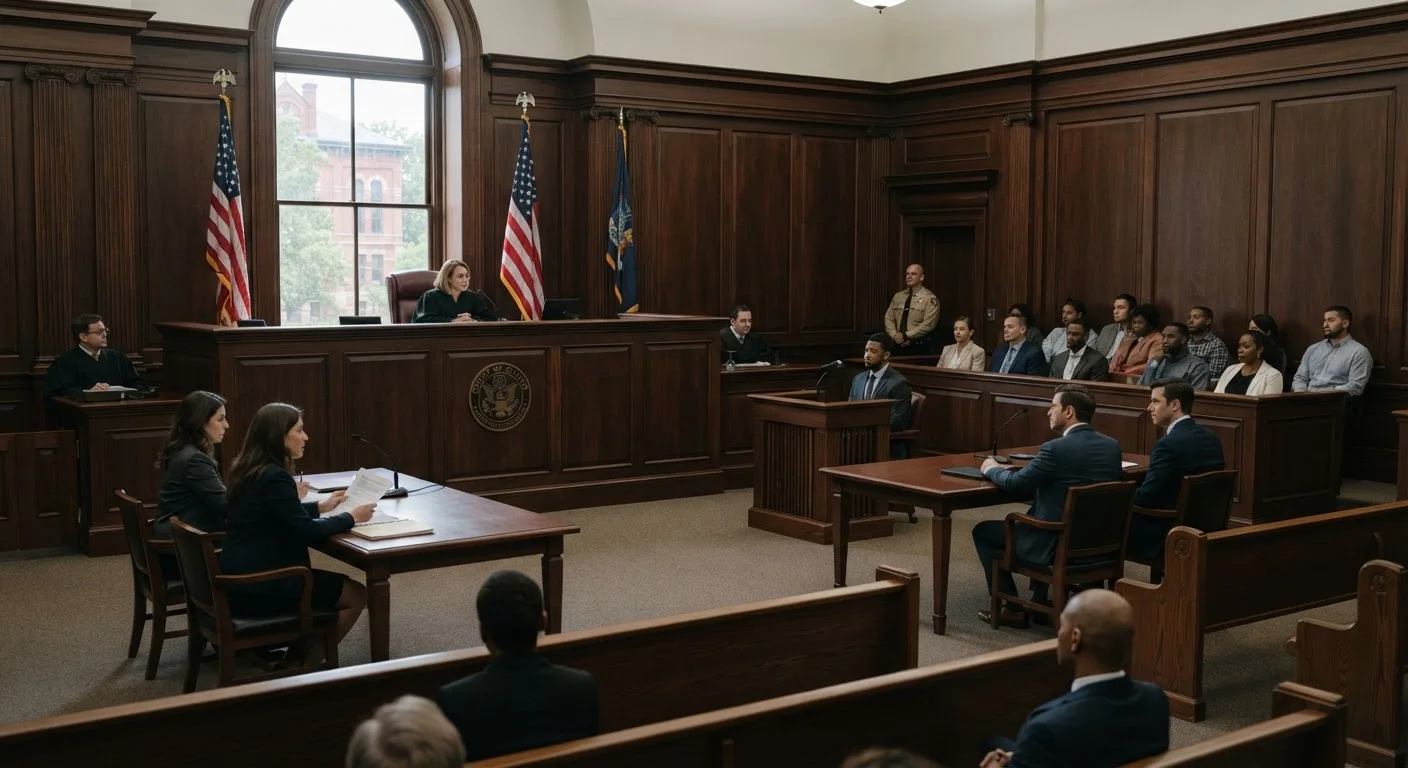
Photo: TotemBuzz.com | Your Lifestyle Companion editorial
Key Takeaways
- A courtroom has distinct roles — judge, jury, attorneys, witnesses — and each one serves a specific function.
- Most proceedings follow a predictable sequence: opening statements, evidence, closing arguments, then a decision.
- Civil and criminal cases use different standards of proof and have different possible outcomes.
- Courtroom conduct rules are strict — knowing the basics helps you avoid costly mistakes if you ever attend.
The People in the Room
Walk into a courtroom and you'll see the same cast of participants in almost every proceeding. Understanding what each person actually does cuts through a lot of confusion.
Plaintiff
The person or party who starts a lawsuit by claiming they were harmed or wronged by someone else.
Defendant
The person or party being sued in a civil case, or charged with a crime in a criminal case.
Bench trial
A trial decided by a judge alone, without a jury. The judge weighs all the evidence and delivers the verdict.
Objection
A formal protest by an attorney that a question asked or evidence presented breaks the rules of court procedure.
Testimony
A witness's spoken statement given under oath in court, considered part of the official evidence in a case.
Verdict
The official decision reached by a jury (or judge in a bench trial) about the outcome of a case.
- The Judge
- The judge runs the courtroom. They decide what evidence is allowed, rule on attorneys' objections, and make sure the law is applied correctly. In a bench trial — one without a jury — the judge also decides the outcome of the case.
- The Jury
- A jury is a group of ordinary citizens, typically 6 or 12 people, selected to hear the evidence and decide the facts. In a criminal case, they decide guilt or innocence. In a civil case, they typically decide liability and damages.
- Attorneys
- Each side has a lawyer (or chooses to represent themselves, which is called appearing pro se). In criminal cases, the prosecution represents the government; the defense represents the accused. In civil cases, you have the plaintiff's attorney and the defense attorney.
- The Clerk and Bailiff
- The courtroom clerk manages paperwork and keeps the official record. The bailiff — usually a law enforcement officer — maintains order and escorts the jury.
- Witnesses
- Witnesses testify under oath about what they saw, heard, or know. Expert witnesses are specialists (doctors, engineers, forensic analysts) brought in to explain technical information the jury may not know.
For plain-English definitions of other roles and legal terms, see our legal glossary for beginners.
The Basic Structure of a Court Proceeding
A trial doesn't just unfold randomly — it follows a defined sequence. Here's how it typically flows:
- Jury selection (voir dire): In jury trials, attorneys and the judge question potential jurors to select an impartial panel. Either side can dismiss jurors for specific reasons or use a limited number of automatic dismissals.
- Opening statements: Each attorney gives an overview of what they intend to prove. This isn't evidence — it's a roadmap for the jury.
- Presentation of evidence: The plaintiff or prosecution goes first, calling witnesses and introducing exhibits. The other side then has a chance to cross-examine each witness — asking pointed questions to test their credibility or challenge their account. Then the defense presents its own case.
- Closing arguments: Attorneys summarize the evidence and argue why their side should win. This is their last chance to persuade the jury.
- Jury deliberation and verdict: The jury discusses the case privately and returns a verdict. The judge then handles sentencing (in criminal cases) or enters a judgment (in civil cases).
Most Cases Never Reach Trial
Not every case reaches trial. The vast majority of civil cases settle before a verdict, and most criminal cases are resolved through plea agreements. A trial is actually the exception, not the rule.
Civil vs. Criminal Cases: Key Differences
Courts handle two very different types of disputes, and confusing them is one of the most common misunderstandings beginners have.
| Feature | Civil Case | Criminal Case |
|---|---|---|
| Who brings the case | A private party (person, company) | The government (state or federal) |
| What's at stake | Money damages or a court order | Fines, probation, or imprisonment |
| Standard of proof | Preponderance of the evidence (more likely than not) | Beyond a reasonable doubt (a much higher bar) |
| Jury decision | Majority in many states | Usually unanimous required |
The standard of proof matters a great deal. In a civil case, a plaintiff only needs to show that their version of events is more likely true than not — sometimes described as tipping the scale past 50%. In a criminal case, the government must eliminate reasonable doubt in the jury's mind, which is a significantly harder threshold to meet.
If you're facing an everyday dispute — a landlord disagreement, a fender bender — a civil court is where it ends up. Our guide to common legal situations explains what triggers these cases in the first place. For smaller disputes under a dollar threshold, small claims court is a simpler, lawyer-optional option.
Don't Confuse a Civil Verdict With Criminal Guilt
What to Expect If You Ever Step Inside
Whether you're appearing as a witness, a party to a case, or just observing, a few basics apply everywhere.
- Dress respectfully. Courts expect professional or neat attire. Casual dress can make a bad impression on a judge or jury.
- Arrive early. Security lines at courthouses can be slow. Bring a valid ID and leave prohibited items (pocket knives, etc.) at home.
- Silence your phone. Disrupting a proceeding can result in being removed — or worse, a contempt finding.
- Speak only when addressed. If you're in the gallery, you don't speak. If you're a witness, answer only what's asked — don't volunteer extra information.
- Stand when the judge enters. The bailiff will announce the judge; everyone rises until directed to sit. This is standard courtroom etiquette across the US.
Courts can also vary depending on where the case is filed — federal courts operate differently from state courts, and each state has its own court structure. Understanding how jurisdiction works helps clarify which court handles which matters.
If you're new to legal situations generally, it's also worth reading about how everyday decisions can create legal exposure — many people end up in courtrooms over situations they didn't realize were legally significant.
This article is for general informational purposes only and does not constitute legal advice. If you have a specific legal matter, consult a licensed attorney in your jurisdiction.
Frequently Asked Questions
The content on this site is for informational purposes only and is not a substitute for professional advice. Always consult a qualified professional for guidance specific to your situation.