
Understanding Jurisdiction: Why Where Something Happens Legally Matters

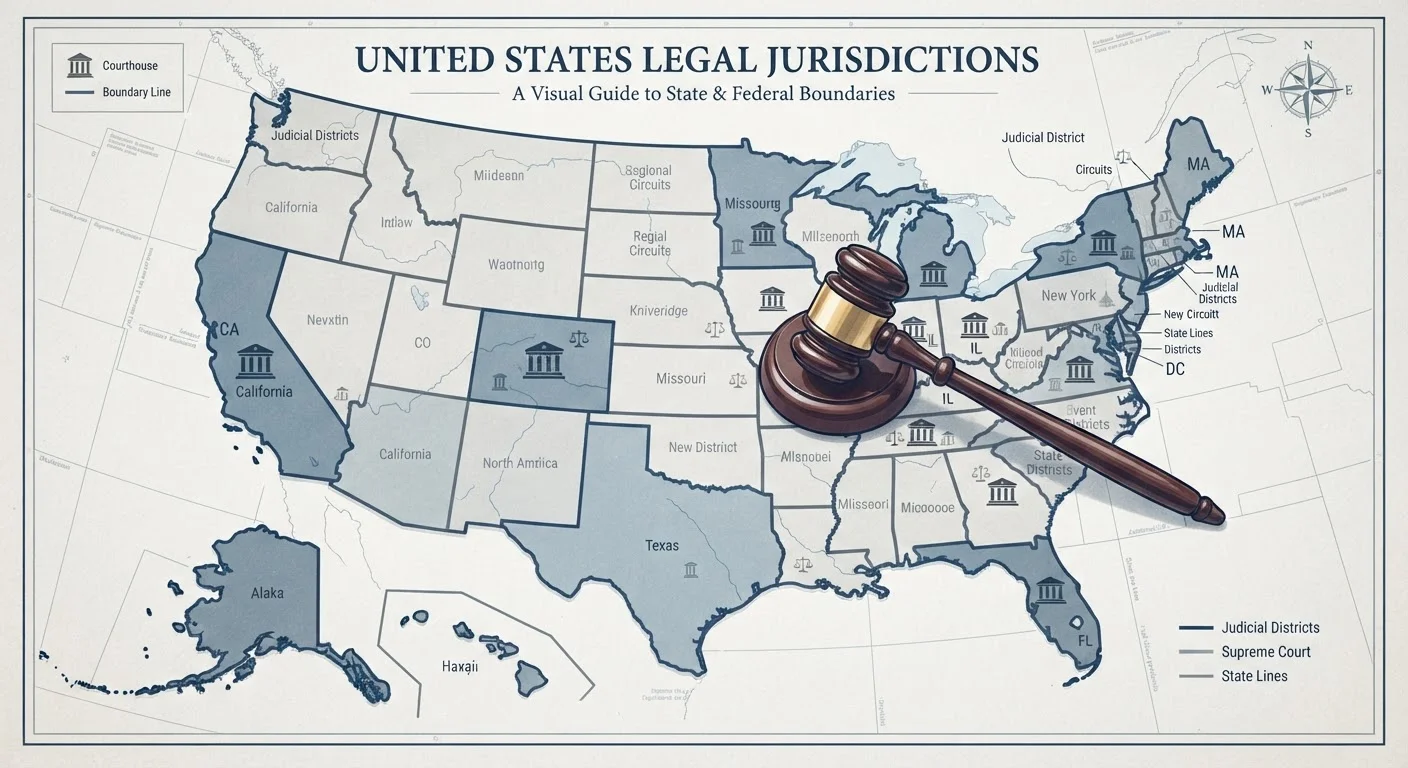
Photo: TotemBuzz.com | Your Lifestyle Companion editorial
Key Takeaways
- Jurisdiction determines which court can hear a case and which laws apply.
- There are different types: federal, state, local, and subject matter jurisdiction.
- A court without proper jurisdiction cannot legally decide a case.
- Online activity and cross-state transactions can create complicated jurisdiction questions.
- Jurisdiction is usually one of the first issues a lawyer examines in any dispute.
Why Jurisdiction Is the Starting Point
Before a court can decide anything — who wins, who pays, what the penalty is — it has to answer a more basic question: do we even have the authority to hear this? That question is jurisdiction.
Jurisdiction isn't a technicality. It's a foundational rule that keeps legal power organized. Without it, any court could theoretically weigh in on any dispute anywhere, which would be chaos. So the legal system sets clear boundaries about who has authority over what.
When a lawyer takes on a new matter, jurisdiction is usually the first thing they check. Get it wrong and any ruling can be challenged or thrown out entirely. Understanding the basics helps you follow what's happening if you're ever involved in a legal dispute — and it explains why cases sometimes get moved or dismissed before they even start.
Federal Courts vs. State Courts
The Main Types of Jurisdiction You'll Encounter
Jurisdiction isn't one-size-fits-all. It breaks down into several overlapping types:
- Subject matter jurisdiction — Does this court handle this type of case? Family courts handle divorces, not patent disputes. Bankruptcy courts handle bankruptcy filings, not personal injury claims. Each court has a defined lane.
- Personal jurisdiction — Does this court have authority over the people or businesses involved? Generally, a court can reach someone if they live in that state, do business there, or if the events in question happened there.
- Geographic jurisdiction — Is this a local, state, or federal matter? Most everyday disputes (landlord issues, car accidents, small contracts) stay in state court. Cases involving federal law or parties from different states may go to federal court.
- Appellate jurisdiction — Some courts only review decisions made by lower courts. They don't hear new evidence; they examine whether the law was applied correctly the first time.
For a deeper look at how criminal and civil cases follow different tracks through these courts, see our explainer on civil law vs. criminal law.
94
Federal judicial districts in the U.S.
According to the U.S. Courts, the federal system is divided into 94 district courts organized into 12 regional circuits, each with its own geographic jurisdiction.
~100M
Civil cases filed in state courts annually
The National Center for State Courts estimates roughly 100 million cases are filed in state courts each year, reflecting how much of everyday legal life stays at the state level.
When Jurisdiction Gets Complicated
Jurisdiction questions get genuinely tricky in a few common situations:
Cross-state disputes. If you live in Texas and sign a contract with a company based in New York, and something goes wrong, both states may have an argument for jurisdiction. Many contracts include a clause specifying which state's law applies — that's often called a choice of law or forum selection clause.
Online activity. The internet doesn't respect state lines. Courts have developed tests to figure out whether a website or online business has enough of a presence in a state to be subject to its courts.
Federal vs. state overlap. Some conduct violates both state and federal law. A person could face prosecution in both systems — that's not double jeopardy, because two separate sovereigns are involved.
These scenarios are exactly why jurisdiction is worth understanding before you speak to a lawyer. Our guide on things worth knowing before your first legal consultation can help you prepare.
What This Means for Everyday Legal Situations
You don't need to be a lawyer to benefit from understanding jurisdiction. A few practical takeaways:
If you're signing a contract — for a rental, a freelance job, or an online purchase — look for a clause that says which state's courts govern disputes. You may be agreeing to resolve problems far from home.
If you're thinking about filing a complaint or small claims case, jurisdiction determines where you file. Filing in the wrong court wastes time and money.
And if you're ever served with legal papers, paying attention to the court named in those documents tells you a lot about what's being claimed and where you'd need to respond.
Jurisdiction also connects directly to statutes of limitations, because deadlines for filing a claim can vary depending on which state's law applies. Knowing the right jurisdiction helps you know which clock is ticking.
Legal systems are complicated, but most of the complexity starts with a simple question: who has the authority here? Jurisdiction is the answer.
“Jurisdiction is the power to hear and determine a cause. Without it, a court's judgment is a nullity.”
— U.S. Supreme Court, Paraphrased from longstanding federal case law on jurisdictional authority
This article is for general informational purposes only and does not constitute legal advice. If you have a specific legal question, consult a licensed attorney in the relevant jurisdiction.
Frequently Asked Questions
The content on this site is for informational purposes only and is not a substitute for professional advice. Always consult a qualified professional for guidance specific to your situation.