
How Time Zones Actually Work—and Why Getting Them Wrong Ruins Connections

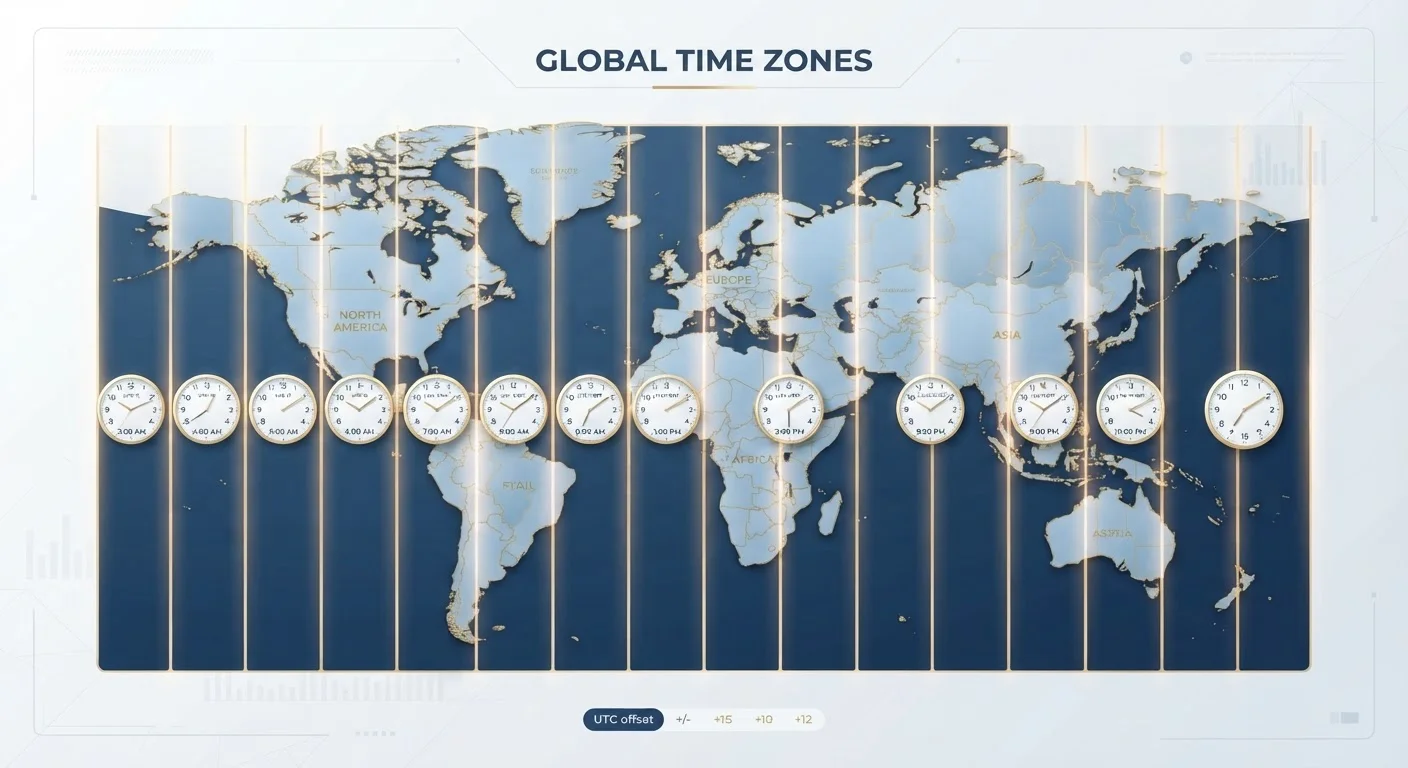
Photo: TotemBuzz.com | Your Lifestyle Companion editorial
Key Takeaways
- Time zones are measured as offsets from UTC, the global reference standard.
- Flight itineraries show local departure and arrival times — not a single unified clock.
- Crossing into a new day mid-flight can make layover math confusing without careful checking.
- Daylight saving time shifts clocks seasonally in many US states and countries, changing offsets.
- Always verify booking windows in your local time zone to avoid missing reservation cutoffs.
Why Time Zones Exist
Before standardised time, every town set its clocks to local solar noon — the moment the sun peaked overhead. This worked fine when travel was slow, but railroads in the 1800s created chaos: a passenger crossing the US encountered dozens of competing local times. In 1884, an international conference established Greenwich, England as the zero-meridian reference, and the world gradually adopted 24 standardised zones radiating outward from it.
Today, that reference point is called Coordinated Universal Time (UTC). Every country or region picks an offset — UTC−5, UTC+9, and so on — that keeps their clocks reasonably aligned with daylight. When you see a time written as "3:00 PM ET (UTC−5)," it means the local clock is five hours behind UTC.
UTC vs. GMT: Are They the Same?
How Flight Times Use Local Clocks
This is where most beginner travellers stumble. A flight itinerary always shows the local time at each airport — not a single unified clock. A departure listed as 11:00 PM from New York and an arrival of 1:30 PM the next day in London is not a 14.5-hour flight. London operates on UTC+0 in winter (five hours ahead of New York's UTC−5), so the actual flight is roughly 6.5 hours. The date change in the middle makes the arithmetic look deceptive.
Understanding this prevents two common mistakes: assuming a layover is longer than it really is, or — more dangerously — assuming it is shorter. Always calculate layover duration by converting both times to UTC first, then subtracting. You can do this with any world clock tool or by simply reading the flight duration field your airline provides. See our guide to reading a flight itinerary for a step-by-step walkthrough of every field you'll encounter.
24
Standard time zone bands worldwide
The International Telecommunication Union recognises 24 primary UTC offset zones, though political boundaries mean real-world use exceeds this number.
UTC±14
Widest time zone spread on Earth
The furthest offset from UTC is UTC+14, observed in parts of the Pacific — meaning some locations are 26 hours apart from UTC−12 zones.
~30%
Countries not observing daylight saving time
Roughly a third of countries worldwide do not shift clocks seasonally, according to timeanddate.com's global DST data.
The Complication of Daylight Saving Time
Daylight saving time (DST) is a seasonal practice — observed in most US states and many countries — where clocks shift forward one hour in spring and back one hour in autumn. That means a location's UTC offset changes twice a year. Arizona (except the Navajo Nation) does not observe DST. Much of Europe shifts clocks on different dates than the US does. Some countries, including Japan and China, do not observe DST at all.
For travellers, DST matters most when booking across the transition weeks. A 90-minute layover booked weeks in advance might shrink to 30 minutes if a DST change occurs before your travel date. Always recheck connection times when clocks are set to change.
Use UTC Math to Verify Layovers
Booking Windows and Time Zone Traps
Hotels, tour operators, and airlines often set booking deadlines in their own local time — not yours. A hotel in Hawaii might close its cancellation window at midnight HST (UTC−10), which is 5:00 AM Eastern time the following morning. Miss that cutoff by assuming it aligns with your bedtime and you may forfeit a deposit.
When a confirmation email states a deadline, look for a time zone abbreviation. If none is listed, contact the provider to confirm. This small step consistently prevents costly misunderstandings — a detail that ties directly into separating travel fact from fiction (see common travel myths that catch new travellers off guard).
A practical habit: keep your phone's world clock showing your destination's time zone from the moment you book. It trains your instinct for the offset before you even board.
Frequently Asked Questions
The content on this site is for informational purposes only and is not a substitute for professional advice. Always consult a qualified professional for guidance specific to your situation.