
Manual vs Automatic Transmission: What Changes Beyond Just the Gear Stick

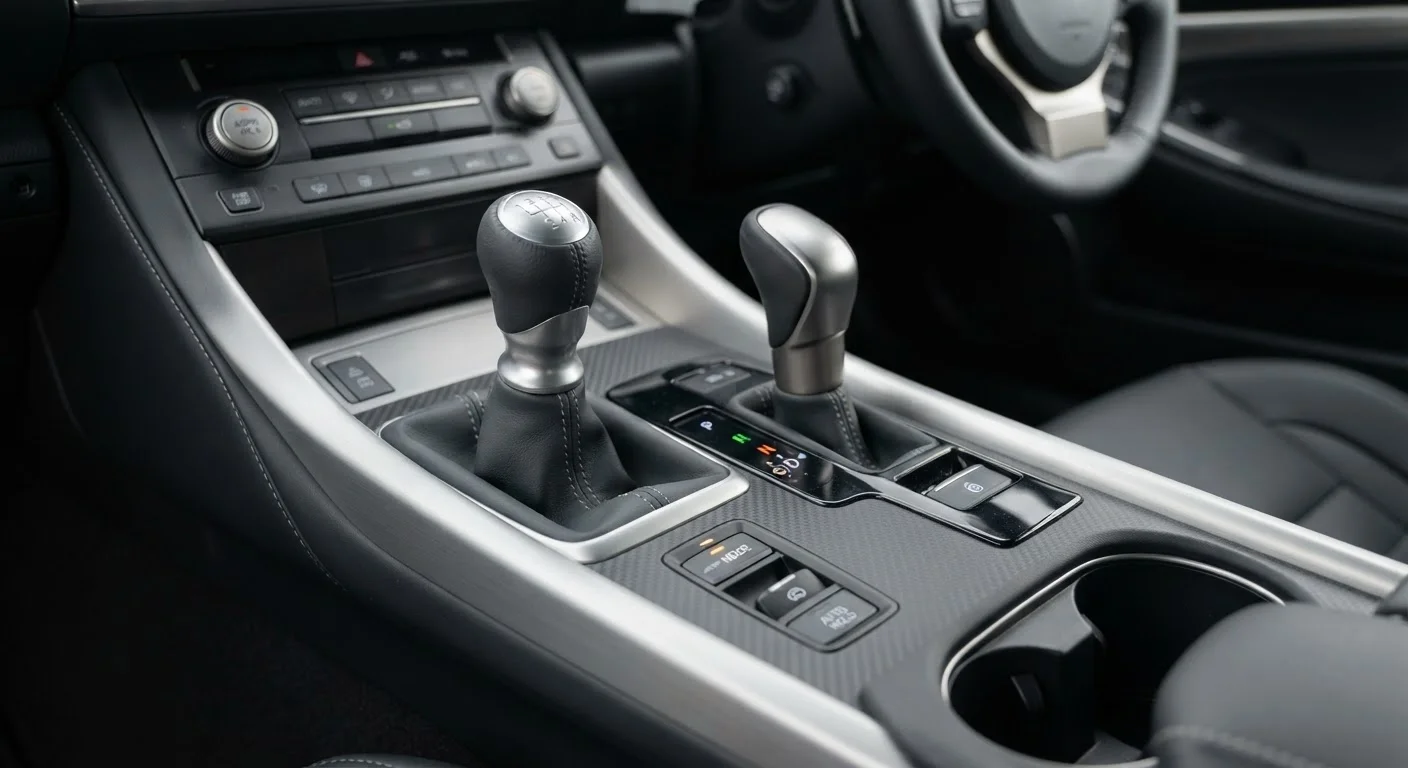
Photo: TotemBuzz.com | Your Lifestyle Companion editorial
Key Takeaways
- Manual transmissions require a clutch pedal and active gear selection; automatics handle shifting for you.
- Maintenance costs differ — manuals typically have simpler clutch systems, but automatics have evolved to be highly reliable.
- Automatic transmissions now dominate the U.S. new car market, making manuals harder to find.
- Fuel economy differences between the two types have narrowed significantly in modern vehicles.
- Your daily driving environment — city vs. highway — is a key factor in choosing the right transmission type.
How Each Transmission Actually Works
At its core, a transmission transfers power from the engine to the wheels — but how that transfer is managed is where the two systems diverge sharply.
In a manual transmission (also called a stick shift or standard), the driver presses a clutch pedal — a third pedal on the left — to temporarily disconnect the engine from the drivetrain. You then select a gear using the gear lever and release the clutch to re-engage power. This all happens within seconds and becomes muscle memory with practice, but it demands coordination from the start.
An automatic transmission handles that entire process internally. A component called a torque converter replaces the clutch, using hydraulic fluid to manage the connection between engine and transmission. The car's computer senses speed and throttle input and shifts gears on your behalf. You simply select Drive (D) and focus on the road.
Modern automatics include sub-variants worth knowing: continuously variable transmissions (CVTs) use a belt-and-pulley system with no fixed gear steps, and dual-clutch transmissions (DCTs) offer automatic convenience with manual-style mechanical efficiency.
| Criterion | Manual Transmission | Automatic Transmission |
|---|---|---|
| Gear shifting | Driver-controlled via clutch and lever | Handled automatically by the car |
| Learning difficulty | Higher — clutch coordination required | Lower — simpler for new drivers |
| City traffic ease | More fatiguing in stop-and-go | Significantly more convenient |
| Typical main service item | Clutch assembly replacement | Transmission fluid changes |
| Fuel economy | Comparable in modern vehicles | Comparable in modern vehicles |
| U.S. market availability | Limited and declining | Standard on most new vehicles |
| Driver engagement | High — full control of power | Lower — system handles shifts |
Maintenance, Costs, and Real-World Ownership
Neither transmission type is categorically cheaper to own — the answer depends on the vehicle, age, and how it's driven.
Manual transmissions have fewer hydraulic components, which historically made them simpler to service. The main wear item is the clutch assembly, which can last anywhere from 50,000 to over 100,000 miles depending on driving habits. Aggressive city driving shortens clutch life considerably. Replacing a clutch is a meaningful repair cost, though generally predictable.
Automatic transmissions require periodic transmission fluid changes — neglecting this is one of the most common causes of premature automatic transmission failure. Repair costs for automatics, particularly older units, can be significant. However, modern automatics are far more reliable than those from decades past, and many manufacturers now use sealed units with extended service intervals.
~96%
Share of U.S. new car sales that are automatic
Industry sales data consistently shows automatics account for the vast majority of new vehicles sold in the United States.
50K–100K+ miles
Typical clutch lifespan on a manual
Clutch longevity varies widely based on driving style, traffic conditions, and vehicle type — city driving shortens it considerably.
From a day-to-day cost standpoint, fuel economy gaps between manual and automatic have largely closed in modern vehicles. Today's multi-speed automatics (some with eight or more gear ratios) often match or exceed manual economy figures on the highway. If fuel type is also a consideration for your next vehicle, see our guide on understanding petrol, diesel, hybrid, and electric differences for a broader ownership picture.
Availability, Learning Curve, and What to Consider
One practical reality in the U.S. market: manual transmissions are increasingly rare on new vehicles. The overwhelming majority of new cars sold in America come standard with an automatic, meaning shoppers who want a manual may find their choices limited — particularly in certain vehicle segments like SUVs and trucks.
For new drivers, the learning curve on a manual is real. Smooth clutch control, hill starts without rolling back, and avoiding stalling in traffic all take time to master. Most people become comfortable within a few weeks of regular practice, but the early phase requires deliberate attention. An automatic eliminates this entirely, which is why it's typically recommended for learners first building road awareness.
There's also a licensing consideration: in some countries, passing a driving test in an automatic restricts you to automatics legally. In the U.S., this restriction does not apply — a standard driver's license covers both — but it's worth knowing if you travel internationally and plan to rent vehicles abroad.
A Note on CVTs and Dual-Clutch Transmissions
Ultimately, neither transmission is universally superior. The right choice is the one that fits your daily environment, comfort level, and the vehicles realistically available to you.
The content on this site is for informational purposes only and is not a substitute for professional advice. Always consult a qualified professional for guidance specific to your situation.