
Reading a Property Listing Without Getting Lost

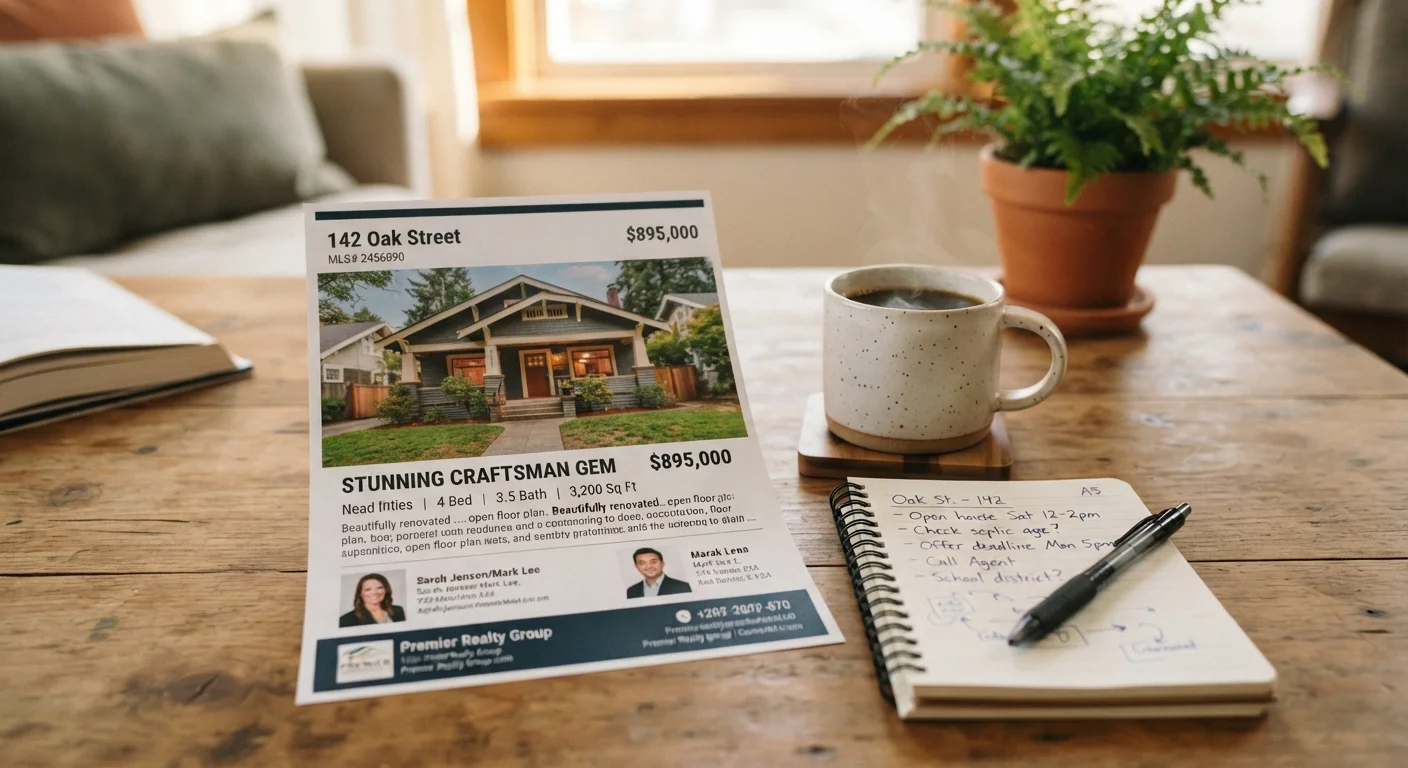
Photo: TotemBuzz.com | Your Lifestyle Companion editorial
Key Takeaways
- Property listings pack a lot of information into a small space — most of it follows a predictable format.
- Square footage, lot size, and bedroom counts can be misleading without understanding how they're measured.
- Zoning codes and HOA disclosures affect what you can do with the property.
- "Days on market" and listing status signals can tell you a lot about a property's situation.
- Always cross-check listing details against public records before making any decisions.
What You'll Need Before You Start
Reading a listing well doesn't require a real estate license, but a little preparation helps. Before you dive into active listings, it's worth bookmarking a plain-language glossary — our glossary of real estate terms covers the core vocabulary you'll run into repeatedly.
What you will need
Once you have the basics down, you'll be surprised how quickly listings start to make sense.
The Anatomy of a Standard Property Listing
Most US real estate listings — whether on a brokerage site or the MLS (Multiple Listing Service, the shared database agents use) — follow a fairly consistent structure. Here's what each section is actually telling you.
Price and Status
The asking price is what the seller wants, not necessarily what the property is worth or what it will sell for. Below or near the price you'll usually see a status tag: Active means it's available; Pending means an offer has been accepted but the sale hasn't closed; Contingent means an offer is in place but depends on conditions being met (like a satisfactory inspection). If a listing is back to Active after being Pending, that's worth noting — it means a deal fell through.
Days on Market (DOM)
This number counts how long the property has been listed. A high DOM — say, over 60 days in a typical market — may indicate the price is too high, there's a known issue, or it's simply an unusual property. It can give you negotiating context, but don't read too much into it without local market knowledge.
Beds, Baths, and Square Footage
Bedroom counts are straightforward, but "bathrooms" can be confusing. A full bath has a toilet, sink, and shower or tub. A half bath (also called a powder room) has only a toilet and sink. You may see listings written as "3/2" meaning three bedrooms and two full baths, or "2 bd / 1.5 ba" meaning two bedrooms, one full bath, and one half bath.
Square footage (sq ft) measures the interior living space, but methods vary. Some listings include the garage or finished basement; others don't. If exact size matters to you, ask for the measurement method or check the tax records, which often have their own figure.
Square Footage Numbers Can Vary
Lot Size
For houses, the listing will usually show lot size in square feet or acres (1 acre = 43,560 sq ft). This is the total land area, including the home's footprint, yard, driveway, and any outbuildings. Lot size matters especially if you're thinking about additions, parking, or outdoor space.
Property Type and Year Built
Common types include Single Family Residence (SFR), Condo, Townhouse, and Multi-Family. Each comes with different ownership structures and costs. For condos and townhouses, also look for HOA (Homeowners Association) information — this will tell you about monthly fees and rules that govern the property. Our article on shared property ownership explains how these arrangements work.
Year built matters because it gives you a rough sense of what systems — roof, HVAC, plumbing — might be approaching the end of their typical lifespan.
Zoning
Zoning codes (like R-1 for single-family residential, or C-2 for commercial) are set by local government and dictate what the property can legally be used for. If you're hoping to run a home business, add a rental unit, or make structural changes, the zoning matters. You can look up zoning details on your local municipality's website or planning department.
Red Flags and What to Double-Check
Listings are written by sellers (or their agents) to present the property favorably — which is completely normal, but worth keeping in mind.
Listing Language Is Written to Sell
A few things to verify independently:
- Flood zone status: Check FEMA's flood map (msc.fema.gov) using the address. Flood zone properties often require additional insurance.
- Tax history: County assessor sites usually show recent property tax bills. This helps you budget accurately.
- Permit history: Major renovations should have permits on record. Unpermitted work can create legal and insurance complications.
- HOA documents: If the listing notes an HOA, request the CC&Rs (Covenants, Conditions, and Restrictions) before going too far — they spell out what you can and can't do.
When you're ready to move beyond reading listings and into actual paperwork, our guide on reading a contract without a law degree is a helpful next step. And if you're unsure whether to involve a professional in your search, see what a real estate agent actually does.
This article is for general informational purposes only and does not constitute real estate, legal, or financial advice. Consult a licensed real estate professional or attorney for guidance specific to your situation.
The content on this site is for informational purposes only and is not a substitute for professional advice. Always consult a qualified professional for guidance specific to your situation.