
The Menstrual Cycle Explained: What's Actually Happening Each Month

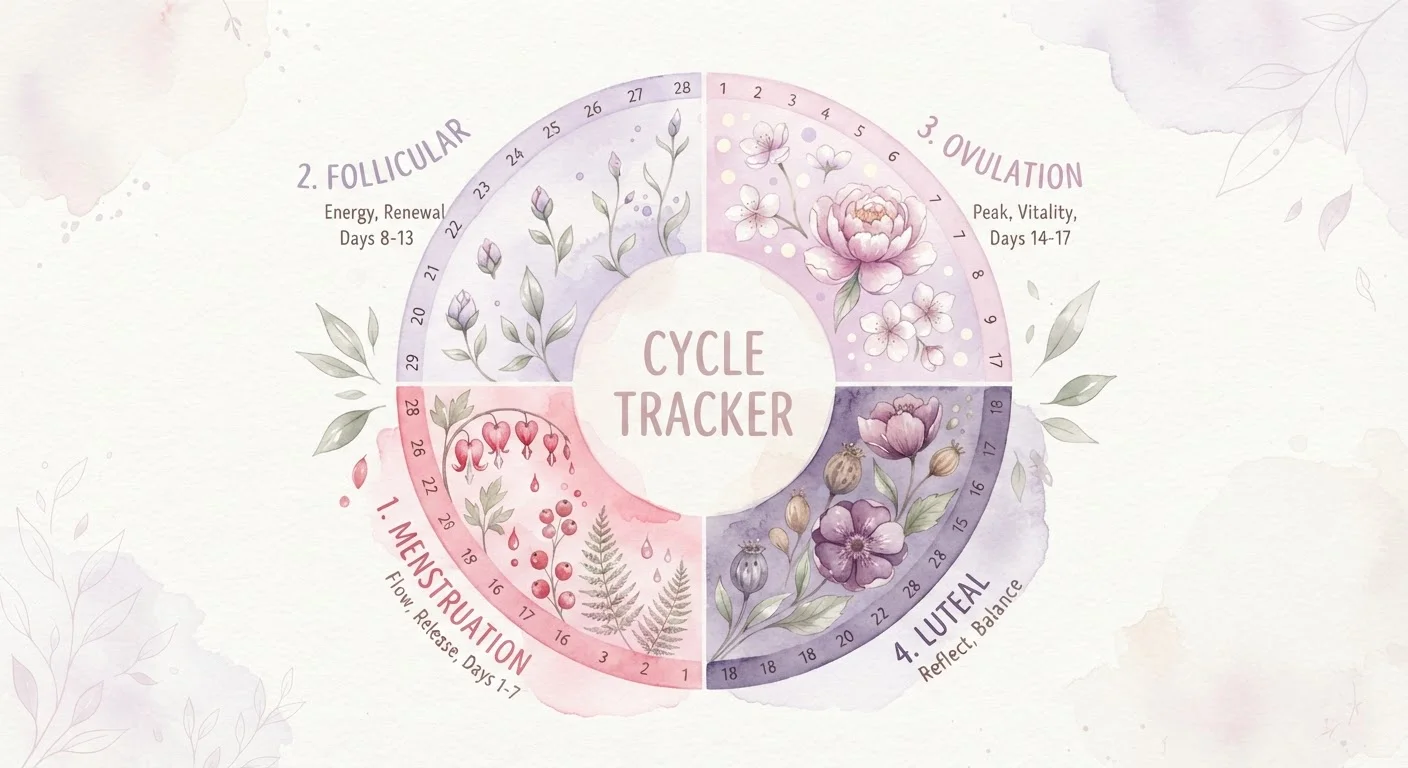
Photo: TotemBuzz.com | Your Lifestyle Companion editorial
Key Takeaways
- The menstrual cycle has four phases: menstrual, follicular, ovulatory, and luteal.
- Hormones — mainly estrogen and progesterone — drive the physical changes in each phase.
- Cycle length varies naturally from person to person and even month to month.
- Mood, energy, and physical symptoms can shift throughout the cycle due to hormonal fluctuations.
- Persistent pain, very heavy bleeding, or irregular cycles are worth discussing with a healthcare provider.
Why Understanding Your Cycle Matters
For many people, the menstrual cycle is something that happens to them rather than something they feel informed about. Getting a clear picture of what's actually going on each month can help you recognize what's typical for your body and notice when something feels different.
The cycle isn't just about menstruation — it's a continuous hormonal rhythm that influences energy, mood, digestion, skin, and sleep. To understand it better, it helps to know a little about the hormones involved. Our beginner's guide to hormonal health covers how estrogen, progesterone, and other hormones shape how you feel day to day.
21–35 days
Typical menstrual cycle length range
According to the American College of Obstetricians and Gynecologists, cycle length naturally varies within this range among adults.
~2–7 days
Average duration of menstrual bleeding
Most periods last between two and seven days, though what's typical varies from person to person.
4 phases
Distinct phases in every menstrual cycle
Each phase — menstrual, follicular, ovulatory, and luteal — is driven by a specific hormonal pattern.
Phase 1: The Menstrual Phase
The cycle begins on day one of your period. During this phase, the uterine lining — which built up during the previous cycle in preparation for a potential pregnancy — sheds because no fertilized egg implanted. This shedding is what causes menstrual bleeding.
Estrogen and progesterone are both at their lowest during this phase, which is why many people notice dips in energy or mood during their period. Cramping occurs because the uterus contracts to help expel the lining; mild discomfort is common, though severe pain is worth mentioning to a doctor.
A typical period lasts two to seven days, and blood loss ranges widely between individuals.
Phase 2: The Follicular Phase
Overlapping with and continuing after menstruation, the follicular phase runs roughly from day one through ovulation. During this time, the pituitary gland releases FSH, which stimulates small fluid-filled sacs called follicles in the ovaries to develop. Each follicle contains an egg.
As follicles grow, they produce estrogen. Rising estrogen signals the uterus to begin rebuilding its lining and also prompts the brain to eventually trigger ovulation. Many people notice increased energy and a more positive mood during the later follicular phase, as estrogen climbs toward its monthly peak.
Tracking Your Cycle Can Be Informative
Phase 3: Ovulation
Ovulation is a brief but pivotal event. A surge in LH from the pituitary gland causes the dominant follicle to release a mature egg. The egg travels down the fallopian tube toward the uterus, where it can be fertilized if sperm are present. An egg is viable for roughly 12 to 24 hours after release.
Some people notice physical signs around ovulation, such as a change in vaginal discharge (often described as clear and stretchy), mild one-sided pelvic discomfort called mittelschmerz, or a slight rise in basal body temperature. These signs can vary significantly between individuals.
Phase 4: The Luteal Phase
After ovulation, the empty follicle transforms into a structure called the corpus luteum, which produces progesterone. Progesterone prepares the uterine lining to receive a fertilized egg and also causes body temperature to remain slightly elevated.
If pregnancy doesn't occur, the corpus luteum breaks down, progesterone and estrogen fall, and the cycle begins again with menstruation. This hormonal drop in the late luteal phase is closely linked to the mood and physical changes many people experience before their period — sometimes called PMS. For those whose symptoms are more severe and affect daily life, a condition called PMDD may be involved. Our article on hormones and mood explores this connection in more depth.
PMS vs. PMDD: A Key Distinction
How the Cycle Changes Over a Lifetime
The menstrual cycle isn't static. It can shift with age, stress, significant weight changes, illness, certain medications, and other health conditions. Cycles are often irregular in the first few years after menstruation begins, and they typically become less predictable again as the body approaches menopause.
The transition to menopause — a phase known as perimenopause — can bring noticeable changes to cycle length and flow before periods stop altogether. If you're curious about what to expect later in life, our article on perimenopause vs. menopause breaks down the key differences.
This article is for general informational purposes only and is not a substitute for professional medical advice. If you have questions about your menstrual cycle or any related symptoms, please consult a qualified healthcare provider.
Frequently Asked Questions
The content on this site is for informational purposes only and is not a substitute for professional advice. Always consult a qualified professional for guidance specific to your situation.